Blog
Bringing nature indoors has transformed from a simple decorative choice into a lifestyle movement that touches every aspect of home design. Whether you’re drawn to the sculptural elegance of a fiddle leaf fig, the delicate beauty of a seasonal bouquet, or the lush abundance of a terrarium garden, plants offer an unparalleled way to breathe life into your surroundings.
The relationship between humans and greenery runs deeper than mere aesthetics. Studies consistently show that indoor plants can reduce stress levels by up to 37%, improve concentration, and even accelerate recovery from illness. Beyond these measurable benefits, there’s something profoundly satisfying about nurturing a living thing and watching it thrive under your care.
This comprehensive resource explores the fundamental aspects of incorporating plants and floral elements into your décor. From understanding which species will flourish in your specific conditions to mastering the principles of arrangement and design, you’ll gain the knowledge needed to create spaces that are both beautiful and life-affirming.
Why Bring Plants into Your Living Spaces?
The decision to introduce plants into your home extends far beyond following trends. When you understand the tangible benefits greenery provides, the choice becomes almost obvious.
Health and Air Quality Benefits
Indoor air can be surprisingly polluted, sometimes containing higher concentrations of toxins than outdoor air. Plants act as natural air filters, absorbing carbon dioxide and releasing oxygen while simultaneously removing volatile organic compounds (VOCs) from the atmosphere. Species like snake plants, pothos, and spider plants are particularly effective, with research demonstrating their ability to remove formaldehyde, benzene, and trichloroethylene.
The impact goes beyond air purification. Plants naturally release moisture through transpiration, increasing humidity levels by approximately 10%. This can be especially beneficial in climate-controlled environments where artificial heating and cooling create uncomfortably dry conditions. Higher humidity helps prevent dry skin, respiratory discomfort, and static electricity.
Psychological and Aesthetic Impact
The presence of plants triggers measurable physiological responses. Heart rate decreases, cortisol levels drop, and feelings of anxiety diminish when people spend time around greenery. This phenomenon, sometimes called biophilia, reflects our innate connection to the natural world.
From a design perspective, plants introduce organic shapes, varied textures, and dynamic color that can’t be replicated with manufactured décor. A well-placed fern softens hard architectural lines, while a flowering orchid becomes a living sculpture that changes with the seasons. Unlike static decorative objects, plants grow and evolve, ensuring your space never feels stagnant.
Selecting the Right Plants for Each Room
Success with indoor plants begins with honest assessment of your environment. Even the most beautiful specimen will struggle if placed in conditions incompatible with its needs.
Understanding Light Requirements
Light is the most critical factor determining plant survival. Windows facing different directions provide vastly different light intensities. South-facing windows (in the Northern Hemisphere) receive intense, direct light for most of the day—ideal for succulents, cacti, and herbs. East-facing windows offer gentler morning sun, perfect for African violets and orchids. West-facing windows deliver strong afternoon light that suits many flowering plants. North-facing windows provide consistent but low light, where only shade-tolerant species like pothos, snake plants, and ZZ plants will thrive.
Don’t guess about light levels. Observe how sunlight moves through your space throughout the day. Areas that seem bright to human eyes may actually be too dim for many plants, since our eyes adjust to low light far better than photosynthesizing leaves can.
Humidity and Temperature Considerations
Kitchens and bathrooms naturally provide higher humidity, making them excellent locations for tropical species like ferns, calatheas, and philodendrons. These moisture-loving plants struggle in drier living rooms or bedrooms unless you’re willing to provide supplemental humidity through misting, pebble trays, or humidifiers.
Temperature stability matters more than the specific temperature range. Most common houseplants tolerate normal indoor temperatures between 60-75°F, but they suffer when subjected to dramatic fluctuations. Avoid placing plants near heating vents, air conditioning units, or drafty windows. Think of it like this: if you’d be uncomfortable standing in that spot for an extended period, your plant probably will be too.
The Art of Floral Design and Arrangements
Creating beautiful floral arrangements is both an art and a science, governed by principles that anyone can learn and apply.
The foundation of successful floral design rests on three core elements: proportion, balance, and focal point. Proportion refers to the relationship between the arrangement and its container—a classic guideline suggests that flowers should be roughly one and a half times the height of the vase. Balance can be symmetrical (formal and traditional) or asymmetrical (dynamic and modern), but the visual weight should feel distributed evenly.
Every compelling arrangement needs a focal point—typically the largest, most striking blooms placed at the heart of the design. These star flowers might be roses, peonies, or dahlias, depending on the season. Around them, you’ll layer secondary flowers for support and filler materials like baby’s breath, eucalyptus, or ferns to add texture and volume.
Color theory plays a crucial role. Monochromatic arrangements using varying shades of a single color create sophisticated, cohesive looks. Complementary color schemes (colors opposite on the color wheel, like purple and yellow) produce vibrant, energetic displays. Analogous combinations (neighboring colors like pink, red, and orange) feel harmonious and natural.
Fresh flower care extends the life of your arrangements significantly. Always cut stems at a 45-degree angle underwater to prevent air bubbles from blocking water uptake. Remove any foliage that would sit below the waterline to prevent bacterial growth. Change the water every two days, and recut stems each time to maintain freshness.
Styling Your Space with Greenery
Strategic placement and thoughtful presentation transform plants from simple objects into integral design elements that define the character of a room.
Container Choices and Display Ideas
The vessel holding your plant contributes as much to the overall aesthetic as the plant itself. Terracotta pots provide classic, breathable options that work well for plants preferring drier conditions. Ceramic planters with drainage holes suit most houseplants and come in endless colors and patterns. For modern spaces, concrete or metal containers create industrial appeal, while woven baskets add warmth and texture.
Consider displaying plants at varying heights to create visual interest:
- Floor-standing planters anchor corners and empty spaces with tall specimens like bird of paradise or rubber trees
- Tabletop plants at eye level become conversation pieces—think sculptural succulents or flowering anthuriums
- Hanging planters utilize vertical space beautifully, perfect for trailing pothos, string of pearls, or spider plants that cascade downward
Creating Visual Balance
Group plants in odd numbers (three or five) for the most pleasing arrangements, varying their heights, leaf shapes, and textures. Pair a tall, upright snake plant with a medium-sized bushy fern and a trailing ivy for dynamic contrast. This layering technique, borrowed from garden design, creates depth and prevents monotony.
Don’t overlook the power of negative space. Rooms filled with too many plants can feel cluttered rather than lush. Strategic placement allows each specimen to shine while maintaining breathing room. Think of plants as living punctuation marks that guide the eye through your space and emphasize architectural features you want to highlight.
Transforming your home with plants and floral elements is a journey rather than a destination. Start with a few resilient species suited to your environment, observe how they respond, and gradually expand your collection as your confidence grows. Each plant teaches you something new about care requirements, seasonal rhythms, and the subtle art of arrangement. The beauty of botanical décor lies in its accessibility—whether you’re working with a single statement plant or curating an entire indoor garden, the principles remain the same: understand your conditions, choose appropriate species, and tend to them with consistent care.
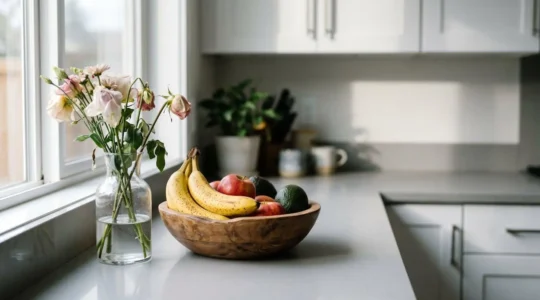
The Invisible Killer in Your Kitchen: Why a Fruit Bowl Halves Your Flowers’ Lifespan
The tragic wilting of your flowers is not simple decay; it’s a hijacking. Ethylene gas from fruit is a potent plant hormone that triggers a self-destruct sequence in your bouquet. Ethylene sources are everywhere, not just the fruit bowl. Gas…
Read more