Bouquets & floral art
Floral art transforms individual stems into cohesive statements. Whether you’re arranging three elegant calla lilies in a minimalist vessel or orchestrating a cascading bridal bouquet with dozens of varieties, the principles that separate amateur attempts from professional results remain consistent. Understanding these foundations allows you to make intentional choices rather than hoping for happy accidents.
This comprehensive resource explores the essential knowledge areas that underpin successful floral design. From the mathematical psychology of odd-numbered groupings to the structural mechanics that keep arrangements upright for days, each principle serves a specific purpose. You’ll discover why certain colour combinations fail despite featuring beautiful blooms individually, how construction techniques dramatically alter silhouette and longevity, and which design philosophies align with different aesthetic goals.
Whether you’re planning a single centrepiece or coordinating flowers for an entire venue, the concepts covered here provide the framework for confident decision-making. Think of this as your foundational map—a way to understand how individual techniques, materials, and choices interconnect to create arrangements that achieve your specific vision while respecting the natural characteristics of the materials themselves.
Foundational Design Principles That Govern Visual Impact
Professional floral arrangements follow compositional rules that create visual harmony, even when the goal is to appear wild and unstructured. These principles operate below conscious awareness but profoundly affect how viewers perceive your work.
The Psychology of Odd Numbers in Focal Points
Human eyes naturally seek patterns and completion. When you place an even number of focal blooms in an arrangement, the brain automatically pairs them, creating a static, predictable composition. Odd groupings—particularly three, five, or seven stems—resist this pairing instinct, forcing the eye to move continuously through the arrangement.
A practical example: three garden roses at different heights create triangular sightlines that guide the viewer’s gaze throughout the piece. Five creates a more complex rhythm, while seven begins to read as abundant. Beyond nine, individual blooms start to blur into texture rather than remaining countable focal points.
The Five-Element Limit and Visual Coherence
Adding variety feels exciting during the design process, but arrangements with more than five distinct flower types often appear chaotic rather than abundant. Each additional element introduces new colours, shapes, and textures that compete for attention rather than creating conversation.
Professional designers often achieve richness through varying bloom sizes within the same variety—spray roses alongside standard roses, for instance—rather than introducing entirely new species. This creates complexity while maintaining coherence.
Controlled Asymmetry Versus Perfect Symmetry
Perfectly symmetrical arrangements often feel static or artificial because natural growth never creates mirror-image perfection. The solution isn’t chaos but rather controlled asymmetry: establishing clear visual weight balance while varying the specific elements on each side. This technique creates arrangements that feel both intentional and organic, with the dynamic tension that makes viewers continue looking rather than glancing once and moving on.
Construction Techniques That Shape Structure and Silhouette
How you physically build an arrangement determines its final shape, density, and longevity. The construction method creates the architectural foundation upon which all other design elements rest.
Hand-Tied Spiral Technique for Fuller Bouquets
The spiral technique involves holding stems at a consistent angle and rotating the bouquet as you add each new stem. This creates a domed, three-dimensional form with stems radiating outward from a central point. The result is a fuller silhouette with better air circulation between blooms, extending vase life compared to stems simply bundled straight.
This method works particularly well for round, European-style bouquets where you want even distribution and a lush appearance. The technique does require practice—if the spiral becomes too tight, stems can break; too loose, and the arrangement collapses when you release your grip.
Parallel Construction for Modern Aesthetics
In parallel builds, all stems run vertically in the same direction rather than spiraling. This creates clean, architectural lines with a distinctly modern feel. The technique works beautifully for minimal arrangements and grid structures where you want perfect vertical alignment and the ability to see through the arrangement.
Parallel arrangements typically need vessel support—grids, pin frogs, or dense packing—since the stems don’t lock together as they do in spiral builds. This construction method uses stems efficiently, a benefit when working with expensive materials like orchids or rare tropical foliage.
Colour Theory and Visual Movement in Floral Compositions
Colour choices can elevate or undermine even technically perfect arrangements. The most common mistake involves creating distinct colour blocks—all pink roses in one section, all white lisianthus in another. This segmentation fights against the principle of visual movement. The eye stops at each colour boundary rather than flowing through the composition.
Professional arrangements distribute colours throughout, creating rhythms and visual pathways. Matching specific brand colours (like Pantone standards for corporate events) presents unique challenges since natural blooms don’t come with colour codes. The solution involves understanding undertones: a “red” rose might lean orange, blue, or brown depending on variety and maturity. Sampling blooms in the actual lighting conditions of your venue proves essential.
Varying bloom sizes creates visual movement even within monochromatic arrangements. Moving from large focal flowers through medium transitional blooms to delicate accent flowers creates depth and guides the eye through different visual layers. Including buds alongside fully opened blooms serves both aesthetic and practical purposes—the variation in openness creates temporal interest while extending display life significantly as buds continue opening over several days.
Design Philosophies: Eastern Minimalism Versus Western Abundance
Different cultural traditions approach floral design with fundamentally distinct philosophies. Understanding these frameworks helps you make coherent stylistic choices rather than accidentally mixing conflicting aesthetic languages.
Ikebana and its various schools treat empty space as an active design element rather than something to fill. The gaps between stems, the negative space around the arrangement, and the relationship between materials and container all carry meaning. A three-stem Ikebana composition might cost more than an overflowing bouquet because the selection, placement, and symbolism of those three elements requires extensive expertise.
British and European floristry traditions typically emphasize abundance, texture, and naturalistic massing. Garden-style arrangements aim to recreate the profusion of cottage gardens, with blooms at various heights and stages of opening, foliage creating movement, and an overall impression of lush generosity.
Neither approach is superior—they simply serve different aesthetic goals and cultural contexts. Problems arise when designers unconsciously blend them, creating arrangements that feel confused rather than eclectic. An abundance of roses with large gaps reads as incomplete rather than intentional.
Mechanics, Infrastructure, and Foam-Free Support Systems
What holds your arrangement in place affects not just stability but also water access, stem health, and your ability to achieve certain shapes. Environmental concerns have driven many professionals toward foam-free mechanics that offer superior longevity.
Chicken wire creates a flexible, reusable grid that works particularly well for large, loose arrangements. Crumpled into the vessel, it provides multiple anchor points while allowing excellent water circulation. The technique requires more stems than foam to adequately fill and stabilize the wire structure, but blooms typically last longer due to better hydration.
A kenzan (pin frog) consists of a heavy base studded with upright pins. This Japanese tool excels for minimal arrangements where each stem placement must be precise and visible. The weight provides stability while the pins grip stems securely at specific angles, working best in shallow vessels.
Natural moss packed firmly creates friction-based support suitable for hand-tied bouquets and structured designs. While moss doesn’t allow the angular precision of pins, it provides adequate support for vertical placements while remaining completely biodegradable. For specific flowers like heliconias with heavy, architectural blooms, weighted-base vessels prevent tipping that standard vases can’t avoid.
Understanding Bloom Selection, Quality, and Pricing
Not all roses cost the same, and understanding why certain flowers command premium pricing helps you make informed purchasing decisions and set appropriate expectations for special occasions.
Garden roses—the lush, many-petaled varieties favoured for weddings—cost significantly more than standard florist roses for several reasons. They’re typically more fragile, have shorter vase life due to dense petal count, and are frequently specialty varieties grown in smaller quantities. A single garden rose stem might cost £6-8 compared to £1 for a standard variety, but the visual impact and romantic aesthetic justify the investment for certain projects.
The phenomenon of “Pinterest peonies” illustrates expectation management. Peonies photograph beautifully at full bloom—a stage lasting approximately one day. Ordering peonies for an event means they’ll likely arrive as tight buds for longevity during shipping and may not reach that full, blowsy stage until days later, or might pass it quickly in warm conditions.
Pairing premium blooms with affordable, high-quality foliage like eucalyptus maximizes impact while controlling costs. The eucalyptus provides volume, movement, and the “English garden” aesthetic while allowing you to use fewer expensive focal flowers—a strategy professionals employ to create luxurious arrangements within realistic budgets.
Preservation Techniques: Extending Life and Creating Keepsakes
Understanding preservation allows you to extend the life of fresh arrangements and transform meaningful bouquets into lasting keepsakes, particularly for significant life events.
Fresh arrangements last longer when you include blooms at various stages of maturity. Tight buds continue opening over days, providing visual interest and extending the period when the arrangement looks fresh. This principle applies particularly to roses, ranunculus, tulips, and lilies.
For permanent preservation, different techniques yield different results:
- Hanging bunches upside down in dark, dry spaces works well for flowers with naturally low moisture content (lavender, strawflower, statice) but causes most blooms to fade and shrivel
- Silica gel desiccant drying removes moisture while supporting delicate petal structures, preserving colour and shape far better than air-drying but requiring careful timing to prevent brittleness
- Glycerine preservation works specifically for foliage rather than blooms, with stems absorbing a glycerine-water solution that replaces natural moisture, leaving greenery flexible for years
Hydrangeas present particular challenges, drying successfully only when cut at the right maturity stage—after blooms have begun naturally drying on the plant but before they’ve turned completely brown. This explains why DIY-dried hydrangeas often turn papery brown while preserved commercial versions maintain antique colour.
Sustainable Practices and Event-Scale Design
Environmental impact extends beyond the blooms themselves to include mechanics, sourcing, and waste management, while scaling from single arrangements to entire events introduces logistical challenges.
Conscious Design Choices
Many arrangements marketed as eco-friendly still contain floral foam (which doesn’t biodegrade) and blooms flown thousands of miles. Choosing foam-free mechanics represents the most impactful single change most designers can make. Seasonal, locally-grown flowers reduce transportation emissions and often arrive fresher, though realistic sustainable practice often means choosing locally when available and selecting the least-impacted imported options when necessary.
The question of abundance versus waste requires nuanced thinking. Using sufficient stems to create the aesthetic impact you’re seeking isn’t wasteful if those materials are purposeful. Waste occurs when stems are discarded unused or when arrangements are so overbuilt that inner stems receive no water and die prematurely.
Designing for Events and Challenging Spaces
The florist’s formula for table arrangements typically calculates stems per table based on vessel size and desired density. A low, full centrepiece for a standard round table might require 35-50 stems depending on flower size, while a tall, architectural arrangement might use fewer stems displayed more dramatically. Multiplying by twenty tables reveals that even “simple” event florals can require 700-1000 stems.
Venue proportions dramatically affect how arrangements read. A stunning centrepiece designed for standard ceiling heights gets visually lost in a double-height ballroom. Venues with significant vertical space require either notably taller arrangements or layered installations that occupy multiple sight levels. Overhead installations create drama but require careful material selection—lighter materials like hanging amaranthus and eucalyptus tendrils work better than heavy blooms that add dangerous weight to suspended structures.
Mastering floral art requires understanding how technical skills, design principles, and material properties interact to create successful arrangements. The construction technique you choose affects not just appearance but longevity. Your colour choices either facilitate or block visual movement. Even practical decisions about mechanics and sustainability shape the final result and its broader impact. As you develop your practice, these individual concepts will integrate into intuitive understanding, allowing you to design with both confidence and intention.
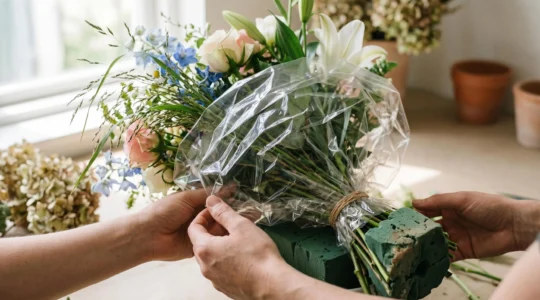
Why Does Your “Eco-Friendly” Bouquet Still Contain Foam and Imported Blooms?
The “eco-friendly” label on flowers often hides a complex reality; true sustainability lies in understanding the system, not just the marketing. An air-freighted Kenyan rose can have a lower carbon footprint than a locally grown Dutch flower from a heated…
Read more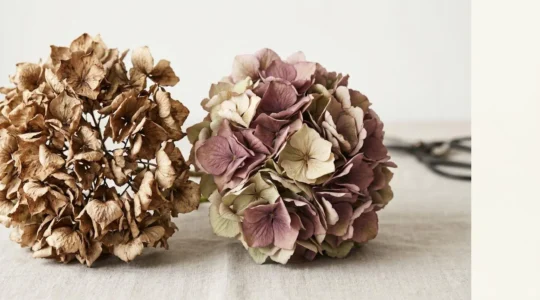
Why Do Hydrangeas Turn Papery Brown Instead of Drying to a Beautiful Antique Shade?
The number one reason your hydrangeas turn brown isn’t your drying method—it’s that you’re cutting them at the wrong time. Fresh, vibrant summer blooms are full of water and are biochemically programmed to wilt and rot, not dry gracefully. The…
Read more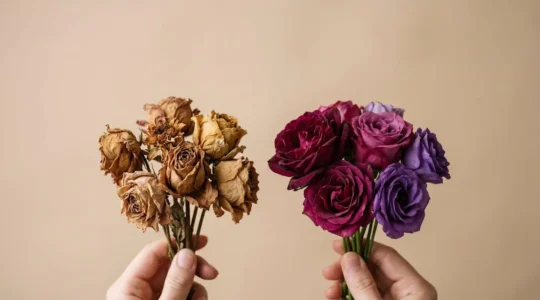
Why Do DIY-Dried Flowers Turn Brown While Shop-Bought Preserved Blooms Stay Vibrant?
The vibrant colour of professionally preserved flowers stems from halting cellular decay with science, a process simple DIY drying cannot replicate. DIY air-drying is too slow, allowing enzymes to cause browning and structural collapse in delicate flowers. Professional preservation uses…
Read more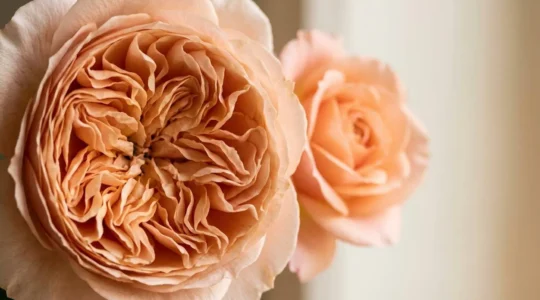
Why Do Garden Roses Cost £8 per Stem When Standard Roses Cost £1?
The £8 price tag for a garden rose isn’t just for a flower; it’s an investment in artistry, irreplaceable scent, and decades of botanical craftsmanship. The high cost is driven by years of intensive breeding, extreme fragility, and very short…
Read more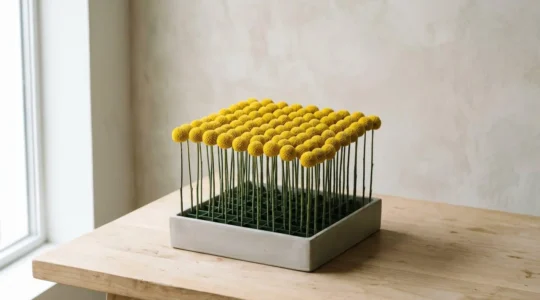
How to Build a Grid-Structure Arrangement That Stays Perfectly Symmetrical?
The pursuit of perfect, mathematical symmetry is precisely what makes most grid-style floral arrangements feel static and lifeless. True architectural balance comes from hidden structural integrity and balancing ‘visual weight’—not just mirroring physical placements. Intentionally introducing ‘controlled asymmetry’ and using…
Read more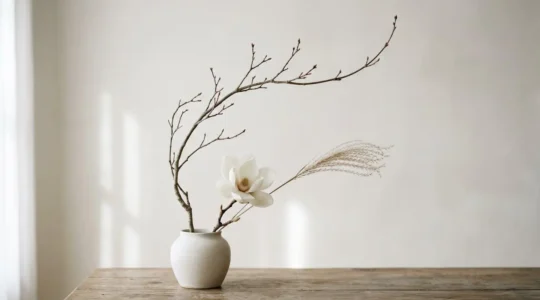
Why Are Minimalist Arrangements With 3 Stems Priced Higher Than Overflowing Bouquets?
You’ve seen it at a design fair, in a high-end hotel lobby, or on a contemporary florist’s feed: a stark, sculptural arrangement featuring just a handful of stems in a beautifully crafted vessel. Then you see the price tag and…
Read more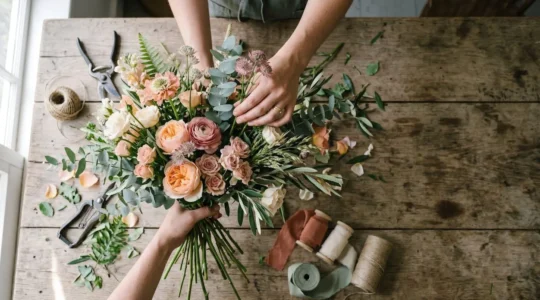
How Do Artisan Florists Create Bouquets That Look Unstructured Yet Perfectly Balanced?
That ‘wild, just-gathered’ look in an artisan bouquet isn’t random; it’s a masterclass in hidden structure and classical design theory. Odd numbers of flowers (3, 5, 7) are used not for tradition, but because the brain perceives them as more…
Read more