Flower care
Every week, thousands of bouquets are discarded prematurely and houseplants are replaced after mysterious declines, yet most of these failures stem from a handful of preventable mistakes. The difference between flowers that wilt in days and blooms that last weeks often comes down to understanding a few fundamental principles about how cut flowers and potted plants actually function after leaving their growing environment.
Whether you’ve just received an expensive bouquet, brought home a supermarket bunch, or are nurturing a collection of houseplants, the care techniques you apply in the first hours and days will dramatically impact their longevity. This comprehensive resource connects the science of flower physiology with practical, proven techniques that work in real homes—not just professional florist coolers.
Understanding Why Flowers and Plants Fail: The Most Common Mistakes
The statistics are sobering: a significant proportion of houseplants don’t survive their first six months in domestic settings, and cut flowers often fail to reach even half their potential vase life. These failures rarely result from a single catastrophic error but rather from compounding small oversights that create hostile conditions.
For houseplants, the leading culprit is watering misjudgment—either too frequent in centrally heated homes or insufficient during growth periods. Many tropical species require humidity levels of 60% or higher, yet typical indoor environments hover around 40%, especially during winter. This creates a chronic stress condition that weakens plants over time.
For cut flowers, the primary enemy is bacterial proliferation in vase water. At room temperature, bacteria colonies can double every 20 minutes, creating millions of cells within a day. These bacteria physically block the vascular system of stems, preventing water uptake even when the vase is full. This blockage causes premature wilting that looks like dehydration but is actually suffocation.
The Science of Stem Preparation: Cuts, Tools, and Techniques That Matter
The moment you cut a flower stem, you’re creating a wound that can either facilitate water uptake or doom the flower to early failure. The technique matters more than most people realise.
The 45-Degree Angle: Surface Area and Stability
Cutting stems at a 45-degree angle rather than straight across creates approximately 40% more surface area for water absorption. This angled cut also prevents the stem from sitting flat against the vase bottom, which would seal the opening and block uptake entirely. For maximum effectiveness, make this cut while the stem is submerged or immediately transfer it to water—cutting stems in open air allows air bubbles to enter the vascular system, creating fatal blockages.
Woody Versus Soft Stems: Different Flowers Need Different Prep
Not all flowers respond to the same preparation method. Soft-stemmed flowers like tulips, daffodils, and sweet peas benefit from clean angled cuts with sharp tools. Woody-stemmed varieties like lilacs, roses with thick stems, and hydrangeas require more aggressive treatment: splitting the bottom inch of stem vertically or even lightly hammering the cut end exposes more vascular tissue and dramatically improves water uptake.
Tool Quality: Why Kitchen Scissors Fail
Blunt scissors crush stem tissue rather than cutting cleanly, collapsing the delicate vascular tubes that transport water. Professional-quality secateurs or a sharp knife create clean cuts that keep these pathways open. This single equipment upgrade can add days to your flowers’ lifespan.
Water Quality: The Foundation of Flower Longevity
The water you use matters as much as how much you provide. Hard water, common in southern regions, contains dissolved minerals that can clog stems over time, while water that’s too soft may lack beneficial trace elements.
Hard Water Challenges
Water hardness varies dramatically by location. In areas with mineral-rich water supplies, the calcium and magnesium content can leave deposits inside flower stems, gradually blocking the tiny tubes that transport water to petals. If you notice white residue on your vases or kettle, your water is likely hard enough to affect flower longevity. Solutions include using filtered water, collected rainwater, or allowing tap water to stand for 24 hours before use.
pH and Acidity
Flowers generally prefer slightly acidic water (pH 3.5-5.5), which helps them absorb nutrients and inhibits bacterial growth. This is why commercial flower foods often contain citric acid. Without additives, most tap water is neutral to slightly alkaline, which is less than ideal for maximum vase life.
The 48-Hour Refresh Rule
Rather than completely changing water every day—which can stress flowers—topping up with fresh water every 48 hours and doing a complete change with stem re-cutting every two to three days provides the best balance. This maintains water levels while managing bacterial buildup without excessive disruption.
Flower Food and Bacterial Control: Chemistry That Extends Vase Life
Those small sachets that come with bouquets genuinely add days to flower lifespan when used correctly. They contain three essential components working together.
The Three-Part Formula
- Sugar: Provides energy for flowers that can no longer photosynthesize, keeping petals firm and colours vibrant
- Acidifier: Lowers water pH to the optimal range and helps stems absorb the sugar solution more effectively
- Biocide: Controls bacterial and fungal growth that would otherwise block stems and spoil water
Homemade Alternatives: What Actually Works
Popular DIY formulas using lemonade, vinegar, or a drop of bleach can work, but their concentrations are difficult to standardise. A typical effective homemade mix combines one teaspoon of sugar, two teaspoons of lemon juice or white vinegar, and a quarter-teaspoon of bleach per litre of water. However, certain flowers—particularly bulb flowers like daffodils and hyacinths—secrete compounds that react badly with flower food and should be kept in plain water.
Professional Products: Worth the Investment?
Commercial flower food products like Chrysal and Floralife offer precisely calibrated formulations that consistently outperform homemade alternatives. For special bouquets or when you want guaranteed results, the small investment is worthwhile.
Environmental Factors: Temperature, Light, and Humidity
Where you place your flowers influences their lifespan as much as how you prepare them.
Temperature Control
Cut flowers last longest in cool conditions—ideally 15-18°C. Each 5-degree temperature increase can halve their lifespan. This explains why flowers placed above radiators or in warm kitchens fade within days, while those in cool hallways or north-facing rooms persist for weeks. Professional florists store stock at 2-4°C; while you can’t maintain such low temperatures at home, placing arrangements in a cool room overnight or even in the refrigerator (away from fruit) can add several days to their display life.
Light Requirements
Cut flowers need indirect light—enough to maintain their natural rhythms but not so much that petals fade or dry out. Direct sunlight accelerates deterioration rapidly, causing petals to bleach and wilt. Conversely, complete darkness causes some flowers to close their blooms permanently. A spot with bright ambient light but no direct sun exposure provides the ideal balance.
Humidity for Houseplants
Tropical houseplants struggle in the low-humidity environments created by central heating. Species like orchids, anthuriums, and monsteras evolved in environments with 60-80% humidity, yet typical homes provide only 30-40% during winter. Simple solutions include grouping plants together to create humid microclimates, placing them on trays filled with pebbles and water (ensuring pots don’t sit directly in water), or positioning moisture-loving plants in naturally humid rooms like bathrooms.
The Ethylene Problem: Why Fruit Kills Flowers
One of the most overlooked threats to flower longevity is ethylene gas—a natural plant hormone that triggers aging and senescence.
Ripening fruit produces significant quantities of ethylene, which is why a banana or apple placed near flowers can cause dramatic wilting within 48 hours. The effect is so pronounced that storing flowers near fruit during transit can cut their lifespan by half before they even reach consumers. In home settings, maintain at least two metres of separation between fruit bowls and flower arrangements.
Flowers vary dramatically in their ethylene sensitivity. Carnations are remarkably resistant and can tolerate nearby fruit, while delphiniums, sweet peas, and orchids are extremely sensitive and will collapse rapidly when exposed. Other ethylene sources include gas stoves, vehicle exhaust, and even ripening vegetables like tomatoes.
Species-Specific Care Requirements
While general principles apply broadly, individual species have unique requirements that dramatically affect their success.
Orchids: Humidity and Root Health
Orchids fail most often due to root rot from overwatering or desiccation from insufficient humidity. Unlike most houseplants, orchids are epiphytes that naturally grow on trees with roots exposed to air. They require excellent drainage, infrequent watering (typically weekly), and high humidity around leaves. The mushy root test—gently squeezing roots through the pot—reveals rot before visible symptoms appear in leaves.
Roses: Water Uptake Challenges
Rose stems can develop “bent neck,” where heads droop despite firm stems—a sign of vascular blockage. Cutting stems under water, removing all foliage that would sit below the water line, and using warm (not hot) water for initial hydration helps prevent this. Premium roses from florists typically last 10-14 days with proper care, while supermarket roses may only achieve 4-6 days due to their different handling and storage history.
Lilacs: The Hammer Technique
Lilacs have extremely woody stems that benefit from aggressive preparation. After cutting at an angle, lightly hammer the bottom 2-3 centimetres to break apart the woody tissue and expose more surface area. Additionally, removing all foliage—which lilacs don’t need once cut—redirects all water to the flower heads, potentially doubling vase life.
Hydrangeas: Wilting and Revival
Hydrangeas are notorious for sudden wilting due to their massive water requirements. If yours droop, submerge the entire flower head in cool water for 30 minutes—this often achieves complete revival. For ongoing care, hydrangeas drink enormous quantities, so check water levels daily and consider placing them in wide, shallow bowls rather than narrow vases for better stability and surface area.
Troubleshooting and Revival: When Things Go Wrong
Even with perfect care, flowers sometimes struggle. Recognising whether wilting is reversible or terminal saves time and disappointment.
The Hot Water Revival Bath
For roses and other flowers showing early droop, a two-hour treatment in water heated to about 40°C (warm to touch but not scalding) can force water back into stems and revive blooms. This works only if flowers haven’t been dehydrated for more than a few hours—flowers left on a hot doorstep for extended periods typically suffer irreversible cellular damage.
Bacterial Bloom Diagnosis
If vase water turns cloudy and develops an unpleasant smell within 48 hours, bacterial overgrowth is the culprit. Immediately cut stems 2-3 centimetres higher (removing the bacteria-blocked portion), thoroughly clean the vase with hot water and a drop of bleach, and refill with fresh water and flower food. Remove any submerged foliage, which creates ideal conditions for bacterial growth.
Knowing When to Remove Dying Stems
In mixed arrangements, one failing flower can accelerate the decline of others by releasing ethylene and contributing bacteria to shared water. Remove any bloom showing brown petal edges, slime at the stem base, or complete droop to protect the remaining flowers.
From Farm to Vase: Understanding the Flower Supply Chain
The journey flowers take before reaching your home profoundly affects their ultimate vase life, explaining why seemingly identical flowers perform differently based on their source.
Premium roses may travel from Kenyan farms to London florists within 48 hours via air freight, spending the entire journey in carefully controlled cold storage at 2-4°C. Supermarket flowers often take longer routes, may experience temperature fluctuations during distribution, and might spend days in non-ideal storage before purchase. This explains why florist flowers consistently outlast supermarket alternatives—they’ve simply experienced less stress and maintained better hydration throughout their journey.
When purchasing, look for flowers with firm stems, tight buds showing just a hint of colour, and crisp foliage. Avoid any with brown petal edges, yellowing leaves, or slimy stem bases—these indicate age or poor storage conditions that will drastically limit their remaining lifespan.
Understanding these fundamental principles transforms flower care from guesswork into a logical practice. Each technique builds on the others: proper stem cuts mean nothing if bacteria block uptake within hours, while perfect water quality can’t compensate for ethylene exposure or hostile temperatures. By addressing all factors systematically, you create conditions where flowers and plants can achieve their full genetic potential for longevity and beauty.
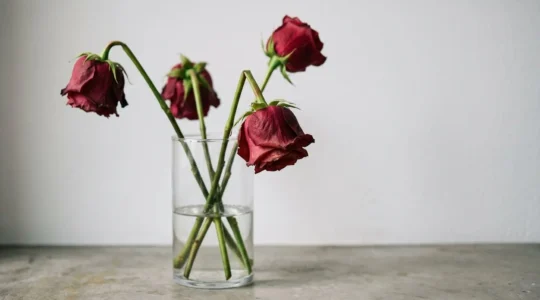
Why Did Your Expensive Roses Droop Just 12 Hours After Arrival?
The shocking collapse of your new roses is not bad luck; it’s a specific physiological failure, most often an air bubble blocking the stem’s ability to drink. A wilted flower is like a person choking: the stem’s vascular system (the…
Read more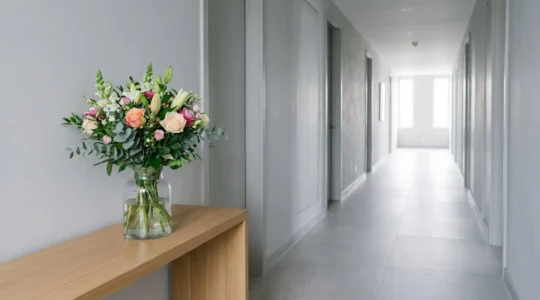
Why Does Your Hallway Arrangement Last Twice as Long as the One by the Window?
You’ve been told to change the water and trim the stems, but the real reason your flowers are dying is hidden in plain sight: the microclimate of the room itself. This guide reveals that the difference between a thriving arrangement…
Read more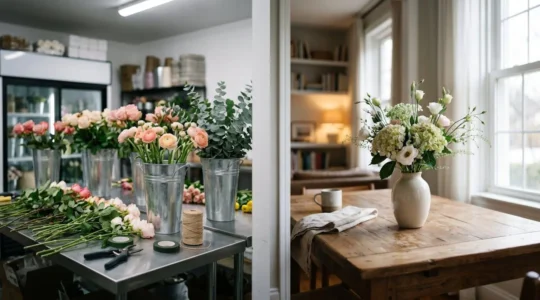
Why Do Florists Add Bleach to Bucket Water but Tell You Not to at Home?
The “don’t use bleach” advice for flowers is a safety precaution, not a botanical rule. Florists use precise, low doses (around 50 parts per million) as a biocide in a controlled, professional process to inhibit bacterial growth. Most home attempts…
Read more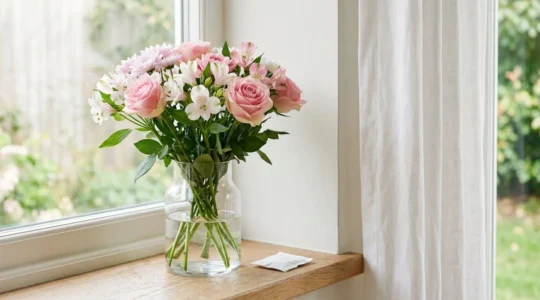
The Unseen Science: How That Little Sachet Adds 5 Days to Your Flowers’ Life
Contrary to the belief that it’s an unnecessary additive, that small flower food sachet is a precisely engineered life-support system. It’s not just “food”; it’s a chemical trinity of sugar for energy, acidifiers for water uptake, and biocides for microbial…
Read more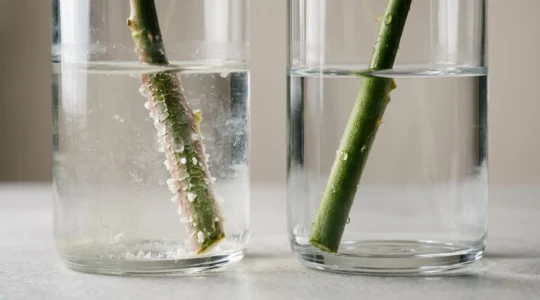
Why Does Hard Water in Surrey Kill Flowers Faster Than Soft Water in Scotland?
The rapid death of your flowers isn’t your fault—it’s a direct result of your regional tap water chemistry, and it’s entirely solvable. Hard water in areas like Surrey physically clogs flower stems with mineral deposits, starving them of water. Soft…
Read more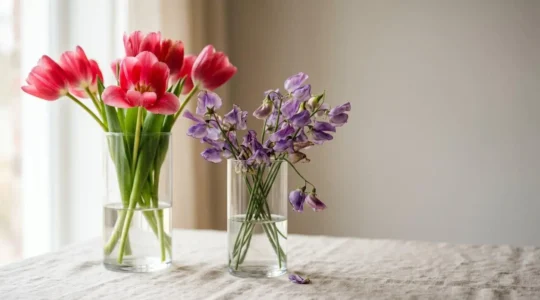
Why Do Tulips Last 10 Days While Sweet Peas Fade in 4?
You might think making flowers last is all about fresh water and flower food packets. The reality is far more fascinating. A flower’s lifespan is predetermined by its genetics, stem structure, and sensitivity to aging hormones. Understanding this hidden biology…
Read more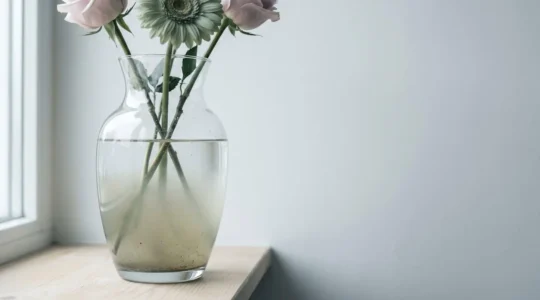
Why Does Your Vase Water Turn Cloudy and Smell After Just 2 Days?
In summary: Cloudy, smelly water is a sign of rapid bacterial multiplication, which clogs flower stems and prevents water uptake. Effective vase hygiene involves a three-part protocol: thorough vase sanitization, removing all submerged leaves, and using a commercial flower food…
Read more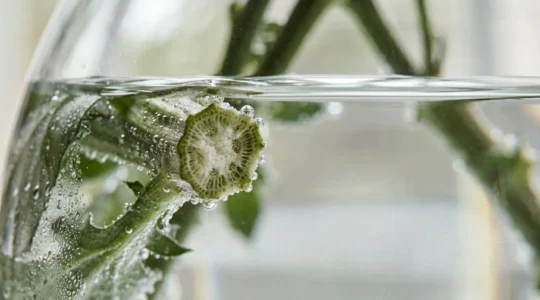
Why Do Chrysanthemums Drink Twice as Much Water as Roses?
The short vase life of your flowers isn’t due to bad luck; it’s a result of invisible vascular blockages and environmental stress that disrupt their internal plumbing. Most wilting is caused by air embolisms (air bubbles) in the stem’s xylem,…
Read more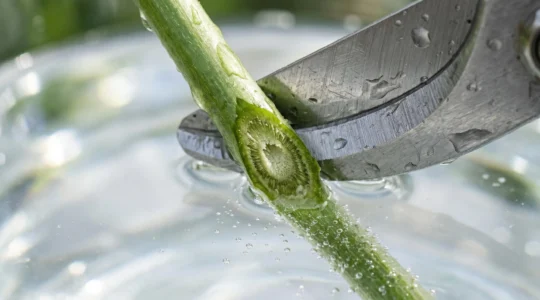
Why Does Cutting Stems at the Wrong Angle Block Water Uptake Completely?
The common advice to ‘trim your stems’ is dangerously incomplete; using the wrong tool or angle actively creates microscopic blockages that starve your flowers, regardless of fresh water or flower food. A blunt cut crushes the stem’s vascular tissue (the…
Read more
Why Do Florist Flowers Last 10 Days When Yours Die in 4?
Your flowers don’t die from old age; they’re suffocated and poisoned by an invisible microbial assault, a battle that is often lost within the first 48 hours in your home. Vase water isn’t just “dirty”; it becomes a bacterial soup…
Read more