Flowers & varieties
Choosing the right flowers—whether for a vase arrangement, a garden border, or a special event—depends on far more than aesthetics alone. Every flower variety comes with its own seasonal rhythm, vase life expectancy, growing conditions, and environmental footprint. Understanding these nuances transforms you from a passive consumer into an informed enthusiast who can predict which blooms will thrive in your climate, last longest in your arrangements, and deliver genuine value for money.
This resource brings together the essential knowledge you need to navigate the world of flowers and varieties with confidence. From the structural differences that make some flowers preserve beautifully whilst others collapse within days, to the hidden economics behind why certain blooms cost four times more out of season, we’ll explore the practical realities that florists, gardeners, and floral designers encounter daily. Whether you’re puzzling over why your orchid drops buds each winter or questioning whether Kenyan roses truly have a smaller carbon footprint than Dutch greenhouse flowers, the answers lie in understanding the fundamental characteristics that define each variety.
Understanding Flower Types: Structure and Characteristics
Flowers can be broadly categorised by their structural composition, which directly impacts their longevity, care requirements, and suitability for different purposes. Cellular structure determines everything from how well a flower dries to how long it holds up in a vase without water.
Single-stem statement flowers like anthuriums, bird of paradise, and protea feature thick, waxy petals or modified leaves (bracts) that retain moisture exceptionally well. These architectural varieties suit modern, minimalist arrangements precisely because their bold forms require no accompaniment. Their sturdy construction means they can survive the journey from tropical growing regions to British homes, though this doesn’t guarantee longevity once cut—anthuriums, despite being marketed as long-lasting, often turn brown within weeks if exposed to cold draughts or inconsistent temperatures.
Conversely, delicate multi-petalled varieties like roses, peonies, and ranunculus have softer cell walls that make them more susceptible to wilting but also give them that coveted romantic, full-bloom appearance. Garden roses bred by specialists like David Austin undergo 15 years of development to achieve both visual appeal and fragrance—factors that explain their premium pricing. The density of petals in varieties like ‘Juliet’, ‘Keira’, or ‘Patience’ also affects their scent throw, with tighter blooms often holding fragrance longer than loose, open forms.
Symmetrical vs. Asymmetrical Forms
Flowers with naturally symmetrical heads—such as gerberas, sunflowers, dahlias, alliums, hydrangeas, and certain chrysanthemums—lend themselves to architectural and geometric designs. Their predictable forms create visual rhythm in arrangements and work particularly well in contemporary settings where clean lines matter. This structural predictability also makes them easier to work with for beginners, as they naturally sit evenly in foam or grid systems.
Foliage: The Overlooked Variety
Foliage like eucalyptus and monstera leaves often gets categorised separately, yet it functions as a variety in its own right. Silver dollar eucalyptus versus seeded eucalyptus represents a meaningful choice: the former tends to shed less and lasts a fortnight in the vase when properly conditioned, whilst the latter offers more textural interest but requires more frequent water changes. Monstera deliciosa and monstera adansonii differ dramatically in scale—the former’s split leaves can overwhelm a compact office desk, whilst the latter’s smaller fenestrations suit tighter spaces.
Seasonal Availability and Why Timing Matters
Perhaps no factor influences flower quality, pricing, and environmental impact more profoundly than seasonality. British-grown summer flowers arrive cheaper and last longer than imports for a simple reason: they’re harvested at peak maturity and travel shorter distances, experiencing less temperature fluctuation and physical stress.
Peonies exemplify seasonal constraints perfectly. British peonies emerge during a narrow May-June window—roughly six weeks when weather conditions align. Asking for peonies in December means sourcing from the Southern Hemisphere or forcing, which quadruples the cost and halves the quality because blooms are either harvested prematurely (to survive long-distance shipping) or grown in artificial conditions that compromise petal strength and colour saturation.
What You Can Grow Month by Month
Britain’s climate supports a surprising variety when you align expectations with seasonal reality:
- March-April: Daffodils, tulips, early cherry blossom, hellebores
- May-June: Peonies, early roses, alliums, foxgloves, sweet peas
- July-August: Dahlias, sunflowers, zinnias, scabious, cornflowers
- September-October: Late dahlias, asters, sedums, ornamental grasses
- November-February: Hellebores, winter jasmine, forced bulbs, imported stock
Understanding this calendar helps you anticipate when to source specific varieties for events. Buying tight peony buds three days before an event, for instance, requires warmer room temperatures to encourage opening—a detail that determines whether your centrepieces look full or disappointingly closed.
The Import Equation
Kenyan roses can genuinely have a lower carbon footprint than Dutch greenhouse tulips—a paradox that challenges assumptions about food miles. Kenyan flowers grow in abundant natural sunlight and warmth, requiring no heated greenhouses. Dutch production, conversely, relies on gas-heated glasshouses throughout colder months. When air freight emissions are factored against year-round heating costs, the Kenyan option sometimes emerges greener. This doesn’t make all imports sustainable, but it illustrates why sweeping rules about “localisalwaysbetter” oversimplify a complex calculation.
Popular Varieties: Characteristics and Care
Certain flower families dominate both retail and garden spaces, each with distinct requirements and common pitfalls that catch beginners off guard.
Roses: Garden vs. Commercial
Standard florist roses prioritise longevity, stem strength, and consistent appearance—they’ll last a week in a vase with minimal fuss. Garden roses, including David Austin varieties and old-fashioned English roses, sacrifice some vase life for fuller heads, stronger fragrance, and more romantic, slightly irregular forms. British-grown garden roses are typically available from late May through September, with peak quality in June and July when temperature and daylight hours optimise oil production in petals—the source of their scent.
Peonies: Myths and Realities
The ant-peony relationship is often misunderstood. Ants are attracted to the sugary nectar secreted by peony buds, but they do not help peonies open—the flowers open perfectly well without them. This garden myth persists because ants are so commonly observed on outdoor peony plants during bloom time. For cut stems, simply rinse buds gently before bringing them indoors to avoid introducing insects to your arrangements. British farm peonies generally open fuller and last longer than Dutch auction stock because they’re cut at a more mature stage and travel shorter distances.
Orchids: Phalaenopsis vs. Dendrobium
Phalaenopsis orchids (moth orchids) tolerate typical centrally heated British homes reasonably well but suffer in draughty conditions—cold air currents trigger bud drop as a stress response. Dendrobiums are slightly hardier to temperature fluctuation but require brighter light. Both dislike radiator proximity and overwatering; their thick aerial roots are adapted to absorb moisture from humid air, not sit in waterlogged compost. Winter bud drop often results from placement near poorly sealed windows or exterior doors where temperature swings are most extreme.
Tropical Statement Flowers
Anthuriums, heliconias, bird of paradise, and proteas belong to a category of bold, architectural flowers that command attention but require specific care. Anthuriums—with their waxy, heart-shaped spathes—last longest in red varieties, as pigment density in darker colours correlates with thicker cell walls. Pink and white cultivars, whilst visually softer, tend to brown at edges more quickly. Potted anthuriums deliver better six-month value than cut stems if you can provide consistent warmth and humidity.
Heliconias come in two main forms: hanging lobster claw varieties that cascade dramatically, and upright parrot types. The latter suit modern interiors better because they require less vertical space and stay balanced in vases more easily—hanging varieties have a tendency to tip containers unless properly weighted.
Lilacs: Garden vs. Shop Performance
Garden-cut lilacs wilt within two days, whilst shop-bought stems last a week—a frustrating discrepancy explained by conditioning. Commercial growers cut lilacs early in the morning, immediately split woody stems, and give them a long drink in preservative solution before shipping. Home gardeners typically cut mid-day (when stems are already stressed) and place them directly in tap water. The variety also matters: Syringa vulgaris (common lilac) is more fragrant but less vase-hardy than Syringa meyeri (dwarf Korean lilac), which has smaller panicles but stronger stem structure.
Cut Flower Longevity: Why Some Varieties Last
Vase life varies wildly between species due to physiological differences that determine how quickly a flower dehydrates, stops nutrient uptake, or succumbs to bacterial blockage in stems.
Roses preserve beautifully whilst tulips collapse because of cell wall composition. Roses have lignified (woody) cells in their petals that retain structure even when dried. Tulips, as bulb flowers, have soft parenchyma cells with high water content—once dehydrated, these cells collapse irreversibly. This is why roses air-dry successfully into potpourri whilst tulips simply shrivel.
Eucalyptus sheds leaves after three days in arrangements typically because it’s been cut too mature. Younger stems with slightly softer leaves adapt better to vase conditions and retain foliage longer. Seeded eucalyptus varieties, with their decorative seed pods, naturally shed more readily than silver dollar types.
Hydrangea Varieties and Drying Potential
Not all hydrangeas dry equally well. ‘Annabelle’ (smooth hydrangea) dries to a creamy beige, ‘Limelight’ (panicle hydrangea) shifts from lime green to rich antique pink, and traditional mophead varieties yield the deepest burgundy and purple tones—but only if cut at the right moment when petals feel papery rather than fleshy. Cutting too early results in wilting instead of drying; too late and petals shatter.
Growing Flowers: Perennials and Garden Cycles
For those cultivating their own cutting garden or ornamental borders, understanding perennial behaviour prevents disappointment and enables realistic planning.
Flowering perennials for shade—north-facing walls and beneath tree canopies—include hellebores, astrantia, Japanese anemones, hardy geraniums, and foxgloves. These five reliably perform where sun-lovers fail, though “shade” in gardening terms usually means dappled light rather than deep darkness. Salvia, true geranium (not pelargonium), and astrantia engage in a contest for longest flowering period in British gardens: astrantia often wins, blooming from June through September if deadheaded regularly.
Understanding Bloom Cycles
Oriental poppies illustrate the concept of “gapplants”—they deliver a spectacular two-week show in late May or early June, then die back completely, leaving a ten-month gap in your border. Successful garden design accounts for this by interplanting with later-emerging perennials like asters or Japanese anemones that fill the space from mid-summer onwards.
Soil Compatibility
Choosing acid-loving versus lime-tolerant plants according to your soil pH prevents years of struggle. Rhododendrons, camellias, and pieris require acidic conditions (pH 4.5-6); planting them in chalky, alkaline soil leads to chlorosis (yellowing leaves) and eventual decline regardless of care efforts. Simple soil testing kits reveal pH in minutes and save costly mistakes.
Supporting Pollinators
Single-flowered varieties support ten times more insects than double-flowered cultivars because pollinators can actually access nectar and pollen. Double flowers, bred for visual fullness, often have reproductive parts transformed into extra petals—beautiful for arrangements but ecologically sterile. Ensuring garden flowers for bees from March through November means selecting a sequence: early crocus and pulmonaria, summer salvias and echinaceas, autumn sedums and asters.
Value, Pricing, and Investment
Understanding why certain flowers command premium prices helps you make informed purchasing decisions and appreciate genuine quality.
Ranunculus, sweet peas, and Café au Lait dahlias regularly exceed £10 per stem in Britain due to a combination of factors: short seasonal availability, labour-intensive cultivation (dahlias require staking and disbudding; sweet peas need daily picking), and high consumer demand concentrated in brief windows. Café au Lait dahlias specifically became Instagram-famous, creating demand that outstrips supply from the limited growers who produce exhibition-quality blooms.
The days-per-pound value calculation favours flowers like alstroemeria, chrysanthemums, and carnations—often dismissed as “ordinary” but offering two weeks of vase life at under £1 per stem. Contrast this with tulips (£2-3 per stem, 5-7 day vase life) or peonies (£5-8 per stem, 4-5 day vase life when cut). For everyday enjoyment, the unfashionable flowers deliver objectively better value; for special occasions where symbolic meaning or aesthetic impact matters more than longevity, premium varieties justify their cost.
Reception and Event Flowers
Expensive centrepieces can still feel flat if they lack ambient fragrance or visual interest at eye level when seated. Varieties that add scent without overwhelming dining tables include freesias, stocks, and garden roses—their fragrance radiates gently rather than cloying the way oriental lilies or tuberoses can. The traditional wedding flower anniversary list (carnations for year one, lilies for year thirty) reflects historical availability and symbolism rather than modern preferences, yet understanding these traditions helps when selecting meaningful arrangements for milestone celebrations.
Sustainability: Making Informed Choices
Conscious flower purchasing balances aesthetic desires with environmental and social responsibility—a complex equation that resists simple answers.
British-grown summer flowers generally represent the most sustainable choice during their season: minimal transport, no hot-house heating, and support for domestic growers. The five underrated British flowers that florists rarely stock but should—typically including varieties like sweet Williams, cornflowers, nigella, ammi, and scabious—thrive in British conditions, require minimal inputs, and offer characterful alternatives to imported standards.
The carbon footprint paradox of Kenyan roses versus Dutch tulips reveals that production methods often outweigh transport distance. Year-round demand for flowers that don’t naturally grow in winter forces a choice between energy-intensive European greenhouses and equatorial open-field cultivation with air freight. Neither option is perfect; the most sustainable approach remains aligning purchases with natural British seasons and treating out-of-season flowers as occasional luxuries rather than weekly staples.
Supporting biodiversity through plant choices extends sustainability beyond carbon calculations. Choosing native species, single-flowered varieties accessible to pollinators, and avoiding peat-based composts for potted plants creates positive ripple effects that pure carbon accounting overlooks.
This foundation in flower varieties, their characteristics, and the systems that bring them to your vase or garden equips you to ask better questions, make choices aligned with your priorities, and genuinely appreciate the remarkable diversity the floral world offers. Each variety has its moment, its purpose, and its particular requirements—understanding these transforms flowers from generic decoration into a nuanced, endlessly fascinating subject.
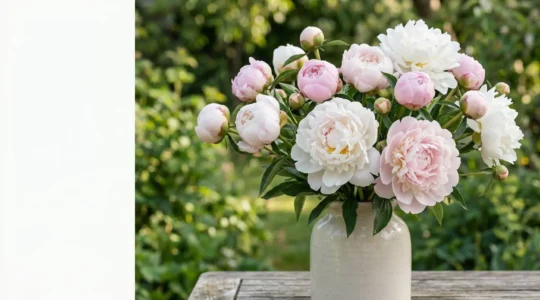
Why Are Peonies Only Available for 6 Weeks and How to Make Them Last?
In summary: The short British peony season is dictated by a non-negotiable scientific need for a cold period, known as vernalisation. To maximise vase life, always buy peonies at the ‘marshmallow’ bud stage—soft and squishy, but not yet open. You…
Read more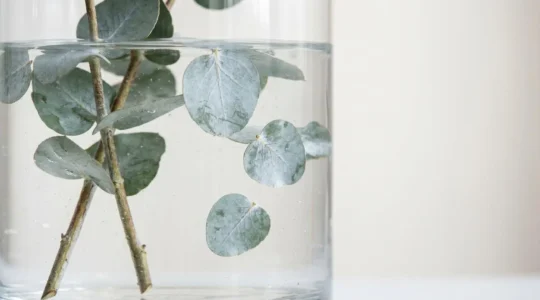
Why Does Eucalyptus Shed Its Leaves in an Arrangement After Just 3 Days?
The crushing disappointment of seeing your beautiful eucalyptus arrangement wilt and shed its leaves in three days isn’t your fault. It’s a fundamental misunderstanding of the plant’s unique biology. The secret to a multi-week vase life lies not in simply…
Read more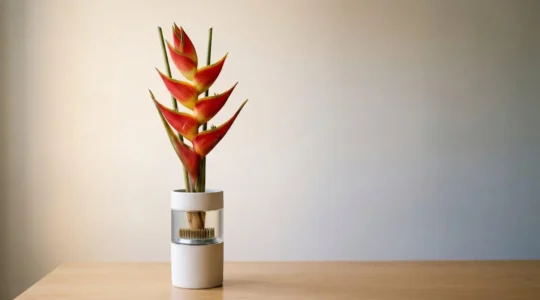
How to Keep Heliconia Stems Upright in a Vase Without Them Toppling Over?
Stop your expensive heliconia stems from toppling over with a simple shift from brute force to floral engineering. The secret isn’t a heavier vase; it’s a weighted anchoring system called a kenzan (pin frog) that provides a low centre of…
Read more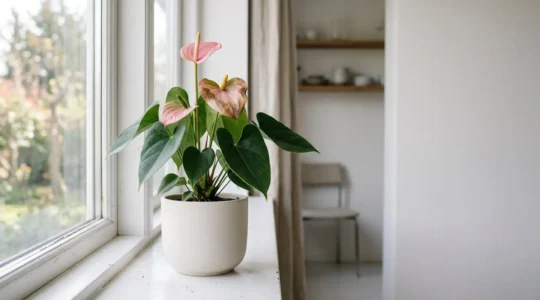
Why Do Anthuriums Turn Brown Within Weeks Despite Being Sold as Long-Lasting?
Your anthurium isn’t failing due to a lack of care; it’s experiencing ‘supply chain shock’ from the perfect greenhouse to your dry, centrally-heated UK home. The primary cause of brown, crispy leaves is a severe “humidity deficit,” not necessarily bad…
Read more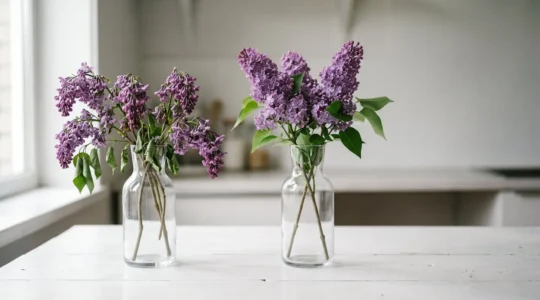
Why Do Lilacs From the Garden Wilt in 2 Days While Shop Lilacs Last a Week?
The belief that garden lilacs are naturally short-lived is a myth; their longevity is determined by a precise, science-backed post-harvest protocol, not folk wisdom. Rapid wilting is primarily caused by an air bubble (xylem embolism) blocking water uptake in the…
Read more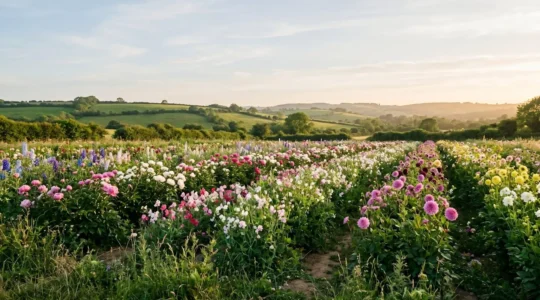
Why Are British-Grown Summer Flowers Cheaper and Longer-Lasting Than Imports?
The true value of British flowers isn’t just about being ‘local’; it’s about embracing superior quality, character, and scent that mass-produced imports simply cannot match. Choosing flowers in their natural UK season means they are at their peak of beauty,…
Read more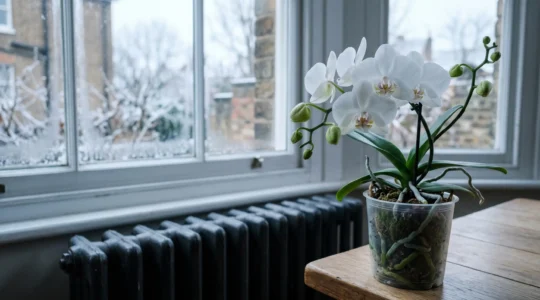
Why Does Your Orchid Drop Buds Every Winter Despite Following Care Advice?
The frustrating drop of your orchid’s buds is rarely due to a single mistake, but to an invisible environmental conflict happening in your home. Central heating creates a ‘humidity deficit’, silently stressing your plant’s roots faster than you can water…
Read more