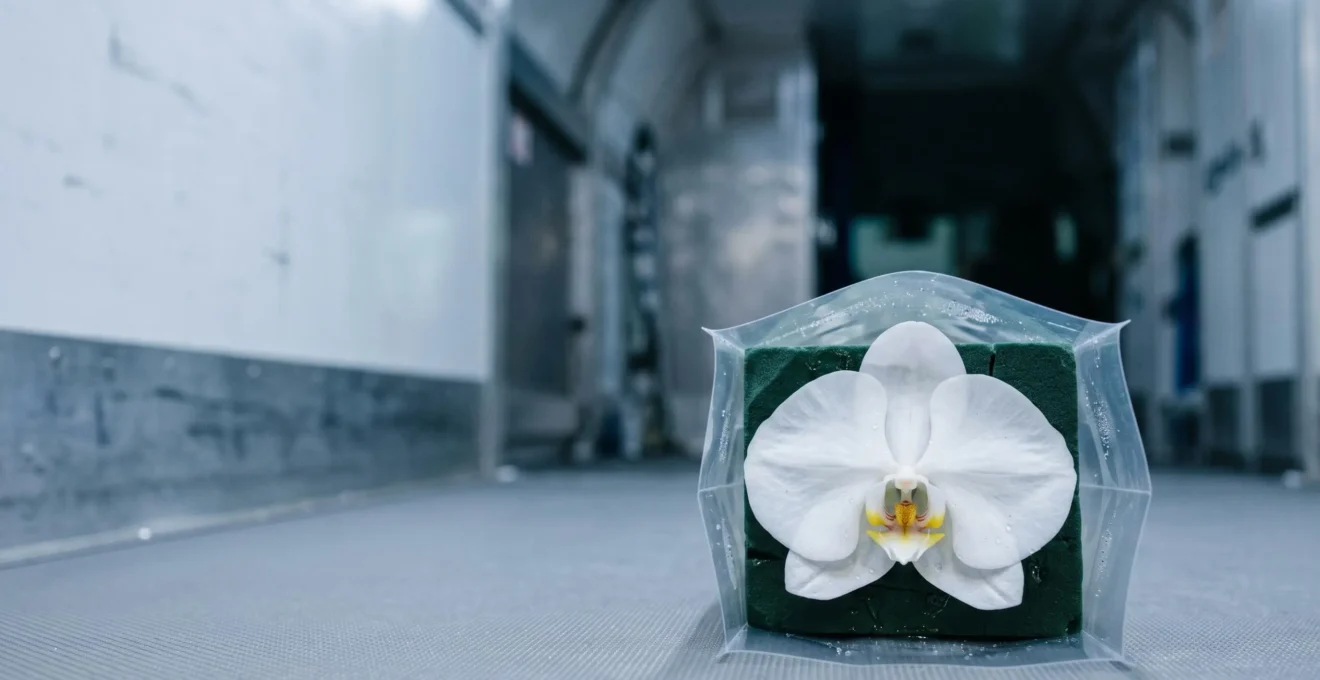
The freshness of internationally delivered flowers isn’t a matter of luck; it’s a triumph of precision cold-chain logistics that effectively pauses a flower’s biological clock.
- An unbroken cold chain, maintaining 1-3°C, is the single most critical factor, preventing cellular damage and bacterial growth.
- The journey involves a high-speed relay from refrigerated farm trucks to the chilled cargo holds of passenger jets, monitored by IoT sensors.
Recommendation: Trust services that can detail their cold chain process; they aren’t just shipping a product, they are managing a living organism’s journey.
You see an option to send a bouquet to family in Sydney, New York, or Paris, with the promise of same-day or next-day arrival. The immediate, logical reaction is skepticism. How can a delicate, living thing like an orchid or a rose possibly travel thousands of miles and arrive looking like it was just picked? It seems to defy the laws of nature. Many assume it’s a simple trick: the order is just routed to a local florist who has completely different flowers in stock. While that network model exists, the reality behind the global fresh flower trade is far more fascinating.
The secret isn’t magic, but a masterful, high-stakes ballet of science and logistics. It’s a system designed not just to transport flowers, but to place them in a state of suspended animation. Forget simply “fast shipping”; this is about managing a flower’s metabolism, fighting bacteria at a microscopic level, and navigating global time zones with millimetric precision. The real key to understanding this feat is to stop thinking of it as a parcel delivery and start seeing it as a mobile, intensive-care unit for botanicals.
This article will pull back the curtain on that journey. We will explore the critical role of temperature, the technology used to track each stem, the difference between a standard courier and a floral specialist, and the precise choreography required to move a bloom from a Kenyan field to a London vase. By the end, you’ll see that a flower’s 4,000-mile journey is one of the modern marvels of the global supply chain.
To understand this intricate process, we’ll follow the journey of a flower from the core scientific principles to the practical steps that ensure its freshness upon arrival. This overview breaks down the entire logistical chain for you.
Summary: The Global Journey of a Fresh Flower
- Why Temperature Drops of Just 5°C Can Cut Flower Lifespan by Half During Shipping?
- How to Track Your International Flower Order From Dutch Auction to Doorstep?
- FedEx Priority or Specialist Floral Courier: Which Protects Stems Better?
- The 12 Countries Where Same-Day Flower Delivery Actually Works Reliably
- When to Place Your Order From London to Guarantee Morning Delivery in Sydney?
- How Does a Kenyan Rose Reach Your London Vase in Under 48 Hours?
- Why Bacteria Colonies Double Every 20 Minutes in Room-Temperature Vase Water?
- Why Do Supermarket Flowers Wilt in 3 Days While Florist Blooms Last 10?
Why Temperature Drops of Just 5°C Can Cut Flower Lifespan by Half During Shipping?
The single most important factor in floral logistics is temperature. A cut flower is a living organism in a race against time, consuming its own stored sugars to survive. Cold temperatures act like a pause button on this process, slowing its metabolism, reducing water loss, and inhibiting the production of ethylene gas—a natural plant hormone that accelerates ageing and causes petals to drop. The goal of the entire supply chain is to maintain what is known as “cold chain integrity.”
This means keeping the flowers within a strict temperature window, typically between 1-3°C, from the moment they are harvested until they reach the florist. A deviation of just a few degrees can have catastrophic consequences. When flowers get too warm, their biological clock speeds up dramatically. Conversely, if they get too cold, ice crystals can form within their cellular walls, causing irreversible physical damage known as “chilling injury.” This damage isn’t always visible immediately but will cause the flower to wilt and die rapidly once it’s in a vase.
The impact is quantifiable and severe. Research shows that even brief cold chain interruptions can cause a 40% vase life reduction. This is why the entire infrastructure—from refrigerated trucks at the farm to pre-cooled cargo holds on aircraft—is designed to eliminate temperature fluctuations. A five-degree change isn’t a minor inconvenience; it’s the difference between a flower that lasts ten days and one that wilts in three.
How to Track Your International Flower Order From Dutch Auction to Doorstep?
In the past, ensuring cold chain integrity was a matter of procedure and hope. Today, it’s a science driven by data. The most advanced floral logistics networks embed technology into the process, giving them unprecedented visibility and control. This goes far beyond a simple parcel tracking number that tells you if your package is “in transit.” We’re talking about monitoring the vital signs of the shipment itself.
A key innovation is the use of IoT (Internet of Things) sensors. These small devices are placed inside the shipping boxes and actively monitor a range of environmental conditions in real-time, including temperature, humidity, and even shock exposure. They are the flower’s personal flight recorder. If a pallet of roses is left on a sun-drenched airport tarmac for even ten minutes, a temperature alert is automatically triggered and sent to the logistics team. This allows for immediate intervention, transforming quality control from a reactive post-mortem into a proactive science.
This level of monitoring is essential because the risks are very real. For instance, a study of flower shipments revealed that 59% triggered high-temperature alarms at some point in their journey, highlighting the numerous potential points of failure. By having this data, shippers can identify weak links in the supply chain—whether it’s a specific airport’s handling procedure or a particular trucking contractor—and take corrective action. For the customer, this hidden layer of technology is the ultimate guarantee that the “cold chain integrity” is not just a promise, but a measurable and actively managed reality.
FedEx Priority or Specialist Floral Courier: Which Protects Stems Better?
This question gets to the heart of the “last-mile” challenge in floral logistics. While a global carrier like FedEx or DHL offers incredible speed and reach, their system is optimized for durability, not delicacy. They move boxes. A specialist floral courier moves living things. The fundamental difference lies in control and environment. A standard courier network involves multiple handoffs at large, non-refrigerated sorting hubs. Each handoff is a potential point of delay, damage, or temperature shock.
As one industry analysis points out, the use of a generalist third-party carrier introduces significant risk. The expert network BloomsyBox notes this vulnerability in their own logistics breakdown:
When a third-party carrier is introduced, the company loses some control over the process. Multiple handoffs during shipping increase the risk of delays, damage, or mishandling of delicate products like flowers.
– BloomsyBox, Flower Delivery Logistics Analysis
In contrast, specialist floral logistics companies maintain an unbroken, dedicated cold chain. They use refrigerated trucks for pick-up and delivery, operate out of cold storage facilities, and prioritize carriers that can guarantee temperature-controlled environments. Their entire operation is built around the unique needs of flowers, including using clean, odor-free equipment to prevent contamination from things like fruit, which can emit ethylene gas. While a premium courier service might get a box from A to B quickly, a specialist ensures the living thing inside that box arrives with its biological clock still paused.
The 12 Countries Where Same-Day Flower Delivery Actually Works Reliably
The promise of “same-day international” delivery hinges on one critical factor: a highly sophisticated, densely populated network of local partner florists operating within a robust national logistics infrastructure. It’s not about flying a single bouquet from London to Tokyo in five hours. It’s about having a system so integrated that an order placed in London can be received, fulfilled by a local Japanese florist using fresh, locally-sourced (or internationally-imported and pre-conditioned) stock, and delivered within a few hours. This is only possible in countries with both a mature e-commerce culture and exceptional logistics.
The backbone of this system is massive import hubs. For example, an incredible 85% of cut flower imports to the United States pass through Miami International Airport, which has extensive cold-storage facilities to process blooms from South America. Similar hubs exist worldwide, like Aalsmeer in the Netherlands. Countries with reliable same-day services are those that combine these world-class import logistics with a network of high-quality local florists. Based on these criteria, the most reliable countries for this service are typically:
- The United Kingdom
- The Netherlands
- Germany
- France
- The United States
- Canada
- Australia
- Japan
- Singapore
- Hong Kong
- Switzerland
- United Arab Emirates
When to Place Your Order From London to Guarantee Morning Delivery in Sydney?
Guaranteeing a morning delivery across a 9-hour time difference (or 11 in summer) is a masterclass in reverse logistics and understanding cut-off times. The key is to think backward from the desired delivery time. If you want flowers to arrive in Sydney at 10 AM on a Tuesday, the local Sydney florist needs to have received the finalized order, prepared the bouquet, and scheduled their courier run well before that. This means the order must be processed by the international network hours earlier.
Here’s the critical path:
- Sydney, 10 AM Tuesday (Delivery): The courier arrives at the recipient’s door.
- Sydney, 8 AM Tuesday (Florist Dispatch): The bouquet is likely already out for delivery in the morning run.
- Sydney, 5 PM Monday (Florist Cut-Off): To be included in Tuesday morning’s arrangements, the order must be in the florist’s system by the end of their previous business day.
- London, 6 AM Monday (Sydney’s 5 PM): Accounting for the +11 hour time difference (during British Summer Time), you must place your order before 6 AM London time on Monday to guarantee it reaches the Sydney florist before their end-of-day cut-off.
Most reputable international flower delivery services automate this. When you select the delivery country, they will show you the earliest possible delivery date and time based on your current time and the destination’s cut-offs. Ordering a day or two in advance is always the safest bet. While the temperature-controlled cold chain allows flowers to last up to 12 days in transit for bulk shipments, customer-facing “same-day” or “next-day” services rely entirely on coordinating these local time zones and cut-offs.
How Does a Kenyan Rose Reach Your London Vase in Under 48 Hours?
The journey of a rose from the highlands of Kenya to a London flat is a testament to the speed and efficiency of modern air freight. It’s a precisely choreographed sequence that begins the moment the rose is cut. Within an hour, it’s in a refrigerated packing house on the farm, graded, bunched, and placed in a chilled box. That box is loaded onto a refrigerated truck and driven directly to Jomo Kenyatta International Airport in Nairobi.
Here, the flowers don’t wait in a general cargo warehouse. They are moved to a dedicated cold-storage facility to await their flight. The real magic of the speed is “belly freight.” The flowers are transported in the temperature-controlled cargo holds of scheduled passenger flights. Every day, dozens of passenger planes fly from Nairobi to major European hubs like London and Amsterdam. The flowers are simply another form of luggage, albeit one that requires a constant temperature of 2°C.
Upon landing at Heathrow, the process goes into reverse. The flower boxes are unloaded first and fast-tracked through customs (thanks to pre-cleared agreements) to another cold-storage facility at the airport. From there, they are picked up by refrigerated trucks and taken to a central distribution wholesaler or directly to a florist’s workshop. This entire journey, from farm to florist, often takes less than 48 hours. While Kenya is a powerhouse, other countries like Ecuador have become leaders in luxury roses, exporting over 100,000 boxes daily during peak seasons, all following this same cold-chain model.
Why Bacteria Colonies Double Every 20 Minutes in Room-Temperature Vase Water?
The cold chain’s primary mission is to keep flowers fresh during transit, but its secondary, equally crucial role is to inhibit the growth of the flower’s greatest enemy: bacteria. Once a flower is placed in a vase at room temperature, any dormant bacteria on the stem or in the water are given the perfect conditions to thrive. And they multiply at an explosive rate. In typical tap water at 20°C, a bacterial colony can double in size every 20-30 minutes.
This is why keeping flowers in the optimal cold chain range of 34-38°F (1-3°C) for as long as possible is so vital. It’s not just about slowing the flower’s metabolism; it’s about keeping these bacterial armies at bay. The real danger, as experts in horticulture point out, is not the bacteria themselves but what they produce.
The real damage is not the bacteria themselves, but the slimy biofilm they create. This biofilm physically clogs the xylem (the flower’s water-uptake channels), causing the flower to wilt from thirst, even while sitting in water.
– The Flower Hub, Cold Chain Logistics Guide
This is the sad irony of a wilting flower in a full vase. It isn’t lacking water; it’s physically blocked from drinking it. This is also why flower food is so important. It typically contains three components: a sugar (food for the flower), an acidifier (to help water uptake), and most importantly, a biocide (to kill bacteria). An unbroken cold chain followed by clean water with flower food is the one-two punch that ensures maximum vase life.
Key Takeaways
- Temperature is Everything: The integrity of the cold chain (1-3°C) is the single most important factor determining a flower’s final vase life.
- Speed is a System: Fast delivery relies on a sophisticated system of air freight, customs pre-clearance, and dedicated logistics, not just a fast courier.
- Post-Transit Care is Crucial: The battle for freshness continues in the vase. Clean water and flower food are non-negotiable to prevent bacterial blockage.
Why Do Supermarket Flowers Wilt in 3 Days While Florist Blooms Last 10?
It often comes down to the final, critical steps in the supply chain and a process known as “conditioning.” While both supermarket and florist flowers may start their journey on the same farm in Kenya or Colombia, their paths diverge significantly upon arrival in the destination country. Supermarket supply chains are optimized for volume and efficiency. Flowers are often moved from the central warehouse to the store floor with minimal intervention, sometimes sitting in buckets in a warm stockroom or on display under bright, hot lights.
A professional florist, however, treats the arrival of new flowers as the start of a crucial rehydration and conditioning process. This is their expertise. Upon arrival, they don’t just put them in a bucket. They undertake several critical steps:
- Stems are re-cut at an angle to create a fresh surface for water absorption.
- Lower foliage that would sit below the waterline is removed to prevent it from rotting and fueling bacterial growth.
- The flowers are placed in special hydrating solutions and left to rest in a cool, dark environment for several hours to drink deeply and recover from their journey.
This conditioning step, which is often skipped in high-volume retail, is the primary reason for the difference in vase life. The florist is actively reversing the stresses of travel and preparing the flower for its final performance in a vase. They have respected the cold chain throughout, and now they are ensuring the flower is in peak condition for the customer. It’s the difference between an athlete who rests after a long flight and one who is asked to run a race straight off the plane.
Your Action Plan: Maximise Your Flower’s Vase Life
- Unpack and Prepare: Immediately remove flowers from any packaging. Strip all leaves that will fall below the waterline in your vase to prevent bacterial growth.
- Re-cut the Stems: Using a sharp knife or shears, cut at least one inch off the bottom of each stem at a 45-degree angle. This creates a fresh surface for maximum water uptake.
- Use the Right Food: Fill a clean vase with fresh, cool water and mix in the flower food packet provided. It contains essential nutrients and a biocide to keep bacteria at bay.
- Position Strategically: Place your vase in a cool spot, away from direct sunlight, heating vents, or ripening fruit (which releases aging ethylene gas).
- Maintain and Refresh: Check the water level daily and top up as needed. For best results, change the water and re-cut the stems every 2-3 days.
Now armed with an understanding of the incredible science and logistics behind every fresh bloom, you can send or receive international flowers not with skepticism, but with appreciation for the journey they have undertaken.