You’ve been told to change the water and trim the stems, but the real reason your flowers are dying is hidden in plain sight: the microclimate of the room itself. This guide reveals that the difference between a thriving arrangement and a wilting one isn’t the care you provide, but whether it’s placed in the path of a radiator’s dry heat or a sunny window. Understanding your home’s unique environmental stresses is the true key to longer-lasting bouquets.
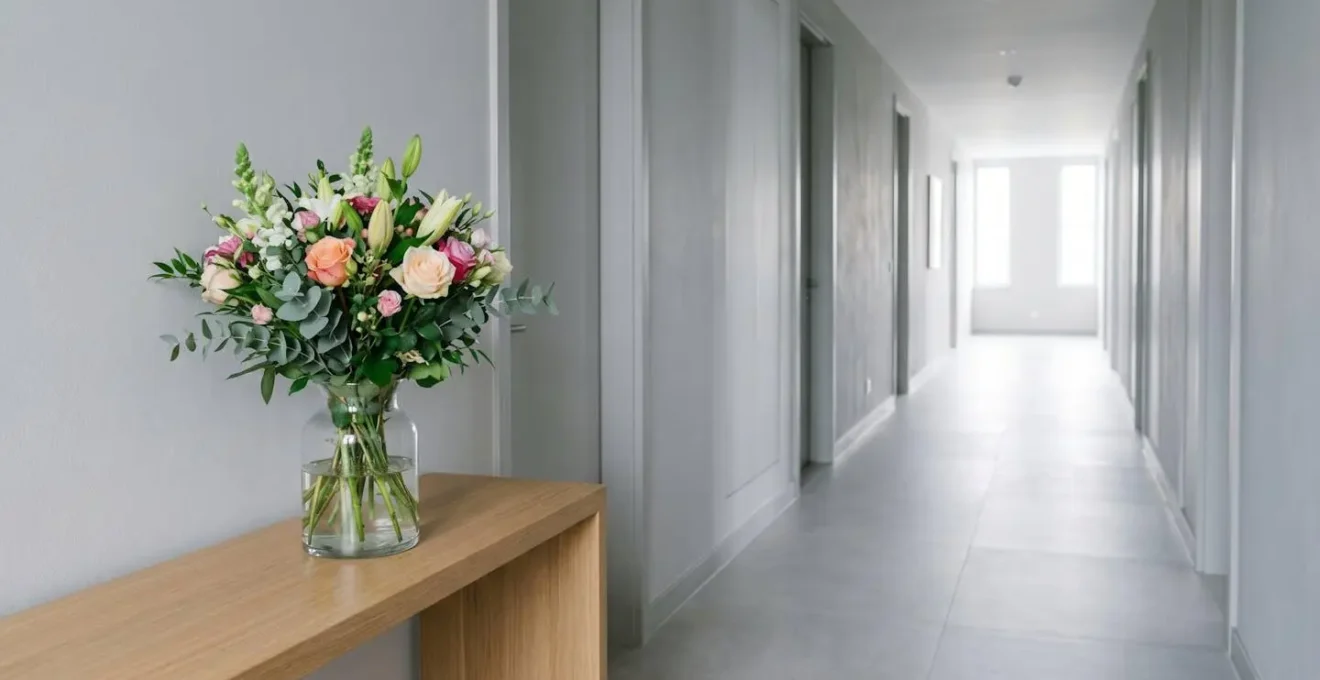
It’s a frustratingly common scenario for any UK homeowner. You buy two identical, beautiful bouquets. One, placed in the cool, calm hallway, looks vibrant for over a week. The other, intended to brighten up the living room by the window, wilts in a matter of days. You’ve followed all the standard advice: fresh water, flower food, trimmed stems. Yet, the outcome is drastically different. This inconsistency isn’t a fluke; it’s a symptom of a hidden battle your flowers are fighting against their immediate environment.
Most advice focuses on what to do *to* the flower. But the real secret to longevity lies in understanding the distinct, and often hostile, microclimates within your own home. The space above a radiator, the spot near an air conditioning vent, or even a sunny windowsill create specific forms of spatial stress that accelerate ageing. But what if the key wasn’t just avoiding bad spots, but actively diagnosing your home’s environmental weak points? Instead of treating the flower, it’s time to treat the space.
This guide offers an environmental diagnosis of the modern home. We will move beyond generic tips to dissect the specific reasons why one location is a sanctuary and another is a death sentence for cut flowers. By learning to read your rooms, you can strategically place your arrangements to dramatically extend their beauty and life, turning frustration into a predictable success.
To help you become a master of your home’s floral microclimates, this article breaks down the most common environmental challenges and provides clear, actionable solutions. Here’s what we’ll cover.
Summary: Why Your Home’s Environment Is the Key to Flower Longevity
- Why the Spot Above the Radiator Kills Flowers 3 Days Faster?
- How Much Light Do Cut Flowers Actually Need: The Indirect-Light Sweet Spot?
- Why Placing Flowers Near Air Conditioning Vents Causes Petal Crisp?
- How to Keep Flowers Fresh When Your Home Is Heated to 22°C All Winter?
- How to Add Humidity Around Tropical Flowers Without a Humidifier?
- Why Do 70% of Houseplants Die Within 6 Months in UK Homes?
- Why Central Heating Kills Orchid Roots: The 40% Humidity Problem
- How to Style Botanical Décor in a North-Facing British Living Room Without Killing Your Plants?
Why the Spot Above the Radiator Kills Flowers 3 Days Faster?
The mantelpiece above the radiator seems like a prime display location, but it’s the single most destructive spot in a centrally heated home for cut flowers. The issue is twofold: intense, dry heat and constant air movement. Flowers stay fresh by absorbing water through their stems to compensate for moisture lost through their petals—a process called transpiration. A radiator creates a column of rising hot, dry air that drastically accelerates this water loss, forcing the flower to dehydrate far faster than it can rehydrate.
The flower is essentially being baked. While professional florists use cold storage to slow down a flower’s metabolism, placing an arrangement above a heat source does the exact opposite. It speeds up every biological process, from opening to wilting, dramatically shortening its vase life. As the FloraLife Research Team explains, this relationship is brutally simple.
The warmer the temperature the faster the flower’s development which equals shorter vase life.
– FloraLife Research Team, FloraLife Temperature Control Guidelines
This accelerated development, combined with extreme dehydration from the dry air, is why a bouquet can lose its freshness in just a couple of days. The visual evidence of this thermal stress is stark, as seen in the wilting and crisping of delicate petal tissues.
As you can see, the cellular structure of the petals collapses under the environmental assault. The solution is simple but absolute: never place flowers directly above or adjacent to an active radiator. The temperature difference of just a few degrees can be the difference between three days of beauty and ten.
How Much Light Do Cut Flowers Actually Need: The Indirect-Light Sweet Spot?
It’s a natural instinct to place flowers in a bright, sunny window to enjoy their colours. However, this is a critical mistake. Once a flower is cut, its relationship with light changes. It no longer needs intense sunlight for photosynthesis. Instead, direct sunlight becomes a source of two major problems: heat and accelerated ageing. A sun-drenched windowsill acts like a mini-greenhouse, raising the temperature of the water in the vase and warming the petals, which, just like radiator heat, significantly increases the transpiration rate and causes wilting.
Furthermore, bright light signals the flower to continue its life cycle at a faster pace. It encourages the bloom to open fully and then quickly proceed to the seeding and wilting stage. The goal for cut flower longevity is to slow this process down as much as possible. The ideal location is a spot with bright, indirect light—a room that is well-lit but where the sun’s rays do not fall directly on the arrangement.
Florists themselves operate within a carefully controlled climate. While temperatures vary by flower type, professional guidelines recommend keeping most arrangements within a range of 18-22°C (65-72°F) to ensure optimal freshness. A sunny spot on a summer’s day can easily exceed this, creating a hostile environment. As UK-based Regency Flowers advises, avoiding these hotspots is crucial, especially during warmer months when the sun’s intensity is at its peak.
Think of it as finding a balance. You want enough light to appreciate the flower’s beauty, but not so much that you are actively encouraging it to age. A position a few feet away from a window, or in a room with a north-facing aspect that receives gentler, more consistent light, is the perfect indirect-light sweet spot.
Why Placing Flowers Near Air Conditioning Vents Causes Petal Crisp?
While we often associate floral damage with heat, cold draughts from air conditioning (AC) vents are an equally potent, though more subtle, threat. The problem isn’t just the cold air; it’s the drastic reduction in humidity. AC systems work by cooling air, which causes moisture to condense out of it, resulting in a much drier environment. This creates a significant humidity deficit that is incredibly stressful for cut flowers.
The mechanism of damage is the same as with heat: accelerated transpiration. The dry air blowing directly over the petals pulls moisture from them at a relentless pace. The flower’s internal “plumbing”—the stem—simply cannot draw up water fast enough to replace what’s being lost. This leads to the tell-tale signs of desiccation: the edges of the petals become dry, brittle, and “crispy,” and the entire bloom may droop as it loses turgidity.
The impact of AC on indoor humidity is well-documented. Research shows that continuous air conditioning can cause indoor humidity to plummet, with levels dropping to 30-40% in conditioned rooms. For flowers that thrive in more humid conditions, this is an arid desert. The constant airflow, even if it’s not freezing cold, compounds the problem by constantly stripping away the thin layer of humid air that naturally forms around the petals.
To protect your arrangements, perform an environmental diagnosis of your rooms. Identify the location of all air vents and ensure your flowers are placed well away from their direct airflow. Even being in the same room is fine, as long as they are not in the path of the draught. This simple spatial awareness prevents the invisible assault of dry air and preserves the delicate texture of the petals.
How to Keep Flowers Fresh When Your Home Is Heated to 22°C All Winter?
Maintaining a comfortable home temperature of around 22°C during a UK winter is pleasant for you, but it’s a chronic stressor for cut flowers. This constant, moderate warmth accelerates their metabolism, meaning they live their life cycle—from bud to bloom to decay—at a faster rate. While avoiding the intense heat of a radiator is the first step, the ambient warmth of the entire house still presents a challenge. The solution is to give your flowers a nightly “rest” in a cooler environment.
This strategy, known as overnight cooling, works by dramatically slowing down the flower’s respiration and transpiration rates while you sleep. Moving your arrangement from a warm living room to a cooler location like an unheated conservatory, a porch, or even the coolest room in the house can add several days to its vase life. Think of it as putting the flowers into a state of partial hibernation for 8-10 hours each night.
When performing this technique, it’s also a good time to tend to the basics. Before moving them to their cool spot, check the water level and top it up with fresh, lukewarm water. This ensures they are fully hydrated to withstand the temperature shift. This simple daily ritual can make a more significant difference than almost any other care tip, directly counteracting the ageing effects of a consistently warm home.
This method mimics the practices of professional florists, who use precise temperature controls to manage their inventory. By applying a simplified version at home, you can achieve a similar extension in freshness and vitality.
Action Plan: The Overnight Cooling Technique
- Identify the coolest, stable spot in your home (ideally 4-15°C) that is free from draughts.
- Before bed, move your flower arrangement from its daytime display area to this cool spot.
- Ensure the vase is topped up with fresh water to support overnight hydration.
- Keep the flowers away from any ripening fruit, as the ethylene gas released accelerates wilting.
- Return the arrangement to its display location in the morning to enjoy its extended freshness.
How to Add Humidity Around Tropical Flowers Without a Humidifier?
Tropical flowers like orchids, anthuriums, and heliconias bring an exotic touch to any home, but they are particularly vulnerable to the dry air created by central heating. These species evolved in environments with high ambient humidity, and their petals are not adapted to the arid conditions of a heated UK living room. When the air is too dry, they lose moisture rapidly, leading to browning edges and a shortened lifespan. While an electric humidifier is effective, there’s a simpler, more elegant solution: creating a localised humidity microclimate.
The most effective low-tech method is the pebble tray. This technique involves placing the flower vase on a shallow tray filled with pebbles and water. The water in the tray evaporates slowly, raising the relative humidity in the immediate vicinity of the arrangement. It’s crucial that the bottom of the vase sits on the pebbles, not directly in the water, to avoid any issues with waterlogging or stability. This creates a small “aura” of moisture that directly benefits the flowers.
Another complementary technique is grouping. Placing several houseplants or flower arrangements close together creates a small, self-sustaining microclimate. As each plant transpires, it releases water vapour into the air, collectively raising the local humidity for the benefit of the entire group. This is a perfect strategy for a “botanical décor” corner in a room.
This visual below demonstrates how a simple pebble tray can create an effective, targeted humidity zone without altering the environment of the entire room.
By using these simple spatial strategies, you provide a critical buffer against the drying effects of your home’s atmosphere, directly addressing the environmental needs of these beautiful but sensitive tropical species.
Why Do 70% of Houseplants Die Within 6 Months in UK Homes?
The shocking mortality rate of houseplants in the UK isn’t due to a lack of care, but to a fundamental mismatch between the plants’ needs and the typical British home environment, especially in winter. This same environmental challenge is what makes keeping cut flowers fresh so difficult. The primary culprit is what the Royal Horticultural Society calls a “lethal combination”: the collision of very short daylight hours with the dry, artificial heat of constant central heating.
The lethal combination of very short daylight hours and constant central heating creates an environment few species are adapted to.
– Royal Horticultural Society, Cut Flowers: Cutting and Conditioning Guide
During winter, central heating systems work overtime to keep our homes warm. This process robs the air of its natural moisture. Research on seasonal indoor climates shows that indoor heating can drive relative humidity down to 30% or lower, far below the 50-60% range that most plants—and cut flowers—require to thrive. This chronic low-humidity environment puts them under constant stress, forcing them to lose water faster than they can absorb it, leading to premature wilting and browning.
Compounding this is the low natural light. With shorter days and often overcast skies, the quantity and quality of light are poor. While cut flowers don’t need intense light, an overly dim environment can fail to showcase their beauty and contribute to a generally less-than-ideal setting. This combination of dry air and low light creates a uniquely challenging indoor ecosystem that is fundamentally hostile to most forms of botanical life.
Understanding this systemic, UK-specific problem is the first step. It reframes the issue from “What am I doing wrong?” to “How can I mitigate the harshness of my home’s environment?” The solutions lie not in more frantic care, but in strategic placement and environmental modification.
Why Central Heating Kills Orchid Roots: The 40% Humidity Problem
Orchids, both as potted plants and as cut flowers, are particularly susceptible to the dry conditions of a centrally heated home. The “40% humidity problem” refers to the typical indoor humidity level in winter, which hovers around 30-40%. For a tropical species like an orchid that thrives in 60-80% humidity, this represents a severe environmental deficit that directly impacts its health and longevity.
For cut orchids, this dry air leads to accelerated moisture loss from their delicate petals, causing them to become limp and lose their waxy sheen. But there’s another factor at play: temperature sensitivity. Unlike roses or carnations that benefit from cold storage, tropical flowers are subject to “chilling injury” at low temperatures. This is a critical point of differentiation often missed by homeowners.
Professional florist guidelines are clear on this distinction. A case study on floral storage specifies that while standard flowers are kept at near-freezing temperatures, tropicals like orchids must be stored at 13-18°C (55-65°F). Storing them any colder can cause cellular damage, leading to blackened petals and a dramatically shortened vase life. This creates a paradox for the homeowner: the cool temperatures that preserve standard flowers can harm tropicals, while the warm room temperatures that tropicals prefer are often accompanied by fatally low humidity from central heating.
The solution is therefore not just about managing one factor, but about finding a delicate balance. The ideal spot for a cut orchid arrangement is a room that is moderately warm but not hot, away from any direct heat sources or draughts, and where local humidity can be boosted using methods like a pebble tray. It requires a more nuanced environmental diagnosis than for hardier, non-tropical species.
Key Takeaways
- The primary factor in cut flower longevity is the microclimate of its location, not just the care it receives.
- Heat from radiators and direct sun, along with dry air from AC and central heating, are the main culprits for premature wilting.
- Extend vase life by moving arrangements to the coolest room in the house overnight to slow their metabolism.
How to Style Botanical Décor in a North-Facing British Living Room Without Killing Your Plants?
A north-facing room in a UK home presents a unique set of opportunities and challenges for botanical styling. On the one hand, it offers the perfect solution to the problem of direct sunlight. The light is cool, indirect, and consistent throughout the day, creating the ideal “indirect-light sweet spot” that prevents heat stress and slows the ageing of cut flowers. This makes it a natural sanctuary for your most delicate arrangements.
However, these rooms can also be the coolest in the house, which, while beneficial overnight, needs to be managed alongside the ever-present threat of low humidity from central heating. The key to successful styling in a north-facing room is to leverage its natural advantages while actively mitigating its risks. Position your main arrangement several feet away from the window to get the full benefit of the light without being too close to the colder glass pane in winter.
This is the perfect space to practice grouping. Create a stunning botanical feature by clustering your cut flower vase with several humidity-loving houseplants. This creates a small, vibrant community that generates its own beneficial microclimate. It transforms a simple vase of flowers into a dynamic piece of living décor. Remember to keep this display well away from any heat sources; even in a cooler room, a nearby radiator will undo all your good work.
Finally, complete your environmental strategy by being mindful of other invisible threats. Ripening fruit releases ethylene gas, a plant hormone that signals flowers to mature and decay rapidly. Ensure your fruit bowl is kept in a completely different room from your prized botanical displays. By combining these spatial tactics, you can turn a challenging north-facing room into the safest and most beautiful showcase for your flowers.
Now that you can diagnose the hidden environmental risks in your home, you have the power to create spaces where your flowers don’t just survive, but truly thrive. The next step is to put this knowledge into practice and start observing your own home’s unique microclimates.