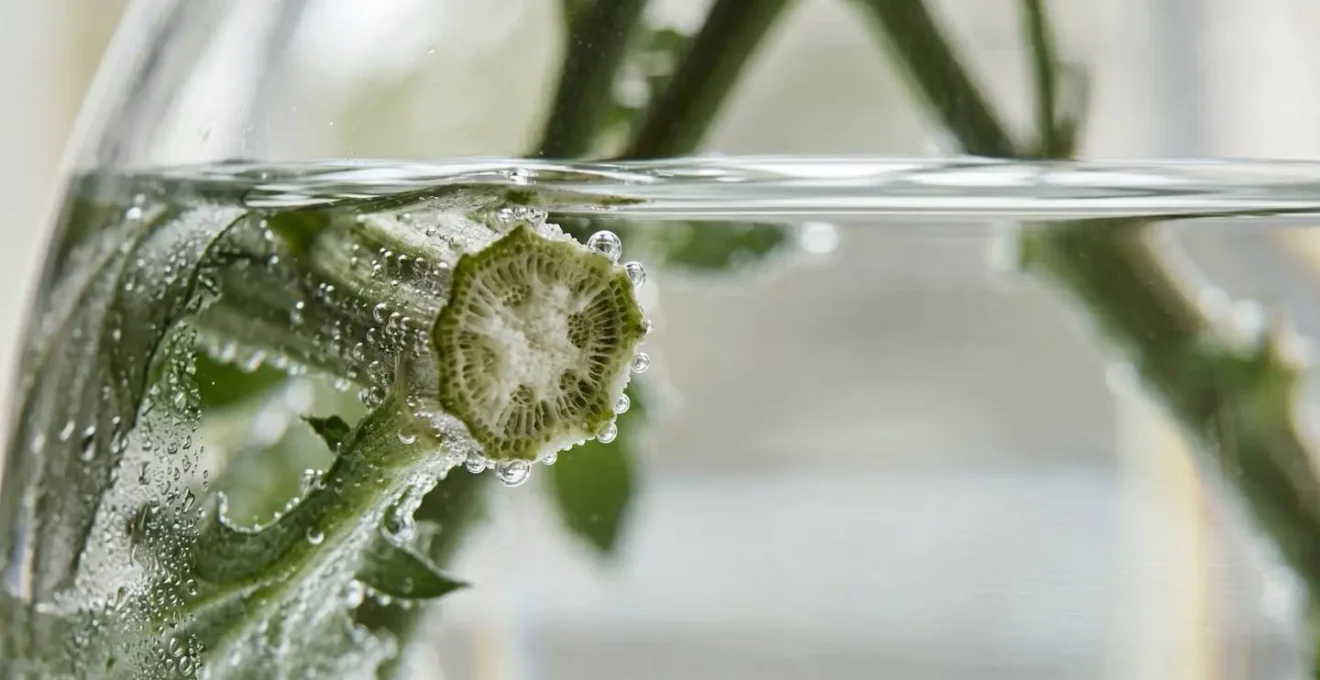
The short vase life of your flowers isn’t due to bad luck; it’s a result of invisible vascular blockages and environmental stress that disrupt their internal plumbing.
- Most wilting is caused by air embolisms (air bubbles) in the stem’s xylem, which physically prevent water from reaching the bloom.
- Different flowers, like woody-stemmed hydrangeas and soft-stemmed roses, have unique vascular structures requiring specific preparation methods to maximize hydration.
Recommendation: Instead of relying on generic advice, treat your flowers like a specialist by diagnosing the specific cause of distress—from air locks to bacterial clogs—and applying the correct hydraulic solution.
It’s a familiar frustration for any UK flower keeper: a beautiful, expensive arrangement of mixed blooms looks spectacular for a day, only for the roses to droop while the chrysanthemums remain vibrant. You followed the common advice—you trimmed the stems, used the little sachet of flower food, and placed them in fresh water. Yet, the inconsistency persists, leading to the belief that some flowers are simply ‘difficult’. This approach, however, focuses on the symptoms, not the root cause.
The conventional wisdom about flower care often involves a list of ‘what’ to do, but rarely delves into the ‘why’. We are told to cut stems, but not why an air bubble, or air embolism, can be a flower’s fatal enemy. We hear about using flower food, but don’t consider the distinct energy and hydration needs of a woody-stemmed lilac versus a soft-stemmed tulip. The truth is, the longevity of your cut flowers is not a matter of chance; it is a direct result of managing the intricate physics of plant hydraulics.
This guide moves beyond the platitudes. We will adopt the mindset of a plant hydraulics specialist to understand the journey of a water molecule from the vase to the petal. By exploring the science of turgor pressure, vascular anatomy, and the catastrophic effects of a broken cold chain, you will learn to diagnose and treat your flowers’ specific needs. It’s not about being a ‘green thumb’; it’s about understanding the engineering that keeps a flower alive.
This article dissects the critical factors that govern water uptake in cut flowers. By understanding these scientific principles, you can take precise, effective action to ensure every stem in your arrangement achieves its maximum potential vase life.
Summary: The Science of Flower Hydration
- How Much Water Does a 20-Stem Arrangement Consume Per Day?
- The 5 Early Warning Signs Your Flowers Need Water Before They Wilt?
- When to Hammer or Split Woody Stems: The Technique for Lilacs and Hydrangeas?
- Why Professional Florists Use Warm Water: The Temperature Science?
- Why Some Flowers Won’t Hydrate: The Air-Lock Emergency Fix?
- Woody Stems vs Soft Stems: Why Different Flowers Need Different Prep Methods?
- The 2-Hour Hot Water Bath That Brings Wilted Roses Back to Life?
- Why Did Your Expensive Roses Droop Just 12 Hours After Arrival?
How Much Water Does a 20-Stem Arrangement Consume Per Day?
The water consumption of a flower arrangement is not static; it’s a dynamic process dictated by the types of flowers and their environment. The primary driver is transpiration, the process where water evaporates from the leaves, creating a negative pressure or tension that pulls more water up the stem’s vascular system, or xylem. A flower with a large leaf surface area, like a chrysanthemum, will transpire more rapidly than a rose, which has a smaller, waxier leaf structure.
To put this in perspective, a greenhouse study on chrysanthemum water uptake revealed the astonishing rate at which these flowers drink. Researchers found that on a sunny day, these plants could consume approximately 0.7 liters per square meter per hour. While a 20-stem arrangement in a UK home won’t face greenhouse conditions, this illustrates the high baseline water demand of ‘thirsty’ flowers. A large mixed bouquet containing several stems of chrysanthemums or hydrangeas could easily consume over 500ml of water in a 24-hour period, especially in a warm, dry room.
This high consumption rate is why the water level in your vase can drop so quickly and why a failure to replenish it promptly leads to rapid wilting in some flowers before others. Their efficient but demanding hydraulic system means they are the first to suffer when the water supply dwindles. Understanding this variation in transpiration rate is the first step to managing a mixed bouquet effectively.
The 5 Early Warning Signs Your Flowers Need Water Before They Wilt?
Visible wilting is the last, most desperate cry for help from a flower. By the time a bloom has drooped, significant cellular stress has already occurred. A vigilant flower keeper can, however, learn to spot the subtle, early signs of dehydration, allowing for intervention long before collapse. These indicators are direct physical manifestations of decreasing turgor pressure—the internal water pressure that keeps plant cells rigid and firm.
Observing your flowers closely reveals these early warnings. It’s a skill that moves you from a reactive to a proactive carer. By recognizing these signs, you can address water stress hours before permanent damage is done. The key is to look for changes in texture, appearance, and even scent, as the flower’s metabolism shifts to conserve its dwindling water reserves.
Here are the five early warning signs that your flowers are experiencing water stress:
- Check turgor pressure: Gently squeeze the stem just below the flower head. A well-hydrated flower feels firm and crisp. A thirsty one will feel slightly soft or ‘hollow’ as the cells begin to lose water.
- Observe petal sheen: Many fresh flowers have a vibrant, almost waxy lustre on their petals. When a flower becomes thirsty, these petals can start to appear matte or papery as the surface cells dehydrate.
- Monitor leaf angle: The uppermost leaves are often the first to show signs. They will begin to angle downward slightly, losing their perky, upward orientation as the vascular system struggles to pump water to the extremities.
- Notice scent reduction: For fragrant flowers like roses or lilies, a significant decrease in scent production can indicate an early metabolic response to water stress as the plant shuts down non-essential functions.
- Test stem flexibility: The neck of the flower, the part of the stem directly under the bloom, may become slightly more flexible or show a subtle bend well before the head visibly droops.
When to Hammer or Split Woody Stems: The Technique for Lilacs and Hydrangeas?
The advice to smash or hammer the ends of woody stems from plants like lilacs, forsythia, or hydrangeas is one of the most persistent and damaging myths in floristry. The logic seems plausible: create more surface area for water to enter. However, the reality is that this brute-force method does far more harm than good. It crushes the delicate xylem tubes, the very structures responsible for transporting water, creating a mangled blockage rather than an open channel.
This outdated practice is strongly condemned by floral science professionals. As the Dillon Floral Research Team states in Floral Management Magazine:
Do not even consider the old practice of smashing woody stems with a hammer to expose more water-absorbing tissue! This damages the xylem in the stems and releases many fine plant pieces in the water that cause blockage and reduce water uptake.
– Dillon Floral Research Team, Water, Water Everywhere – Floral Management Magazine
The correct technique is precise and surgical, not destructive. For thick, woody stems, the goal is to bypass the tough outer bark and expose the functional xylem without compromising its structure. This is best achieved by making a clean, vertical slit up the base of the stem. Using a sharp, clean knife, make one or two cuts, approximately 2-3 cm long, up from the bottom. This opens up the stem to the water without crushing the vital vascular tissues.
This method significantly increases the surface area of viable xylem exposed to water, allowing these notoriously thirsty flowers to hydrate effectively. It’s a testament to the principle that in flower care, precision and understanding of plant anatomy always trump brute force.
Why Professional Florists Use Warm Water: The Temperature Science?
The question of water temperature for cut flowers often defaults to a simple answer: cool or room temperature. However, professional florists understand that for initial hydration or reviving a wilted flower, warm water is a powerful tool. The science behind this practice is grounded in basic physics and plant physiology. Warm water molecules move more quickly and have lower surface tension, allowing them to be absorbed into the fine capillaries of the xylem more readily than cold water.
Furthermore, and perhaps more critically, warm water contains less dissolved oxygen than cold water. While oxygen is vital for a living plant’s roots, in a cut stem, dissolved gases can be a problem. When a flower is cut, the sudden change in pressure can cause these gases to come out of solution and form tiny bubbles—the dreaded air embolisms—that block the xylem. Using warm water for the initial drink helps to minimize this risk. As research from North Carolina State University’s Horticulture Department explains, it also helps preservatives dissolve more effectively.
The optimal temperature is not scalding hot, which would cook and damage the stem cells. Instead, industry research confirms that a specific temperature range is most effective for kick-starting hydration. The ideal temperature is tepid, or what you might use for a baby’s bath. For maximum effect, 100-110°F (37-43°C) is the optimal initial hydration temperature. Placing newly cut stems into water at this temperature for about an hour before moving them to a cooler location can dramatically improve their initial water uptake and subsequent vase life.
Why Some Flowers Won’t Hydrate: The Air-Lock Emergency Fix?
Sometimes, despite your best efforts, a flower simply refuses to drink. It wilts within hours, its stem remaining stubbornly dry. The most common culprit for this catastrophic failure is an internal blockage in the stem’s vascular system. This blockage is often an air embolism, a microscopic air bubble trapped within a xylem vessel. This air lock, formed during cutting or from dissolved gases in the water, acts as a physical barrier, making it impossible for water to be pulled up to the flower head, no matter how much water is in the vase.
This phenomenon is a primary reason why re-cutting stems is so crucial. Each cut exposes fresh xylem, but if the stem is then held out of water for even a minute before being placed in a vase, a new air embolism can form. Other causes of blockage include bacterial growth, which creates a slimy biofilm over the cut surface, or waxy compounds exuded by the stem itself. Commercial hydrating treatments often use acidifiers to lower the water’s pH, which helps dissolve these blockages and inhibit bacterial growth.
When you face a flower that has wilted due to a suspected air lock, you need an emergency revival protocol. The goal is to clear the blockage and force water back into the system. The following steps, applied quickly, can often save a flower from the brink:
- Re-cut stems at a sharp angle: Under running water or in a bowl of water, remove at least 1-2 inches from the base of the stem. This ensures the new cut is made in a water-filled environment, preventing a new air bubble from forming.
- Use deep water placement: Place the newly cut stems in a tall vase with deep water (at least 8-10 inches). The increased water column creates greater hydrostatic pressure (head pressure) that helps to push water into the stem and dislodge minor blockages.
- Apply a warm water treatment: Use water at 100-110°F for the initial rehydration. As we’ve seen, this can help expand and expel trapped air bubbles from the xylem.
- Submerge for severe wilting: For badly wilted flowers with sturdy heads like roses or hydrangeas, you can submerge the entire flower and stem in a basin of cool water for 30-60 minutes. This allows for hydration through the petal and leaf surfaces as well as the stem.
- Refrigerate after treatment: Once the flower shows improved turgor pressure, move it to a cool location (like a garage or even a refrigerator for an hour) to slow its metabolism and lock in the hydration.
Woody Stems vs Soft Stems: Why Different Flowers Need Different Prep Methods?
The “one size fits all” approach to flower preparation is a recipe for inconsistent results. The reason a lilac needs a different preparation to a tulip lies deep within their anatomy. The key difference is in their xylem structure—the network of tubes that transports water. Woody stems, like those of a hydrangea, have a few, large-diameter, rigid vessels. Soft, herbaceous stems, like those of an iris, have many small, flexible vessels. Semi-woody stems, like a rose, fall somewhere in between.
These anatomical differences dictate their primary vulnerabilities. The large vessels of woody stems are highly efficient at moving large volumes of water, but they are also exceptionally prone to a catastrophic air embolism. The many small vessels of soft stems are less susceptible to a single devastating air lock, but their delicate structure is easily crushed, and the high sugar content in their sap makes them a prime breeding ground for bacterial clogs.
Therefore, preparation methods must be tailored to counter these specific challenges. A woody stem benefits from a method that maximizes access to its few large vessels, while a soft stem needs a clean cut that avoids crushing and is placed in water treated to prevent bacterial growth. A comprehensive comparison, such as the one in The Professional Florist’s Manual, provides a clear guide.
| Stem Type | Xylem Structure | Primary Challenge | Optimal Cut Method | Recommended Water Temp | Example Flowers |
|---|---|---|---|---|---|
| Woody Stems | Few large-diameter rigid vessels | Air embolism and bacterial blockage | Sharp 45° angle or 1-2 inch vertical slit | Warm (100-110°F) initial hydration | Lilac, Hydrangea, Forsythia |
| Soft Herbaceous Stems | Many small flexible vessels | Bacterial clogging and crushing damage | Clean sharp 45° angle cut | Cool to tepid (60-70°F) | Tulip, Daffodil, Iris |
| Semi-Woody Hybrid | Mixed structure with medium vessels | Both air locks and bacterial growth | Sharp 45° angle with clean blade | Warm (100-110°F) for revival | Rose, Chrysanthemum, Carnation |
By identifying the stem type and applying the correct preparation method and water temperature, you are working with the flower’s natural biology, not against it. This targeted approach is a cornerstone of professional floristry.
The 2-Hour Hot Water Bath That Brings Wilted Roses Back to Life?
A wilted rose, with its head bent in a sad curve, seems like a lost cause. But in many cases, this is a simple hydraulic failure—an air embolism blocking the flow of water—and it can be reversed with a specific, intensive treatment. The hot water bath method is an emergency procedure designed to use heat and pressure to force-dislodge the air lock and re-establish the flow of water up the xylem.
This technique is not just about dunking stems in warm water; it’s a precise, multi-step protocol. The key is to protect the delicate bloom from the heat and steam while treating the stem. The temperature must be exact: hot enough to expand and push out the air bubble, but not so hot that it “cooks” the plant cells, causing irreparable damage. This method should be reserved for sturdy, semi-woody flowers like roses that have wilted prematurely.
This visual guide shows the proper setup, with the delicate rose bloom protected by paper while the stem undergoes treatment, a crucial step for success.
Action Plan: The Emergency Rose Revival Protocol
- Protect the bloom: Wrap the rose head loosely in paper or newspaper. This acts as a shield, protecting the delicate petals from steam and direct heat during the treatment.
- Prepare precise temperature water: Heat water to exactly 110°F (43°C). Use a kitchen thermometer for accuracy. Water that is too hot can cause irreversible damage to the stem’s cells.
- Make a fresh cut immediately before immersion: Using sharp, clean shears, remove 1-2 inches from the bottom of the stem at a sharp 45-degree angle. This must be done just seconds before placing it in the hot water.
- Immerse stems for up to 2 hours: Place only the stems into the container of hot water. Ensure the wrapped flower heads are well above the water line. Leave them in a cool, dark location for one to two hours.
- Transfer to cool storage: After the treatment, you should see a noticeable improvement in the flower’s posture. Transfer the roses to a clean vase with fresh, cool water and flower food, and place them in a cool spot or refrigerator for an hour to stabilize.
Key Takeaways
- The primary cause of premature wilting is not lack of water in the vase, but blockages (air embolisms, bacteria) within the stem’s vascular system (xylem).
- Different flowers have different xylem structures (woody vs. soft stem), requiring tailored preparation methods to maximize water uptake.
- Water temperature is a strategic tool: warm water (100-110°F) helps clear air locks and dissolve preservatives, while cool water slows metabolism and extends vase life post-hydration.
Why Did Your Expensive Roses Droop Just 12 Hours After Arrival?
One of the most disheartening experiences is to see a costly bouquet of roses, perfect on arrival, suddenly collapse overnight. The cause is often invisible and occurred days before the flowers even reached your home. Two of the biggest culprits are ethylene gas exposure and, crucially for flowers imported into the UK, breaks in the ‘cold chain’.
Ethylene is a natural plant hormone, a colourless, odourless gas that triggers ripening and, in cut flowers, senescence (ageing). It’s produced by ripening fruit, car exhaust, and even by stressed or dying flowers. Exposure to even minute amounts can be devastating; peer-reviewed research demonstrates that ethylene exposure can shorten vase life by up to 50%. A single banana in a fruit bowl near your vase can be enough to accelerate the demise of your roses.
However, the more insidious cause is often a ‘cold chain’ break. To survive the long journey from growers in South America or Africa to a UK home, roses are kept in a state of suspended animation in refrigerated conditions (around 2°C). A 2026 FloraLife study highlighted the complex effects of this process. While roses kept in coolers showed better initial weight gain, they also exhibited significantly reduced water uptake after 72 hours. This suggests that sudden temperature fluctuations—from a refrigerated truck to a warm warehouse to your centrally-heated living room—cause invisible cellular damage. The flower appears fine initially, but its damaged vascular system can no longer function properly, leading to a sudden and catastrophic collapse 12 to 24 hours later. The flower essentially suffers from a form of shock, unable to draw water to support its bloom.
Now that you understand the complex journey and hydraulic challenges your flowers face, the next logical step is to apply this knowledge. Begin by assessing your environment for sources of ethylene and always give your flowers a fresh cut and a drink of warm water immediately upon arrival to combat the stresses of their journey.