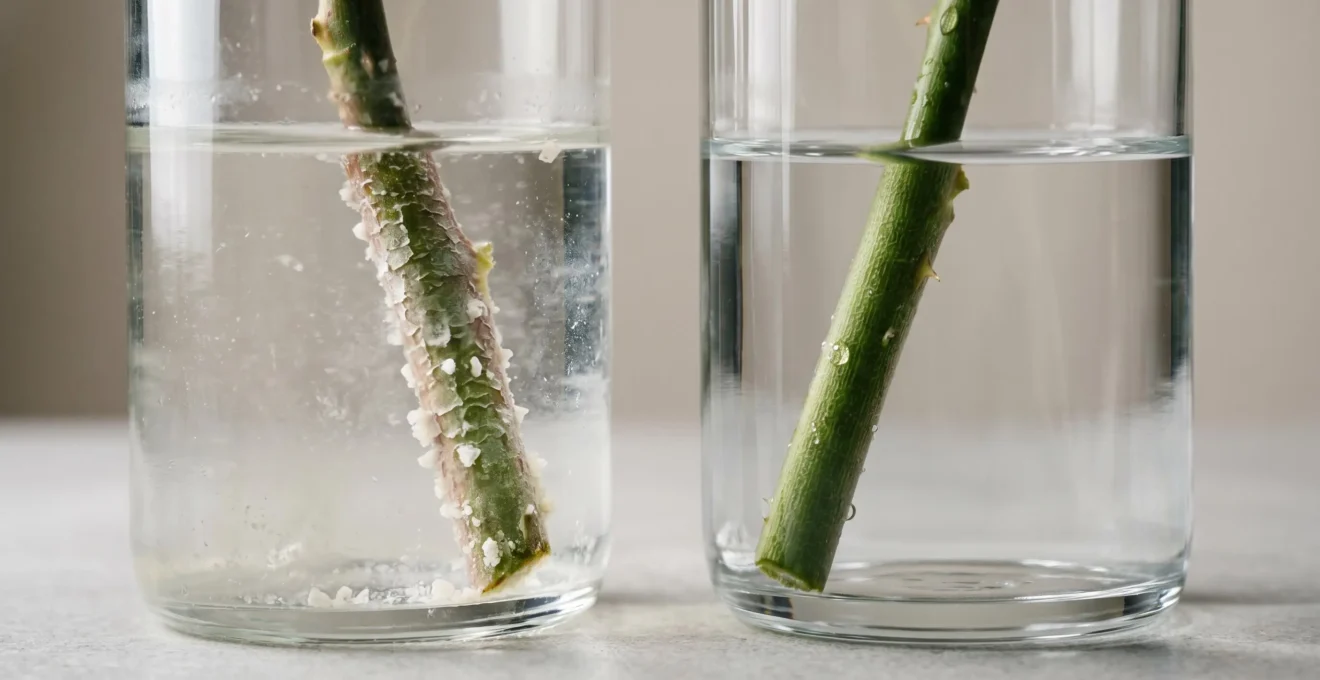
The rapid death of your flowers isn’t your fault—it’s a direct result of your regional tap water chemistry, and it’s entirely solvable.
- Hard water in areas like Surrey physically clogs flower stems with mineral deposits, starving them of water.
- Soft water, common in Scotland, lacks these minerals, allowing for unimpeded water uptake and significantly longer vase life.
Recommendation: Stop generic fixes. The key is to test your specific water hardness and then actively manage its pH to counteract the damaging effects of minerals.
Ever brought home a beautiful bouquet in Surrey, only to watch it wilt in days, while friends in Scotland boast of blooms lasting over a week? It’s a common and frustrating experience for flower lovers across the UK. You follow all the standard advice: you trim the stems, you use the little sachet of flower food, and you might even change the water daily. Yet, the premature drooping persists, leaving you wondering what you’re doing wrong. The truth is, the problem isn’t your technique; it’s the invisible enemy flowing from your tap.
The dramatic difference in flower longevity between a home in the South East and one in the Highlands is a stark lesson in hydrochemistry. The generic advice, while well-intentioned, fails to address the fundamental variable: the vast regional differences in UK water quality. But what if the secret to a long-lasting vase isn’t about more frequent water changes, but about changing the very nature of the water itself? The key lies not in generic rituals, but in understanding and mastering the specific science of your local water.
This guide moves beyond the platitudes. We will dissect the chemical reasons why hard water acts as a silent killer for cut flowers and provide a clear, science-backed framework to combat it. We’ll explore how to test your water, why acidity is your greatest ally, the surprising truth about chlorine, and the professional strategies florists use to guarantee vibrant blooms. By understanding the chemistry, you can turn your tap water from a liability into a life-support system for your flowers, regardless of your postcode.
To navigate the science of flower hydration, this article breaks down the key factors that determine vase life. The following summary outlines the journey from diagnosing your water to implementing professional-grade solutions for lasting beauty.
Summary: Decoding the Chemistry of a Longer Vase Life
- How Hard Is Your Tap Water: The 2-Minute Test That Predicts Flower Lifespan?
- Rainwater, Filtered, or Tap: Which Water Type Extends Vase Life by 30%?
- Why Slightly Acidic Water Helps Flowers Drink Better?
- Does Chlorine in Tap Water Help or Hurt Cut Flowers?
- Why Refilling Is Better Than Replacing: The Top-Up Strategy for Busy People?
- Why Hard Water in Southern England Clogs Stems and Kills Flowers Faster?
- Why Professional Florists Use Warm Water: The Temperature Science?
- Why Do Chrysanthemums Drink Twice as Much Water as Roses?
How Hard Is Your Tap Water: The 2-Minute Test That Predicts Flower Lifespan?
Before you can solve your flower problem, you must diagnose your water. The term “water hardness” refers to the concentration of dissolved minerals, primarily calcium and magnesium. This single factor is the most significant predictor of your flowers’ fate. In the UK, the difference is stark: water is considered soft at under 60 parts per million (ppm) of these minerals, but in many areas, it can be over 300ppm, classified as very hard. This isn’t just a number; it’s a direct measure of the stress your flowers will endure.
You don’t need a chemistry lab to get a reliable indication of your water’s hardness. A simple test using household items can give you a surprisingly accurate reading in just a couple of minutes. The principle is straightforward: the minerals in hard water react with soap to form soap scum, inhibiting the creation of a lather. The less foam you can generate, the harder your water is, and the more challenging the environment for your flowers. This quick diagnostic is the first and most crucial step in moving from a generic flower care routine to a targeted, effective strategy.
Your 2-Minute Water Hardness Action Plan
- Bottle Test: Fill a clear plastic bottle halfway with tap water at room temperature.
- Add Soap: Add 10 drops of pure liquid soap (not detergent) and shake vigorously for 30 seconds.
- Observe Foam: Instant, rich foam indicates soft water (0-60ppm). A thin, cloudy layer suggests moderately hard water (61-120ppm). Minimal foam with milky water means your water is hard to very hard (>121ppm).
- Predict Lifespan: Correlate your results to potential vase life. If soft water is the 100% baseline, expect only 70% lifespan in hard water and as little as 50% in very hard water.
- Confirm with Precision: For definitive results, invest in an affordable Total Dissolved Solids (TDS) meter (£10-£15 online) to get an exact ppm reading.
Rainwater, Filtered, or Tap: Which Water Type Extends Vase Life by 30%?
Once you know you have hard water, the next logical question is: what should I use instead? The choice of water is the single most impactful decision you can make after cutting your stems. As the Flower Boosters Research Team notes, “Hard water contains high levels of calcium and magnesium. These clog flower stems and make it harder for blooms to absorb water.” This simple statement explains why tap water, especially in the south of England, can be so detrimental. The minerals effectively create a bottleneck in the flower’s plumbing system.
Fortunately, there are several readily available alternatives, each with its own profile of benefits and drawbacks. From the pristine, naturally soft profile of rainwater to the engineered purity of filtered water, the options allow you to bypass the problematic mineral content of your tap. While distilled water might seem like the ultimate solution due to its extreme purity, it can sometimes cause osmotic stress on the cells. The ideal water is not just “pure” but correctly balanced, offering a clean slate for hydration without the damaging baggage of excessive minerals.
The following table breaks down the characteristics of common water types, highlighting how a simple switch can dramatically improve vase life, as shown in a comparative analysis by floral experts. Rainwater emerges as a superior, free alternative, offering the potential for a significant boost in bloom longevity.
| Water Type | Mineral Content (Hardness) | pH Range | Chlorine/Chloramine | Potential Contaminants | Cost | Vase Life Impact |
|---|---|---|---|---|---|---|
| Tap Water (Hard) | High (200-400ppm) | 6.5-8.5 | Present (biocidal benefit) | Calcium/magnesium buildup | Free | Baseline (stem clogging risk) |
| Brita-Filtered Water | Moderate (reduced 40-60%) | 6.0-7.5 | Partially removed | Reduced sediment | Low (filter cost) | +15-25% improvement |
| Rainwater | Very Low (10-30ppm) | 5.0-6.5 (naturally acidic) | None | Airborne particles (filtration needed) | Free (collection system) | +30-40% improvement |
| Distilled/RO Water | Extremely Low (<5ppm) | 5.0-7.0 | None | None (but osmotic stress risk) | Moderate to High | Neutral to -10% (osmotic shock) |
| Remineralized Water | Optimized (20-50ppm) | 4.0-5.5 (acidified) | Controlled biocide added | Balanced minerals | Moderate (additives) | +35-50% improvement |
Why Slightly Acidic Water Helps Flowers Drink Better?
Beyond mineral content, the pH of your water plays a critical, yet often overlooked, role in flower hydration. pH is a measure of acidity or alkalinity on a scale from 0 to 14. Most hard tap water in the UK is slightly alkaline, typically falling in the 7.5 to 8.5 range. While perfectly safe for us to drink, this alkalinity is a major obstacle for cut flowers. It hinders the physiological process of water uptake and encourages the precipitation of minerals, exacerbating the clogging issue we’ve discussed.
The solution is to make the water slightly acidic. An acidic environment (ideally between pH 3.5 and 5.5) helps in two ways. Firstly, it helps dissolve the mineral ions that cause blockages, keeping the ‘pipes’ (xylem) clear. Secondly, and more importantly, it encourages the cells at the cut end of the stem to take up water more efficiently. This isn’t a marginal improvement; it’s a game-changer. In fact, compelling research demonstrates that flowers in acidic water (pH 3) can absorb up to 70% more water than those in neutral water. This is why commercial flower food always contains an acidifier, like citric acid.
As the illustration suggests, an acidic solution acts like a key, unlocking the stem’s vascular system. It ensures the pathways for hydration remain wide open, allowing the flower to drink freely and stay turgid and vibrant for much longer. You can achieve this effect at home by adding a small amount of lemon juice, vinegar, or a crushed vitamin C tablet to your vase water, turning a hostile alkaline environment into a life-sustaining one.
Does Chlorine in Tap Water Help or Hurt Cut Flowers?
One of the most persistent myths in flower care is the idea that you must let tap water stand overnight to allow the chlorine to dissipate. This advice is not only often unnecessary but can be counterproductive. The reality is that chlorine, at the low levels found in treated drinking water, is more of a friend than a foe to your cut flowers. Its primary role in water treatment is to kill harmful microorganisms, and it performs the exact same beneficial function in your vase.
According to a technical report from the FloraLife Research Department, a leading authority on post-harvest floriculture, “At the low concentrations found in UK tap water, chlorine acts as a beneficial biocide, preventing bacterial bloom.” A vase of flowers is a perfect breeding ground for bacteria, which feed on the sap leaking from the cut stems. As they multiply, they create a slimy biofilm that physically blocks the xylem, preventing water uptake just as effectively as mineral deposits. Chlorine acts as a gatekeeper, keeping this bacterial growth in check and the water pathways clear.
Case Study: The Chlorine vs. Chloramine Myth
The advice to “let water sit” is particularly flawed in areas that use chloramine, a more stable disinfectant used by many UK water authorities. Research has shown that chlorine dissipates from an open container within 24 hours, but chloramine can remain stable for weeks. A study on its stability revealed that even after boiling for 5 minutes, 50% of the chloramine remained. This means the passive standing method is completely ineffective for chloramine-treated water. The professional recommendation is to use tap water directly with an acidifying flower food; the acidic conditions actually enhance the antibacterial power of the existing chloramine, making it more effective, not something to be removed.
The takeaway is clear: don’t fear the chlorine in your tap water. It provides a baseline level of protection against the biggest threat to your flowers’ longevity after dehydration – bacterial contamination.
Why Refilling Is Better Than Replacing: The Top-Up Strategy for Busy People?
The conventional wisdom to completely replace vase water every day seems logical, but it may be causing more harm than good. While done with the best intentions, this daily disruption can create a “system shock” for your flowers. Each change introduces sudden shifts in water temperature, pH, and nutrient levels, forcing the delicate plant system to constantly readjust. Flowers, much like any living organism, thrive in a stable, consistent environment.
A far more effective and less labour-intensive approach is the “top-up” method. This strategy treats the vase water not as something to be discarded, but as a carefully balanced life-support solution to be maintained. The principle is simple and powerful, as explained by experts in floral preservation. Research from industry leader FloraLife demonstrates flowers thrive in stable environments. The top-up method maintains the balanced system flowers need, akin to a continuous IV drip for a patient.
The execution is simple. On the first day, prepare a larger batch of your optimized water—whether it’s filtered, rainwater, or tap water treated with an acidifier and flower food. Fill your vase, arrange your flowers, and store the remaining solution in a bottle or jug. Each subsequent day, instead of a full change, simply top up the vase from your pre-mixed batch to restore the water level. This maintains a consistent chemical environment, preventing stress and ensuring a continuous supply of hydration and nutrients. The only exception to this rule is if the water becomes visibly cloudy, which is a sign of a bacterial bloom that has overwhelmed the biocide. In that specific case, a full clean and replace is necessary.
Why Hard Water in Southern England Clogs Stems and Kills Flowers Faster?
The question posed in this article’s title is not hypothetical; it’s a daily reality rooted in the UK’s geology. The water in Southern England, particularly in counties like Surrey, Essex, and across the London basin, is hard because it has filtered through chalk and limestone bedrock, picking up vast amounts of calcium carbonate. In contrast, Scotland’s water largely flows over hard, impervious rock like granite, remaining naturally soft. The data from the 2026 UK water hardness map is telling: it shows that while Scotland typically has water with less than 60ppm of hardness, South East England frequently exceeds 300ppm.
This five- to six-fold difference in mineral load has a direct and devastating impact on cut flowers. It’s a triple-threat scenario. First, there is the physical blockage, where high concentrations of calcium carbonate precipitate out of the solution inside the stem’s xylem, forming tiny limescale-like deposits that literally choke the flower from the inside. Second is the chemical inhibition caused by the high pH (7.5-8.5) of hard water, which reduces the stem’s natural ability to absorb water, even before physical blockages form. Finally, these alkaline conditions create a perfect environment for bacterial growth, reducing the efficacy of any biocide present.
A comparative analysis of water from Thames Water in Surrey and Scottish Water in the Highlands highlights this starkly. A rose in untreated Surrey tap water faces this combined assault, leading to a vase life that can be 40-50% shorter than the same flower in soft Scottish water. The first signs of wilting often appear 3 to 4 days earlier, not due to the flower’s quality, but purely due to the aggressive chemistry of the water it’s trying to drink.
Why Professional Florists Use Warm Water: The Temperature Science?
Among the tricks of the trade, the use of warm water by professional florists is one of the most effective yet misunderstood. Many assume cool water is best to keep flowers “fresh,” but science points to a more nuanced, two-stage temperature strategy for maximum hydration and longevity. The initial temperature of the water is critical, especially for flowers that have been out of water for a period (a state known as ‘dry-packed’).
The science is based on fluid dynamics. Warm water (around 40°C or 105°F) is less viscous and holds less dissolved oxygen than cold water. This means it can travel up a dehydrated stem’s xylem more easily and with less resistance. Crucially, it also reduces the risk of a fatal air embolism—a tiny air bubble that gets drawn into the stem and creates an irreversible blockage. Placing freshly cut stems into warm water for an initial conditioning period of one to two hours is like performing CPR for a dehydrated flower; it forces rapid water uptake and helps revive tissues that are starting to wilt.
However, this is only Stage 1. Once the flowers are fully rehydrated, the strategy reverses. For ongoing display (Stage 2), flowers are best kept in cool water (10-15°C) and in a cool room. As research on temperature effects indicates, cold water slows bacterial growth and, more importantly, lowers the flower’s metabolism. Like a hibernating animal, a flower in a cool environment slows its respiration and water loss (transpiration), conserving energy and extending its vibrant display by as much as 30-40% compared to one left in warm water at room temperature, a finding confirmed by studies on post-harvest care of roses.
Key Takeaways
- Diagnose First, Act Second: The single most important step is to understand your specific water. Use a simple soap test or a TDS meter to determine your water’s hardness.
- Acidity is Your Ally: Hard, alkaline water blocks stems. Counteract this by making your vase water slightly acidic with flower food, lemon juice, or vinegar to keep hydration pathways open.
- Master the Two-Stage Temperature Trick: Use warm water (40°C) for the first hour to maximize initial water uptake and prevent air blockages, then move to cool water (10-15°C) to slow metabolism and extend vase life.
Why Do Chrysanthemums Drink Twice as Much Water as Roses?
Even with perfectly optimized water, you might notice that some flowers simply wilt faster than others. This isn’t a failure of your water chemistry but a reflection of the vast differences in physiology between flower species. A chrysanthemum and a rose, for example, have fundamentally different water requirements. This is largely determined by two factors: transpiration rate and stem structure. Transpiration is the process of water movement through a plant and its evaporation from leaves and petals. Flowers with large surface areas, like the dense petals of a chrysanthemum or the huge bloom of a hydrangea, have a much higher transpiration rate—they are constantly ‘breathing out’ water vapor and therefore need to drink more to compensate.
Stem structure also plays a huge role. Some flowers, like sunflowers, have thick, hollow stems with large xylem vessels, designed to transport massive amounts of water quickly. Others, like carnations, have dense, woody stems with narrower vessels, making them more like “sippers.” Understanding which of your flowers are “guzzlers,” “drinkers,” or “sippers” allows you to provide tailored care. Guzzlers need larger vases, more water volume, and daily top-ups, while for sippers, preventing bacterial growth in water that sits for a long time becomes the top priority.
This “Thirst Index” helps explain why a mixed bouquet can be challenging to maintain. The thirstiest flowers will often exhaust the water supply before their less demanding vase-mates, leading to selective wilting. The table below categorizes common flowers by their water consumption, providing a practical guide for better bouquet management.
| Thirst Category | Flower Species | Transpiration Rate | Stem Structure | Daily Water Uptake (ml per stem) | Critical Care Strategy |
|---|---|---|---|---|---|
| Guzzlers (High) | Hydrangea, Chrysanthemum, Sunflower (Helianthus) | Very High (large petal/leaf surface area) | Thick hollow stems, large xylem vessels | 50-150ml | Large vase volume essential, daily top-up critical, bacterial control priority |
| Drinkers (Moderate) | Rose, Tulip, Lily, Gerbera | Moderate (medium surface area) | Medium density xylem | 20-50ml | Regular water checks, standard vase size, balanced pH and biocide |
| Sippers (Low) | Carnation, Alstroemeria, Statice, Solidago | Low (thick cuticle, smaller surface area) | Dense stems, narrow xylem | 10-20ml | Bacterial inhibition most critical (long vase residence time), acidifier essential, smaller vase acceptable |
Armed with this knowledge of water chemistry and flower physiology, you’re now equipped to move beyond generic advice. You can diagnose your home’s specific environment and provide your next bouquet with the targeted care it truly needs to thrive. Start by testing your water, and prepare to be amazed by the difference.