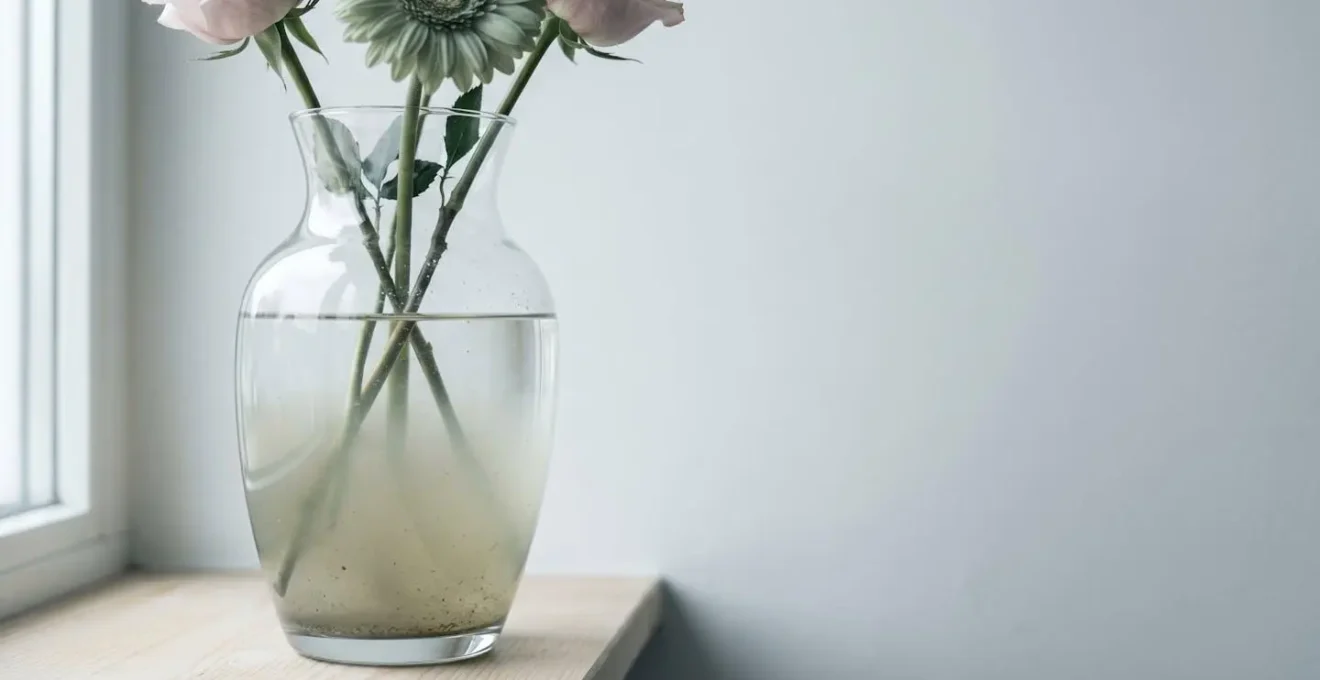
In summary:
- Cloudy, smelly water is a sign of rapid bacterial multiplication, which clogs flower stems and prevents water uptake.
- Effective vase hygiene involves a three-part protocol: thorough vase sanitization, removing all submerged leaves, and using a commercial flower food sachet.
- Daily water changes combined with using the provided sachet is the most scientifically proven method to significantly extend the life and beauty of your floral arrangements.
The disappointment is familiar to any flower lover in the UK. You bring home a beautiful bouquet, place it in a vase, and within 48 hours, the once-clear water turns into a cloudy, unpleasantly odorous soup. Your vibrant blooms begin to wilt, their necks drooping in a clear sign of distress. The common advice is to “change the water” or “trim the stems,” but these actions often feel like a losing battle against an invisible enemy. You might even try home remedies passed down through generations, wondering if they make any real difference.
But what if the problem isn’t the flowers themselves, but a fundamental misunderstanding of the environment you’ve placed them in? The rapid decay you’re witnessing is not just bad luck; it’s a hygiene failure. It’s a war being fought on a microscopic level, and without the right strategy, the bacteria will always win. The key isn’t just to keep flowers “fresh,” but to actively control the microbial contamination in their water supply.
This guide abandons floral folklore in favour of water hygiene science. We will treat your vase as a controlled environment and diagnose the issue with the precision of a laboratory. Forget simply managing symptoms; we are here to understand and defeat the root cause. By adopting a clinical, evidence-based protocol, you can stop the rot, prevent vascular blockage, and add days of vibrant life to your arrangements.
We’ll dissect the unseen world of vase water, from the explosive growth of bacteria to the precise function of that little sachet. Follow this guide to understand the science and master the techniques that truly work.
Contents: The Science of Clean Vase Water
- How Bacteria Multiply From 100 to 1 Million Cells in 24 Hours in Warm Water?
- Bleach, Vinegar, or Hot Water: Which Method Actually Sterilises Your Vase?
- Why Submerged Leaves Create 10x More Bacteria Than Clean Stems?
- Does a Penny in the Vase Actually Prevent Bacterial Growth?
- Why Daily Water Changes Add 5 Days to Your Arrangement’s Life?
- Why Bacteria Colonies Double Every 20 Minutes in Room-Temperature Vase Water?
- Sugar, Acid, and Biocide: What Each Ingredient in Flower Food Actually Does?
- Why Does the Little Sachet Actually Add 5 Days to Your Flowers’ Life?
How Bacteria Multiply From 100 to 1 Million Cells in 24 Hours in Warm Water?
The cloudiness in your vase water is not just dissolved impurities; it’s a visual indicator of a thriving bacterial metropolis. A single bacterium, introduced from the stem, your hands, or the water itself, can undergo binary fission. In ideal conditions – warmth and nutrients – this process becomes exponential. Starting with a mere 100 cells, the population can double every 20-30 minutes. A simple calculation reveals the shocking reality: after 24 hours, this can lead to a microbial load of hundreds of millions, if not billions, of cells per millilitre of water.
This explosive growth is what turns your water cloudy. But the problem is more than aesthetic. As bacteria multiply, they form a slimy, invisible layer on the submerged surfaces of the vase and, most critically, on the flower stems. This layer is known as a biofilm. It’s a complex structure that protects the bacteria and serves as a continuous source of contamination.
As the biofilm matures on the cut end of a stem, it physically obstructs the xylem – the microscopic tubes responsible for water uptake. This vascular occlusion is the primary reason your flowers wilt, even when sitting in a vase full of water. They are, in effect, dying of thirst, choked off by the very microorganisms thriving in their water source.
Therefore, managing vase water is a race against time. The goal is to keep the bacterial population below the critical threshold where biofilm formation and vascular blockage begin.
Bleach, Vinegar, or Hot Water: Which Method Actually Sterilises Your Vase?
Before new flowers are even introduced, the vase itself can be a primary source of contamination. A vase that is merely rinsed with water often retains a residual biofilm from previous arrangements, providing an instant inoculum for a new bacterial bloom. Effective vase care is not just about cleaning; it is about sanitization. This means reducing the microbial load to a safe level. Different methods offer varying levels of efficacy, and choosing the right one is critical.
A simple rinse is insufficient. To break down and remove the resilient biofilm, a more robust method is required. Options range from chemical solutions like bleach and vinegar to thermal methods like hot water or a dishwasher cycle. Each has distinct advantages and disadvantages concerning effectiveness, safety, and material compatibility.
The following analysis breaks down the most common methods, providing a clear comparison for the conscientious flower keeper. This data helps in establishing a proper sanitization protocol as the first line of defence in extending flower life.
| Sanitization Method | Efficacy Against Biofilm | Contact Time Required | Risk to Vase Material | User Safety | Residue Concern |
|---|---|---|---|---|---|
| Bleach (¼ tsp per litre) | High – kills 99%+ bacteria | 5-10 minutes | Low (may discolour some plastics) | Moderate – requires ventilation | High – must rinse thoroughly |
| White Vinegar (diluted) | Moderate – reduces bacterial load | 15-20 minutes | Very Low – safe for all materials | High – food-safe, low toxicity | Low – safer for flowers |
| Hot Water (near-boiling) | Low – surface only | Immediate | High – thermal shock risk for glass | High – burn hazard during handling | None |
| Dishwasher (hot cycle) | High – combined heat + detergent | Full cycle (60-90 min) | Moderate – not suitable for delicate vases | High – automated process | Moderate – detergent residue possible |
Your Vase Hygiene Audit Checklist
- Surface Inspection: Run a finger along the inside of the “clean” vase. Do you feel any sliminess? If yes, a biofilm is present and a simple rinse was insufficient.
- Previous Method Review: What was the last cleaning method used? Compare it to the table above. Was it effective enough to kill bacteria or just move them around?
- Material Check: Is the vase delicate, antique glass, or a sturdy ceramic? Choose a sanitization method (e.g., vinegar over bleach or dishwasher) that poses no risk to the material.
- Residue Risk Assessment: If using chemical cleaners like bleach or dish soap, did you rinse the vase thoroughly with fresh water at least three times to remove any residue that could harm the flowers?
- Protocol Update: Based on this audit, establish a new, consistent sanitization protocol. For most glass vases, a short soak with a diluted bleach solution followed by a thorough rinse is the clinical standard.
For maximum effectiveness and safety, washing the vase with soap and hot water, followed by a 10-minute soak in a diluted bleach solution (1/4 teaspoon per litre of water), and then rinsing thoroughly, is the gold standard for vase sanitization.
Why Submerged Leaves Create 10x More Bacteria Than Clean Stems?
One of the most critical, yet often overlooked, aspects of floral arrangement hygiene is the management of foliage. A single leaf left below the waterline acts as a potent fuel source for bacterial growth. While stems are relatively inert, leaves are rich in sugars, starches, and other organic compounds. When submerged, they begin to decay almost immediately, leaching these nutrients into the water.
This process transforms your clean vase water into a nutrient-rich broth, a perfect petri dish for bacteria. The microbial population, which might have grown slowly with just the stem’s organic leakage, now has an all-you-can-eat buffet. This accelerates their multiplication rate, leading to the rapid onset of cloudy, smelly water and the formation of stem-clogging biofilms. The problem is not just one leaf; it’s the exponential effect this nutrient source has on the entire microbial ecosystem in the vase.
Removing all foliage that will sit below the waterline is not just a tidy aesthetic choice; it is the single most effective preventative measure you can take to limit the initial nutrient supply for bacteria. As experts in the field consistently note, this simple step is foundational to flower care.
Submerged foliage decomposes quickly, fueling bacterial growth that migrates to the stem base and clogs water channels.
– Professional florist research, Locker’s Flowers – Fresh Flower Care Analysis
Think of each submerged leaf as a contamination event. By ensuring only clean, bare stems enter the water, you are effectively starving potential bacterial colonies from the outset, significantly slowing their growth and extending the clarity of your water and the life of your flowers.
Does a Penny in the Vase Actually Prevent Bacterial Growth?
The idea of dropping a copper penny into a vase is one of the most enduring floral folk remedies. The theory behind it is scientifically sound, at least in principle. Copper is a heavy metal with known antimicrobial properties; it acts as a fungicide and biocide, disrupting bacterial enzymes. Proponents of this method argue it’s a simple way to help keep the water clean.
Copper is a fungicide, so adding a penny to the water in your vase helps protect your flowers from bacteria.
– Teleflora Floral Care Team, Teleflora – Keeping Flowers Fresh: Myth vs Fact
However, for a UK flower keeper, the effectiveness of this trick is highly questionable and largely a myth in the modern era. The key factor is the copper content of the coin. British pennies minted before 1992 were made of 97% copper, and might have had a mild biocidal effect. However, pennies minted after 1992 are copper-plated steel. The amount of copper available to leach into the water is minuscule and highly unlikely to be sufficient to control a bacterial population that is doubling every 20 minutes.
Furthermore, even with a high-copper coin, the concentration of copper ions released into the water would be far too low and unregulated to compete with the efficacy of a scientifically formulated biocide found in commercial flower food. It’s the equivalent of using a water pistol to put out a house fire.
In conclusion, while the science of copper’s antimicrobial properties is real, relying on a modern penny to sanitise your vase water is a futile gesture. A far more effective strategy involves using products designed for this specific purpose.
Why Daily Water Changes Add 5 Days to Your Arrangement’s Life?
Changing the vase water is often seen as a chore, but from a microbial hygiene perspective, it is the most powerful intervention you can perform. Topping up the water is not enough; a complete replacement is necessary to physically remove the accumulated bacterial load and their toxic by-products. The initial water quality itself can be a major issue, as a foundational Dutch study found that nearly 70% of retail florists and supermarkets used water with bacterial levels already high enough to negatively impact vase life.
Even if you start with sterile water, the bacterial population will grow. A daily water change effectively resets the microbial clock, flushing out the enemy before their numbers reach a critical mass. This simple act has several profound benefits for the health and longevity of your cut flowers.
The benefits go beyond simply removing visible cloudiness. This daily reset addresses multiple factors that contribute to the premature wilting and decay, known as senescence. Each water change is a comprehensive refresh for the flower’s life support system.
- Removing Bacteria and Toxins: You are physically flushing out millions of floating bacteria and the ethylene gas and other toxic metabolic wastes they produce, which can damage the flower stems.
- Replenishing Oxygen: Fresh tap water is oxygenated. Stagnant, bacteria-filled water has very low dissolved oxygen, which stresses the stems.
- Eliminating Ethylene: Stressed or aging flowers produce ethylene gas, a plant hormone that accelerates aging in other blooms. Changing the water helps to flush away dissolved ethylene.
- Restoring Nutrient Balance: A daily change is the perfect opportunity to add a fresh dose of flower food, replenishing the sugar (energy), acid (for pH balance), and biocide (to slow new bacterial growth).
By making this a non-negotiable part of your routine, you are actively disrupting the lifecycle of the microorganisms that want to destroy your flowers, often adding up to five extra days of vibrant beauty to the arrangement.
Why Bacteria Colonies Double Every 20 Minutes in Room-Temperature Vase Water?
Temperature is a critical, often underestimated, catalyst in the vase water ecosystem. The rate of all biological and chemical reactions, including bacterial metabolism and multiplication, is heavily influenced by ambient temperature. For most common bacteria found in vase water, such as *Pseudomonas*, the temperature of a typical UK home (around 18-22°C) represents a near-perfect incubation environment.
In this temperature sweet spot, the metabolic machinery of bacteria runs at peak efficiency. This allows them to process the available nutrients from submerged leaves or stem leakage at an accelerated rate, fueling rapid reproduction. A colony’s doubling time can shrink to as little as 20 minutes. This explains why a vase that looked clear in the morning can appear noticeably cloudy by evening. The warmth of a room, especially one receiving direct sunlight, is effectively an accelerator pedal for bacterial proliferation.
Conversely, cooler temperatures act as a brake. Placing your flower arrangement in a cooler location overnight, away from radiators or sunny windowsills, can significantly slow bacterial metabolism. This reduces their rate of reproduction and the speed at which they consume nutrients and produce stem-clogging waste. While it won’t stop the process entirely, it can dramatically slow the decline of water quality.
Therefore, managing temperature is a passive but effective way to control microbial load. A cool environment extends the efficacy of your other interventions, like daily water changes and the use of biocides, buying you precious time in the fight against decay.
Sugar, Acid, and Biocide: What Each Ingredient in Flower Food Actually Does?
The small sachet of powder that accompanies a bouquet is not simply “food”; it is a sophisticated, multi-component preservation system designed to combat the exact problems we have discussed. Dismissing it in favour of home remedies is to discard years of horticultural science. Each ingredient serves a distinct and vital purpose in creating a hospitable environment for the flower while making it hostile for microbes.
Understanding the role of each component reveals why the complete formula is so effective. It’s a three-pronged attack that simultaneously provides energy, improves water uptake, and suppresses the enemy. This balanced formulation is the cornerstone of modern post-harvest flower care, a fact confirmed by leading industry researchers.
Sugar provides energy to maintain metabolic functions. Acid enhances water uptake by the xylem. The biocide prevents bacteria from thriving.
– FloraLife Research Department, FloraLife – Flower Care and Handling: Fun with Science
Let’s break down this trifecta of ingredients:
- Sugar (Carbohydrate): This is the “food” component. Once cut from the parent plant, a flower is severed from its energy source. The sugar in the sachet (usually sucrose) provides a vital source of nutrition, fuelling the cellular processes that keep the bloom turgid and vibrant. It helps the flower to open properly and maintain its colour.
- Acidifier: This component, often citric acid, lowers the pH of the water. Tap water in many parts of the UK is neutral or slightly alkaline. However, flowers absorb water most efficiently in a slightly acidic environment. The acidifier adjusts the water’s pH to an optimal range, which improves water flow through the xylem and can also slightly inhibit bacterial growth.
- Biocide (Antimicrobial Agent): This is arguably the most crucial ingredient from a hygiene perspective. It is a disinfectant specifically formulated to kill or inhibit the growth of the bacteria and fungi that cause water to become cloudy and clog stems. It is the sachet’s primary weapon against vascular occlusion.
Using only one component (e.g., adding sugar alone) can be counterproductive, as it would simply provide more food for bacteria without a biocide to control them. The sachet is a complete, balanced system.
Key takeaways
- The primary enemy is invisible: Microbial contamination is the root cause of wilting and decay, not the flower itself.
- Hygiene is the strategy: A strict protocol of vase sanitization, foliage removal, and daily water changes is non-negotiable.
- The sachet is a scientific tool: Flower food is a balanced formula of energy, pH regulators, and biocides that provides a complete life support system.
Why Does the Little Sachet Actually Add 5 Days to Your Flowers’ Life?
The claim that a simple sachet can add five or more days to a flower’s life may seem like marketing hyperbole, but it is rooted in the scientific principles of post-harvest physiology. The sachet works because it creates an optimal vase environment, simultaneously nourishing the flower and suppressing the microbial threats that lead to its demise. It is the culmination of everything we’ve discussed: an all-in-one solution for nutrition, hydration, and sanitation.
The sachet’s effectiveness lies in its ability to keep the microbial load below the critical threshold that causes physical damage. As peer-reviewed research demonstrates, bacterial populations exceeding 10^7 colony forming units per milliliter can significantly reduce hydraulic conductance, effectively blocking the flower’s water supply. The biocide in the sachet is specifically designed to prevent the bacterial count from ever reaching this catastrophic level.
By preventing vascular occlusion, the sachet ensures the flower can continue to draw water and the provided nutrients up the stem, maintaining turgidity and fueling the metabolic processes that keep petals looking fresh and vibrant. The results are not just anecdotal; they are backed by controlled scientific studies.
Case Study: The Impact of Preservatives on Rose Vase Life
A research study on cut roses treated with preservatives provides clear evidence of this effect. In the study, roses in a control group (plain water) lasted only 6.7 days on average. In contrast, roses treated with a preservative solution containing antimicrobial and nutritional components lasted an average of 11.2 days. This represents a 67% increase in vase life, validating the multi-component approach used in commercial flower food sachets.
Therefore, when you next receive a bouquet, view that small sachet not as an optional extra, but as an essential piece of medical equipment for your flowers. Adopting this clinical, evidence-based approach is the definitive step from being a flower owner to becoming a proficient flower keeper.