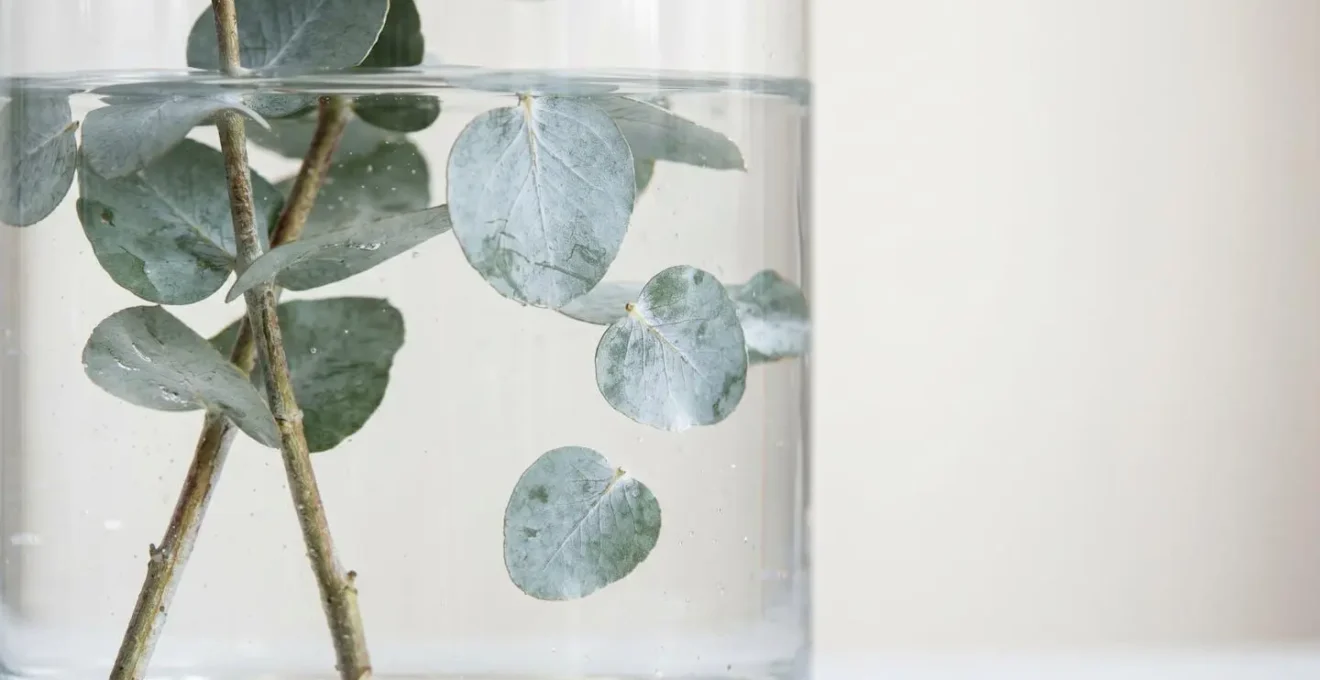
The crushing disappointment of seeing your beautiful eucalyptus arrangement wilt and shed its leaves in three days isn’t your fault. It’s a fundamental misunderstanding of the plant’s unique biology. The secret to a multi-week vase life lies not in simply providing water, but in a specific conditioning process using warm water. This technique overcomes the plant’s natural tendency to seal its woody stems, allowing for proper hydration and unlocking its true decorative potential.
There’s a specific moment of frustration familiar to many home decorators: you invest in a fresh, fragrant bunch of eucalyptus, envisioning weeks of elegant texture and scent, only to find the leaves turning brittle and dropping onto your mantelpiece within 72 hours. You followed the standard advice—a fresh cut, a vase of water—yet the result is a sad, shedding mess. This experience leads many to believe eucalyptus is simply a short-lived green, a fleeting luxury not meant for the home.
The common wisdom to “give it plenty of water” is tragically incomplete. Eucalyptus isn’t like a delicate rose or a soft-stemmed tulip. As a woody plant native to the arid landscapes of Australia, its primary survival instinct is to conserve water, not to drink it freely. When cut, its vascular system immediately begins to seal itself off to prevent moisture loss, a process that ironically starves the leaves of the very water you’re providing. This is why your stems can be sitting in a full vase while the leaves above are curling and dying of thirst.
But what if the solution wasn’t just more water, but smarter water? The key to unlocking the longevity of eucalyptus—extending its life from a few disappointing days to a glorious two or even three weeks—lies in understanding and overriding this botanical defence mechanism. It requires a professional technique known as ‘hardening off’, a crucial step that florists use but is rarely shared with consumers.
This guide will demystify the science behind keeping eucalyptus fresh. We will move beyond the platitudes and explore the specific varieties that offer the best vase life, the precise conditioning method that guarantees hydration, how to manage its potent fragrance, and even how to work with it safely and sustainably. By understanding the plant from a botanical perspective, you will finally achieve the long-lasting, beautiful arrangements you’ve been hoping for.
To guide you through mastering this versatile foliage, this article covers everything from initial selection to advanced arrangement techniques. Explore the sections below to transform your understanding and results with eucalyptus.
Contents: A Guide to Mastering Eucalyptus in Your Home
- Silver Dollar or Seeded Eucalyptus: Which Lasts 2 Weeks in the Vase?
- Why Soaking Eucalyptus in Warm Water Before Arranging Extends Its Life by 5 Days?
- How to Position Eucalyptus for Natural Room Fragrance Without Overwhelming Guests?
- Why Certain Eucalyptus Types Irritate Skin During Handling?
- How to Air-Dry Eucalyptus in 7 Days for Year-Round Décor?
- Why Pairing Garden Roses With Eucalyptus Creates the Perfect English Garden Look?
- Chicken Wire, Kenzan, or Moss: Which Foam-Free Mechanic Works Best for Beginners?
- Why Does Your “Eco-Friendly” Bouquet Still Contain Foam and Imported Blooms?
Silver Dollar or Seeded Eucalyptus: Which Lasts 2 Weeks in the Vase?
Not all eucalyptus is created equal, and the first step to a long-lasting arrangement is choosing the right variety. While many types are available, their performance in a vase can vary dramatically. The general vase life for professionally handled eucalyptus can range from a mere 7 to 28 days, a vast difference that hinges on both variety and conditioning. For the home decorator, understanding the inherent resilience of each type is crucial for setting realistic expectations.
Varieties like Silver Dollar (Eucalyptus cinerea) and Seeded Eucalyptus are incredibly popular for their aesthetic appeal, but they have a moderate vase life, typically lasting around 10 to 12 days with proper care. Seeded Eucalyptus, in particular, has a tendency to drop its delicate pods over time, which can create mess. On the other end of the spectrum, Baby Blue (Eucalyptus pulverulenta) is a workhorse, known for its exceptional longevity, often exceeding 20 days. Its stiff, robust stems and waxy leaves make it highly resilient to dehydration.
However, it’s important to remember that these averages are just a baseline. The actual vase life you achieve is less about the variety you choose and more about the conditioning you provide. A well-conditioned bunch of Silver Dollar will easily outlast a poorly-handled bunch of Baby Blue. The table below offers a general guide to the characteristics of common varieties.
| Eucalyptus Variety | Average Vase Life | Leaf Characteristics | Resilience Rating |
|---|---|---|---|
| Silver Dollar (Cinerea) | 10-12 days | Round, silvery-blue leaves | High |
| Baby Blue (Globulus) | 20+ days | Oval blue-green leaves | Very High |
| Seeded Eucalyptus | 10-12 days | Elongated with seed pods | Moderate (pods drop) |
| Parvifolia | 10-14 days | Small, narrow leaves | High |
| Gunnii (Cider Gum) | 10-12 days | Grey-green, heart-shaped | High |
Ultimately, while selecting a resilient variety like Baby Blue or Parvifolia provides a strong starting point, it is the crucial next step—conditioning—that truly determines whether your arrangement will thrive or fail.
Why Soaking Eucalyptus in Warm Water Before Arranging Extends Its Life by 5 Days?
The single most common reason eucalyptus fails prematurely is a phenomenon known as vascular blockage. As a woody-stemmed plant, its natural response to being cut is to seal the wound with air and sap to prevent water loss. This self-preservation tactic is fatal in a vase, as it creates an embolism that blocks the stem’s xylem—its water-transporting tissue. No matter how much water is in the vase, it simply cannot travel up to the leaves, causing them to dry out and drop.
The solution is a professional floristry technique called “hardening off,” and warm water is the key. Soaking freshly cut stems in warm water (around 37-43°C or 100-110°F) works to dissolve the sticky sap and force out the air bubbles trapped in the stems. This crucial step re-opens the vascular system, allowing the plant to hydrate fully and deeply. This initial deep drink is what sustains it for weeks, not days. Skipping this step is the primary reason home arrangements fail.
This process is not a gentle dip; it’s a specific botanical intervention. The stems must be re-cut, preferably at a sharp 45-degree angle to maximize the surface area for water uptake, and immediately plunged into the warm water. After this initial warm bath for an hour or so, they should be moved to cool, fresh water to rest in a dark place for several hours. This allows the stems to become fully turgid and “hardened” before you even begin to arrange them.
As the visual guide above demonstrates, this process is methodical. Proper conditioning can easily add five days or more to the vase life of any eucalyptus variety, turning a fleeting pleasure into a lasting investment. It is the most critical skill to learn for success with this foliage.
Your Action Plan: The Professional Hardening-Off Process for Eucalyptus
- Initial Cut: Cut 1-2 inches off the stems at a sharp 45-degree angle using clean, sharp shears to maximize the water uptake surface area.
- Warm Water Shock: Immediately place the freshly cut stems into a bucket of warm water (100-110°F / 37-43°C) for at least one hour. This dissolves sap and clears air blockages.
- Strip Lower Leaves: Remove any leaves that would sit below the waterline in your final vase. Submerged foliage will rot and create bacteria, fouling the water.
- Cool Water Rest: Transfer the stems to a bucket of fresh, cold water and place them in a cool, dark location for a minimum of 4 hours, or preferably overnight, to allow them to fully hydrate.
- Ongoing Maintenance: Re-trim the stems and change the vase water completely every 2 days to prevent bacterial growth and ensure continued freshness.
This process may seem like extra work, but it is the non-negotiable step that separates a professional, long-lasting arrangement from a disappointing, short-lived one. It is the true secret to making eucalyptus last.
How to Position Eucalyptus for Natural Room Fragrance Without Overwhelming Guests?
One of the main attractions of eucalyptus is its distinct, clean fragrance, which can purify the air and add a spa-like ambience to a room. However, the intensity of this scent varies significantly between varieties. Some, like the potent Eucalyptus globulus (Baby Blue), release a strong, medicinal aroma, while others, such as Eucalyptus cinerea (Silver Dollar), have a much milder, sweeter fragrance. A failure to account for this can lead to a room that is either disappointingly scent-free or unpleasantly overwhelming for guests, especially in smaller spaces or during dinner parties.
The key to perfect fragrance control is strategic placement and an understanding of how the essential oils are released. The scent is not passive; it is carried on air currents and intensified by warmth. To achieve a gentle, diffusive fragrance, place arrangements in high-traffic areas like hallways or near doorways. The natural movement of people and air will carry the scent subtly throughout the home without creating a concentrated “hot spot.”
Conversely, if you want to amplify the fragrance, use warmth to your advantage. Placing a small arrangement on a sunny windowsill or in a bathroom used for hot showers will warm the leaves and help vaporise the essential oils, creating a more pronounced aromatic experience. For a quick burst of scent without adding more stems, simply roll a few leaves gently between your fingers to release a fresh wave of oil. This technique is far more controlled than adding another bunch of a highly fragrant variety.
A smart florist’s trick is to pair varieties strategically. If you love the look of Baby Blue but find its scent too strong, combine it with non-fragrant flowers that won’t compete. If you’re using a low-scent variety like Silver Dollar, feel free to pair it with other aromatic blooms like garden roses or stocks to create a complex, layered fragrance profile. The goal is balance and control, ensuring the eucalyptus enhances the atmosphere rather than dominating it.
By treating fragrance as a design element to be managed, you can tailor the sensory experience of your space, ensuring it is always welcoming and never overpowering.
Why Certain Eucalyptus Types Irritate Skin During Handling?
While celebrated for its beauty and scent, eucalyptus harbours a potent secret: its essential oil can be a significant skin irritant for some individuals. The characteristic aroma comes from a high concentration of a chemical compound called 1,8-Cineole. This is the same compound found in tea tree oil and camphor, known for its strong antiseptic properties. While beneficial in many contexts, direct contact can cause contact dermatitis, an allergic reaction characterized by redness, itching, or even blisters in sensitive people.
Research published in dermatological journals confirms this risk, noting that 1,8-Cineole comprises 60.0%-80.0% of eucalyptus oil content in common varieties like *Eucalyptus globulus*. The sticky, resinous sap that coats the stems and leaves is rich with this oil. When you handle the branches, strip the leaves, or cut the stems, you are inevitably coating your hands in this potent substance. For most people, this is harmless, but for those with existing skin sensitivities or allergies to essential oils, it can trigger a reaction.
As leading researchers De Groot and Schmidt stated in a study for the Contact Dermatitis Journal, the risk is well-established in occupational settings like floristry:
Eucalyptus oil is known as an established contact allergen in humans.
– De Groot and Schmidt, Contact Dermatitis Journal
This doesn’t mean you must avoid eucalyptus. It simply means you should handle it with informed care, especially if you have sensitive skin or are working with large quantities. The easiest and most effective precaution is to wear protective gloves during conditioning and arranging. This creates a physical barrier, preventing the oils and sap from ever touching your skin. It’s also wise to work in a well-ventilated area, as the volatile oils can also be a mild respiratory irritant for individuals with asthma.
By taking these simple, professional-standard precautions, you can enjoy the beauty of eucalyptus without any unpleasant side effects, ensuring the experience remains entirely positive.
How to Air-Dry Eucalyptus in 7 Days for Year-Round Décor?
The beauty of eucalyptus doesn’t have to end when its time in the vase is over. Many varieties dry beautifully, retaining their shape and a muted version of their colour, making them a superb element for year-round, sustainable décor. While the traditional method involves hanging bunches upside down in a dark, dry place for several weeks, there is a faster and simpler technique: the upright vase method. This not only preserves the stems but does so in a way that maintains their natural, graceful posture.
This method works by allowing the stems to dry slowly while still supported in a vase. Simply take your fresh eucalyptus, arrange it in a vase with about two inches of water, and then leave it. The stems will drink the last of the water and then begin to air-dry slowly and naturally in place. The process typically takes 10-14 days and results in stiff stems with excellent colour and shape retention, far superior to the often-wrinkled results of fast air-drying. This is the perfect “set it and forget it” approach for creating a permanent arrangement.
For those seeking even more pliable, life-like results, glycerin preservation is the gold standard. This method involves replacing the water in the plant’s cells with glycerin, a humectant that keeps the leaves soft and flexible indefinitely. To do this, create a solution of one part vegetable glycerin to two parts hot water, crush the ends of your eucalyptus stems, and place them in the solution for one to two weeks. The leaves will darken slightly but will remain supple and leathery to the touch, perfect for wreaths or arrangements that may be handled.
Each preservation method offers a different outcome in terms of texture, colour, and time investment. Choosing the right one depends entirely on your final goal, whether it’s a rustic, brittle texture for potpourri or a soft, permanent display for a wedding keepsake.
| Method | Duration | Texture Result | Color Retention | Best Use Case |
|---|---|---|---|---|
| Air Drying (Fast) | 7 days in light | Brittle, wrinkled | Poor (fading) | Potpourri, temporary décor |
| Air Drying (Slow) | 2-3 weeks in dark | Brittle but intact | Good | Wreaths, permanent displays |
| Upright Vase Method | 10-14 days | Natural shape, stiff | Very good | Standing arrangements |
| Glycerin Preservation | 1-2 weeks | Soft, pliable | Excellent | Handled arrangements, weddings |
| Silica Gel | 3-5 days | Crisp, detailed | Vibrant | Craft projects, color critical |
Preserving eucalyptus is a simple way to capture its timeless beauty, providing a sustainable and cost-effective alternative to constantly refreshing fresh-cut stems.
Why Pairing Garden Roses With Eucalyptus Creates the Perfect English Garden Look?
The pairing of lush, romantic garden roses with the cool, silvery foliage of eucalyptus is a cornerstone of classic floral design, evoking the effortless elegance of an English country garden. This combination works so well because it’s a study in contrasts: the soft, multi-petaled luxury of the rose against the simple, architectural lines of the eucalyptus. The cool, blue-green tones of varieties like Silver Dollar or Gunnii provide the perfect neutral backdrop, making the vibrant colours of the roses appear even more rich and saturated.
As one professional florist from The Creek Line House notes, this pairing is a go-to for designers. It’s a classic for a reason: the eucalyptus acts as the perfect “filler,” but its role is more than just filling space. It provides structure, texture, and a subtle fragrance that complements, rather than competes with, the scent of the roses. The airy, branching nature of Seeded or Parvifolia eucalyptus adds movement and a wild, just-gathered feel to an arrangement, breaking up the dense formality of the rose heads.
However, successfully combining these two powerhouses in a vase requires a bit of botanical diplomacy. Eucalyptus is an extremely thirsty plant, while roses are notoriously sensitive to dehydration. If placed in the same vase without proper care, the eucalyptus can effectively “steal” the water, causing the roses to wilt prematurely. It’s essential to condition both flower types separately for several hours before arranging them together. This ensures each is fully hydrated before they have to share resources.
Furthermore, daily maintenance is key. The water level in the vase should be topped up daily, as the eucalyptus will continue to drink copious amounts. Using a quality floral preservative is also vital, as it provides nutrients for the roses and helps keep the water clean for both plants. By anticipating the needs of each plant, you can create a harmonious and long-lasting display that captures that coveted English garden aesthetic.
This combination is more than just a visual delight; it’s a masterclass in using foliage to enhance and support a feature flower, creating an arrangement that is greater than the sum of its parts.
Chicken Wire, Kenzan, or Moss: Which Foam-Free Mechanic Works Best for Beginners?
Moving beyond simply placing stems in a vase, creating a structured, professional-looking arrangement requires a “mechanic”—a hidden support system that holds stems in place. For decades, the industry standard has been green floral foam, but growing awareness of its environmental impact (it’s a non-biodegradable, microplastic-shedding product) has spurred a return to more sustainable, reusable alternatives. For a beginner, choosing the right foam-free mechanic can feel intimidating, but each has its own strengths.
The most accessible option for beginners is often balled-up chicken wire. Placed inside an opaque vase, it creates a matrix of holes that grip stems firmly, allowing for airy, natural-looking designs. It’s inexpensive, reusable (though it can rust), and perfect for supporting multiple light stems like eucalyptus and roses. Its main drawback is that it’s not suitable for clear glass vases where it would be visible.
A more advanced, but incredibly effective, tool is the Kenzan, or flower frog. This is a heavy metal base with sharp pins onto which stems are pressed. A staple of Japanese Ikebana, the Kenzan is ideal for arrangements in shallow bowls and can support even heavy, woody branches with ease. While it requires more skill to master stem placement and balance, a quality Kenzan is a lifetime investment. For beginners, the key is to secure it to the vase base with floral putty to prevent it from tipping over.
Finally, natural moss can be used as a mechanic, particularly in clear glass, where it becomes part of the aesthetic. While it offers only low to moderate support, it’s a beautiful, natural-looking option for simpler designs. However, it’s typically a single-use mechanic and can make the water cloudy if not properly rinsed. The table below compares these three popular choices.
| Mechanic Type | Best Vessel | Weight Capacity | Reusability | Skill Level | Cost |
|---|---|---|---|---|---|
| Chicken Wire | Large opaque vases | Moderate (multiple light stems) | Moderate (can rust) | Beginner | Low ($2-5) |
| Kenzan (Flower Frog) | Shallow bowls | High (heavy woody branches) | Lifetime | Intermediate | Medium ($15-40) |
| Moss | Clear glass (visible aesthetic) | Low to moderate | Single use | Beginner | Low per use ($3-8) |
For beginners looking for the best balance of ease, effectiveness, and reusability, starting with chicken wire in an opaque vase is the most forgiving and versatile entry into the world of sustainable floral design.
Key Takeaways
- The rapid death of eucalyptus is caused by vascular blockage, a natural defence that can be overcome with warm water conditioning.
- Vase life varies greatly by variety; ‘Baby Blue’ is a long-lasting champion, while ‘Silver Dollar’ and ‘Seeded’ are more moderate.
- Proper conditioning—a fresh cut, a warm water soak, and a cool water rest—is the single most important factor for longevity.
Why Does Your “Eco-Friendly” Bouquet Still Contain Foam and Imported Blooms?
In the world of floral design, the term “eco-friendly” has become a powerful marketing tool, yet it often masks a more complex reality. Many consumers, in an effort to make a sustainable choice, are surprised to find that their “green” bouquet may still be built on a block of floral foam and feature flowers, including eucalyptus, that have been flown thousands of miles. This disconnect between marketing and practice is a form of “greenwashing” that is prevalent in the floral industry.
The first point of scrutiny should be the mechanics. Floral foam is a petroleum-based, single-use plastic that does not biodegrade and crumbles into microplastics that pollute waterways. A truly eco-friendly florist will have completely abandoned its use in favour of reusable mechanics like chicken wire, glass beads, or the Kenzan. When you purchase an arrangement, you have the right to ask what’s holding it together. If the answer is foam, the “eco” label is questionable at best.
The second, and perhaps more significant, factor is the origin of the blooms. Eucalyptus is native to Australia. While it is now grown in many parts of the world, much of the supply in the UK and Europe is still imported from the Netherlands (where it is often grown in heated greenhouses) or flown in from as far as South America. The carbon footprint of air-freighted flowers is immense, and it stands in stark contrast to the ethos of sustainability. A truly sustainable practice prioritizes local and seasonal flowers, sourcing a majority of its stems from farms within a 50- or 100-mile radius.
This is where the consumer’s role becomes active. Instead of accepting a generic “eco-friendly” label, start asking specific questions: “What percentage of these flowers are grown locally?” “Do you use floral foam?” “Is this eucalyptus from a regional farm or was it imported?” This inquiry pushes the industry towards greater transparency and encourages florists to invest in local supply chains. The most sustainable bouquet is not just foam-free; it’s one that reflects the landscape and season of the place you live.
To truly embrace sustainable floristry, the next step is to actively seek out and support local flower farmers and florists who champion seasonal, foam-free design. This conscious choice is the most powerful tool you have to foster real change in the industry.
Frequently asked questions about Eco-Friendly Eucalyptus Arrangements
What foam-free mechanics should I ask my florist about?
Ask specifically whether they use reusable mechanics like Kenzan flower frogs, chicken wire, or moss. Request that they avoid floral foam entirely and explain their sustainable alternative.
What percentage of flowers should be sourced locally for true sustainability?
Look for florists who source at least 60-80% of their stems locally and seasonally. Ask for the names of local farms they work with and whether eucalyptus is grown regionally.
Is preserved eucalyptus truly natural and eco-friendly?
Preserved eucalyptus undergoes chemical treatment with glycerin, often a byproduct of the diesel industry. While reusable, it’s less natural than fresh eucalyptus and has a higher initial environmental processing footprint.
How can I verify the carbon footprint of imported eucalyptus?
Even sustainably farmed eucalyptus flown from Australia or South America has a larger carbon footprint than locally grown, in-season flowers from farms within 50 miles. Ask about transportation methods and origin.