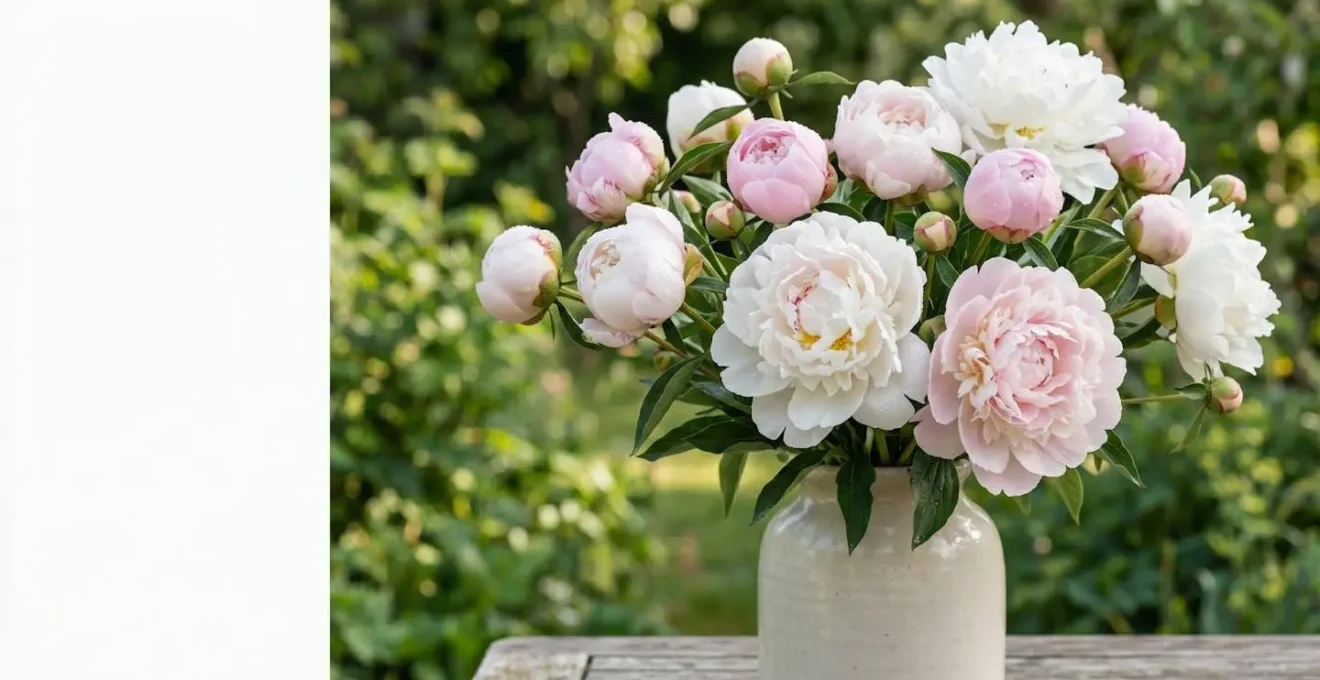
In summary:
- The short British peony season is dictated by a non-negotiable scientific need for a cold period, known as vernalisation.
- To maximise vase life, always buy peonies at the ‘marshmallow’ bud stage—soft and squishy, but not yet open.
- You can strategically ‘pause’ your peonies’ development for several days using specific dry or wet refrigeration methods.
- British-grown peonies consistently outperform imports in longevity and bloom quality due to a drastically shorter and less stressful supply chain.
Every year, it’s the same story. One minute, the buckets outside the florist are overflowing with magnificent, blousy peonies; the next, they’ve vanished, not to be seen again for another year. This fleeting six-week window feels both magical and maddening for any British flower lover. We’re often told the season is simply ‘short’ and that we should buy our flowers ‘in bud’. While true, this advice barely scratches the surface and leaves us powerless against wilting stems and a season that feels over before it’s even begun.
This frustration is understandable, but what if the brevity of the peony season wasn’t a limitation to be endured, but a horticultural dance to be mastered? The secret isn’t just about general flower care; it’s about understanding the specific science that governs a peony’s life, from its growth in a British field to its grand performance in your favourite vase. By thinking like a grower, you can learn to read the signals of the plant, manipulate its internal clock, and extend its fleeting beauty far beyond what you thought possible.
This guide will walk you through the grower’s perspective. We’ll demystify the science behind the season, show you how to select the perfect peony for any occasion, and even reveal the professional secrets to pausing time itself. You’ll learn why provenance matters more than anything and how to become a true peony connoisseur, making the most of every precious day of their glorious, but all-too-brief, reign.
Summary: Why Are Peonies Only Available for 6 Weeks and How to Make Them Last?
- When Exactly Are British Peonies in Season: The May-June Window Explained?
- Tight Buds or Open Blooms: Which Peony Stage to Buy for a 3-Day Event?
- How to Pause Peony Opening for 5 Days Using Your Home Fridge?
- British Farm Peonies or Dutch Auction Stock: Which Opens Fuller and Lasts Longer?
- Do Ants Really Help Peonies Open: The Truth Behind the Garden Myth?
- What Flowers Can You Actually Grow in Britain Each Month of the Year?
- Why David Austin Roses Take 15 Years to Breed and Cost Accordingly?
- Why Are British-Grown Summer Flowers Cheaper and Longer-Lasting Than Imports?
When Exactly Are British Peonies in Season: The May-June Window Explained?
The number one question we get as growers is why the peony season is so stubbornly fixed. The answer isn’t about market trends or logistics; it’s pure plant science. Peonies require a significant period of cold, known as vernalisation, to trigger flower production. Without this cold snap, the plant simply won’t bloom. This is a non-negotiable part of their lifecycle, a genetic clock set by millennia of evolution.
This biological need is precisely why the British climate is so well-suited to them and why their season is so predictable. According to horticultural research, peonies need between 500 to 1,000 hours in temperatures between 32°F and 40°F (0°C and 4.5°C) over winter. Our temperate winters provide this “chilling requirement” perfectly, setting the stage for a spectacular, but condensed, flowering period as the soil warms up in spring. The plant has a singular mission: to bloom, be pollinated, and set seed in that optimal window.
As the image above illustrates, even within this short window, different varieties march to their own beat. Early-season varieties like Coral Charm might appear in early to mid-May, followed by the iconic Sarah Bernhardt in the peak weeks, and late-bloomers like Festiva Maxima rounding out the season towards the end of June. As Tatiana Sergeenko, founder of Floritta, confirms, this is the reliable rhythm of the British peony year.
In most parts of the UK, peonies begin to flower in May and continue through to the end of June. The peak bloom tends to be mid-May to early June.
– Tatiana Sergeenko, Founder of Floritta, interviewed for Woman & Home
Tight Buds or Open Blooms: Which Peony Stage to Buy for a 3-Day Event?
Walking up to a bucket of peonies can be daunting. You have tightly closed, golf-ball-like buds, some partially open flowers, and some in their full, blousy glory. The common advice is to “buy in bud,” but this lacks the precision needed to time their peak beauty perfectly for a specific event, like a weekend party or a wedding.
As growers, we have a much more specific term: the ‘marshmallow stage’. This is the absolute sweet spot for purchasing peonies for maximum vase life and controlled opening. A bud at this stage has moved beyond being hard and tight. When you gently squeeze it, it should feel soft and yielding, much like a marshmallow. You will often see the first hints of true petal colour emerging from behind the green outer sepals. A peony purchased at this exact moment has the maximum stored energy and hasn’t yet begun the exhausting process of unfurling.
For a 3-day event, purchasing at the marshmallow stage is your best strategy. If you buy them on a Thursday for a Saturday event, they will have just enough time to hydrate and begin their slow, magnificent unfurling, hitting their peak performance right on cue. Buds that are still rock-hard may not have been mature enough when picked and risk never opening at all, a common source of disappointment. Conversely, already-open flowers have already spent a significant portion of their energy and will have a much shorter vase life, likely looking tired by day three.
How to Pause Peony Opening for 5 Days Using Your Home Fridge?
This is where we move from appreciating peonies to actively managing them. Perhaps your event was delayed, or you found the perfect ‘marshmallow’ buds a week early. The professional’s secret weapon in this scenario is simple: the refrigerator. By lowering the temperature, you can dramatically slow down the peony’s metabolic rate, effectively pausing its horticultural clock.
However, you can’t just toss them in the vegetable crisper. There are two primary methods, each suited for different timelines, and a critical rule to follow. The key is to manage moisture and protect the blooms from ethylene gas, a natural ripening agent produced by many fruits and vegetables that is lethal to a flower’s vase life.
It’s advisable to store peonies away from fruits and vegetables, particularly those that produce ethylene gas, like apples and bananas. Ethylene can trigger the premature wilting of flowers.
– Appliance Update Editorial Team, Ultimate Guide to Storing Peonies in the Refrigerator
For a short-term hold of up to five days, ‘wet storage’ is simplest. However, for longer holds, the professional ‘dry storage’ method is superior. The following table, based on information from expert growers, breaks down the differences.
| Storage Method | Duration | Technique | Best For | Pros | Cons |
|---|---|---|---|---|---|
| Dry Storage | 8-12 weeks | Wrap stems individually in dry newspaper, place in plastic bag (unsealed), store horizontally at 32-35°F | Long-term storage for weddings/events months away | Maximum storage duration; prevents bacterial growth; stems stay clean | Requires more prep time; flowers may take 1-2 days to fully rehydrate and open |
| Wet Storage | 3-5 days | Place stems in vase with fresh water, store entire vase in fridge at 35-40°F | Short-term hold for weekend events or brief delays | Quick method; flowers stay hydrated; faster bloom upon removal | Limited duration; requires fridge space for vase; water needs monitoring |
Your Peony Preservation Checklist
- Assess the Bud Stage: Confirm your peonies are at the ‘marshmallow stage’—soft to the touch but not open. Hard buds may not open after chilling.
- Prepare the Stems: Remove all leaves that would sit below the water line (for wet storage) or all leaves entirely (for dry storage) to reduce moisture loss.
- Isolate from Ethylene: Dedicate a shelf in your fridge. Ensure there are absolutely no fruits or vegetables nearby, especially apples, bananas, or tomatoes.
- Execute Storage Method: Choose your method. For a 5-day pause, wrap the dry stems and buds gently in newspaper and lay them flat on the shelf.
- Plan the Re-Awakening: Remove peonies from the fridge 24-36 hours before you want them to be in full bloom. Re-cut the stems at a sharp angle and place them in fresh, lukewarm water to encourage them to wake up.
British Farm Peonies or Dutch Auction Stock: Which Opens Fuller and Lasts Longer?
When you buy a bunch of peonies, you are buying a bundle of stored energy and hydration. The journey that flower has taken before it reaches your hands has a monumental impact on how much of that energy is left for its final performance in your vase. This is where the concept of provenance becomes paramount.
A typical peony from the Dutch auctions, destined for a UK supermarket, has had a stressful life. It was likely cut, chilled, bundled, transported to the auction house, sold, transported again across the North Sea in a refrigerated lorry, sent to a distribution centre, and finally delivered to the store. This journey can take several days, involving multiple changes in temperature and handling. Each step of this process depletes the flower’s precious energy reserves.
Now, consider the life of a British-grown peony from a local farm. It is cut in the cool of the morning, conditioned in fresh water just a few metres from where it grew, and can be in a local florist’s or a customer’s hands within hours, not days. It has not endured long-distance travel, extreme temperature fluctuations, or the stress of a complex supply chain. It arrives with its battery fully charged, ready to put on a spectacular, long-lasting show. The result is invariably a fuller, more robust bloom that opens more reliably and lasts significantly longer in the vase. The difference is not subtle; it’s a fundamental disparity in quality born from a shorter, gentler journey from field to vase.
Do Ants Really Help Peonies Open: The Truth Behind the Garden Myth?
It’s an age-old piece of garden folklore: you must have ants on your peony buds for them to open. Many a gardener has watched with apprehension as ants swarm over the precious buds, believing them to be essential little helpers. It’s a charming idea, but as growers, we can confirm it is entirely a myth.
The relationship between ants and peonies is a beautiful example of symbiosis, but it’s a one-way street when it comes to the bloom opening. Peony buds exude a sweet, carbohydrate-rich nectar from their sepals as they swell. This is a delicious and easily accessible food source for ants. The ants are simply there for a free meal. They are not nibbling, coaxing, or otherwise ‘helping’ the petals to unfurl. The flower will open in its own time, dictated by its own internal clock and environmental conditions, whether the ants are there or not.
So, should you worry about them? Not at all. The ants do provide a small benefit to the plant by acting as tiny bodyguards, potentially scaring off other pests that might actually want to damage the flower. When you bring cut peonies inside, a few ant stowaways are common. Simply hold the bloom upside down and give it a gentle shake, or briefly dunk the flower head in a bowl of cool water. The ants will leave, and your flower will be none the wiser. There is absolutely no need to spray them with pesticides. They are temporary visitors, not essential workers.
What Flowers Can You Actually Grow in Britain Each Month of the Year?
The intense, fleeting nature of the peony season can make a British flower lover feel that our climate is restrictive. In reality, it simply encourages us to embrace seasonality and appreciate what each month has to offer. As growers, our year is a constant procession of different beauties, each having its moment. Moving beyond the peony, a whole calendar of British-grown flowers awaits.
While a comprehensive list would fill a book, thinking in seasons helps. A true British flower garden is never truly empty, offering a different character with every passing month. This is just a small taste of what you can find from local growers throughout the year:
- Early Spring (March-April): The year begins with delicate but tough blooms like Narcissi (daffodils), fragrant Hyacinths, Hellebores, and the first vibrant Tulips.
- Late Spring (May-June): This is the crescendo. Alongside the mighty Peony, you have Alliums, Lilac, Ranunculus, and the first flush of garden Roses.
- High Summer (July-August): The garden is buzzing with colour. Dahlias begin their long reign, joined by Sweet Peas, Cosmos, Scabious, and towering Delphiniums.
- Autumn (September-October): The light changes, and so do the flowers. Dahlias are still going strong, but are now joined by rich-coloured Chrysanthemums, stately Gladioli, and elegant Japanese Anemones.
- Winter (November-February): Even in the coldest months, there is beauty. Scented winter-flowering shrubs, evergreen foliage, colourful stems of Cornus (dogwood), and dried flower arrangements carry us through to the spring.
Why David Austin Roses Take 15 Years to Breed and Cost Accordingly?
At first glance, this might seem like a diversion. But understanding the intense dedication behind breeding a world-class flower like a David Austin Rose provides a powerful parallel for appreciating the inherent value of specialist blooms like peonies. The price and availability of a flower are not arbitrary; they are the direct result of time, expertise, and a little bit of horticultural magic.
The process of creating a new David Austin rose is a masterclass in patience. It begins with the cross-pollination of thousands of parent roses, hoping to combine the best traits of each. This results in hundreds of thousands of seeds. Over the next decade and a half, the resulting seedlings are rigorously trialled and evaluated. A tiny fraction will be selected to move on to the next stage of testing.
These chosen few are judged on a host of criteria: fragrance, bloom form, colour, repeat-flowering ability, and, crucially, health and disease resistance. A beautiful rose that succumbs to blackspot is a failure. Year after year, the field is narrowed down until, after more than a decade, one or two exceptional varieties might be deemed worthy of being introduced to the public. That £25 price tag on a potted rose doesn’t just cover the plant itself; it represents a 15-year investment of research, development, and expert cultivation. It’s a testament to the fact that creating perfection in nature cannot be rushed.
Key takeaways
- The six-week peony season is a fixed biological reality in the UK, driven by the plant’s essential winter chilling requirement.
- Maximise vase life by purchasing peonies at the ‘marshmallow’ bud stage—soft to the touch—for a controlled, long-lasting bloom.
- You can ‘pause’ peony opening for days or even weeks with careful refrigeration, keeping them away from fruit to avoid ethylene gas.
Why Are British-Grown Summer Flowers Cheaper and Longer-Lasting Than Imports?
Throughout this guide, we’ve touched on the benefits of provenance. It’s time to state it plainly: for summer flowers like peonies, choosing British-grown is the single most effective decision you can make for quality, longevity, and value. The notion that imported flowers are always cheaper is a widespread fallacy that ignores the hidden costs of a long and complex supply chain.
An imported flower’s price tag reflects massive logistical overheads: air miles or refrigerated lorry transport, auction house fees, and multiple layers of distribution. All these costs are passed on to the consumer. More importantly, as we discussed, this journey inflicts significant stress on the flower. It is a perishable product that suffers from every hour spent in a box. This “travel fatigue” results in a shorter vase life, meaning you are effectively paying more for a product with a lower performance ceiling. Many simply fail to open at all, representing a total loss.
A British-grown flower, by contrast, has a simple, clean journey. It’s a low-overhead, high-freshness model. The money you pay goes directly to the grower and the cultivation of a superior product, not to international logistics firms. The result is a flower that arrives fresher, more hydrated, and with its energy reserves intact. This translates directly into a longer vase life, a more magnificent bloom, and therefore, far greater value for your money. You might enjoy a British peony for seven to ten days, whereas a tired import might struggle to make it to three. Which one is truly the better value?
Now that you are armed with a grower’s knowledge, you can approach the next peony season not with frustration, but with the confidence of a true expert. The next logical step is to seek out these superior blooms and put your new skills to the test.