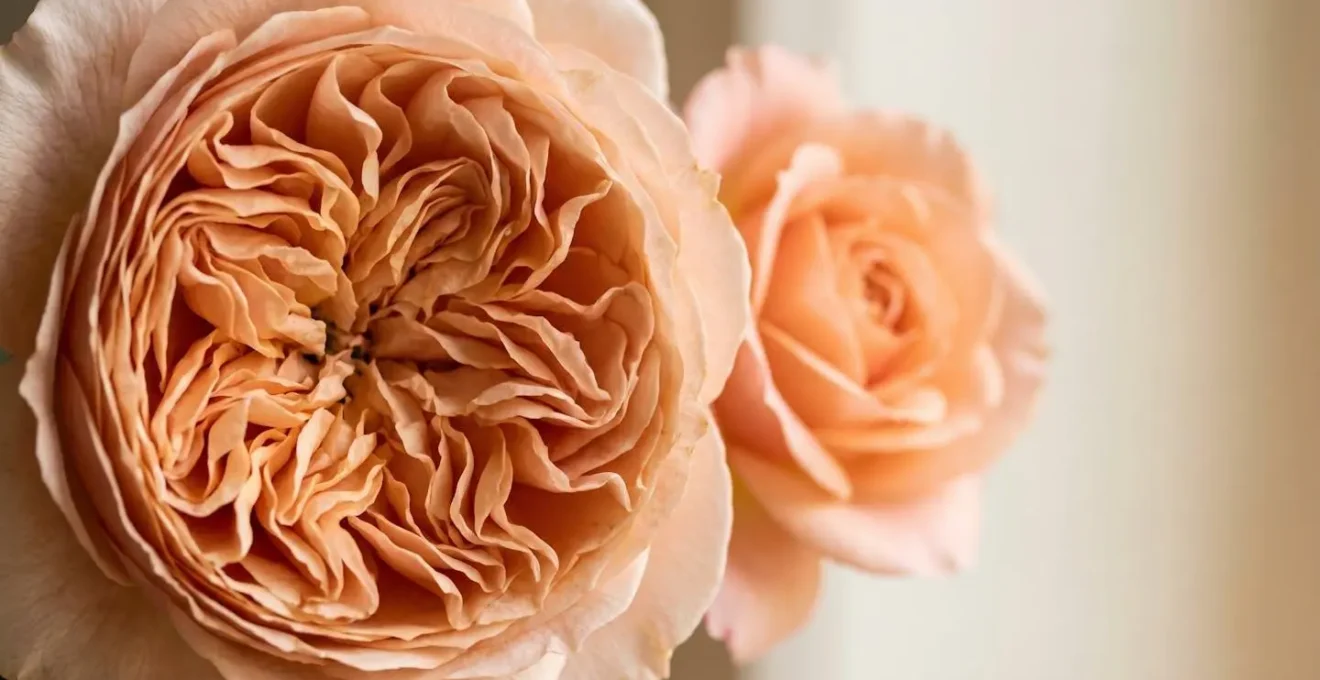
The £8 price tag for a garden rose isn’t just for a flower; it’s an investment in artistry, irreplaceable scent, and decades of botanical craftsmanship.
- The high cost is driven by years of intensive breeding, extreme fragility, and very short seasonal availability.
- Unlike standard roses bred for transport, garden roses are bred for beauty, creating a unique sensory value that cannot be replicated cheaply.
Recommendation: Instead of dismissing them, use them as a ‘strategic splurge’—a few hero blooms in the bouquet—to elevate your entire wedding aesthetic without a £10,000 floral budget.
You’ve pinned hundreds of images for your wedding. They all feature those impossibly romantic, multi-petalled, pillowy blooms that look like they’ve been plucked from a Jane Austen novel. You feel a connection to that soft, abundant, garden-style aesthetic. Then you speak to your florist and the quote arrives. You see the line item and experience a moment of sticker shock: the perfect rose you fell in love with costs £8, maybe even £10 a stem, while a standard supermarket rose is barely £1. It’s easy to feel disheartened and question the value. Is it just a brand name? Are they simply ‘prettier’?
As a floral designer specialising in weddings, I see this moment of surprise often. But the truth is, comparing a garden rose to a standard hybrid tea rose is like comparing a hand-stitched couture gown to a fast-fashion dress. They may both be roses, but they are not the same product. The price difference reflects a chasm of difference in their story, their purpose, and the very experience they deliver. The cost isn’t just for a flower; it’s for artistry, for a fleeting moment of perfect imperfection, and for an olfactory memory that will last a lifetime.
In this guide, we won’t just justify the price. We will deconstruct it. We’ll explore the incredible journey from pollination to your bouquet, understand the sensory value that commands a premium, and, most importantly, reveal the professional strategies to achieve that coveted English garden look you adore, even on a realistic budget. This is about making a conscious, informed artistic choice for one of the most important days of your life.
To understand the true value behind these exquisite blooms, we’ll break down the key factors that contribute to their cost and explore how to incorporate them intelligently into your plans. This article will guide you through the artisan economics of these special flowers, from their creation to their final presentation.
Summary: Why Garden Roses Cost So Much and How to Use Them Wisely
- Why David Austin Roses Take 15 Years to Breed and Cost Accordingly?
- Which Garden Rose Smells Strongest: Juliet, Keira, or Patience?
- Why Pairing Garden Roses With Eucalyptus Creates the Perfect English Garden Look?
- Why Garden Rose Petals Brown Faster Than Hybrid Teas in Warm Venues?
- When Are British-Grown Garden Roses Available and Why Does It Matter?
- Which 5 Old-Fashioned Flowers Instantly Create a 1920s English Garden Feeling?
- Why Ranunculus, Sweet Peas, and Café au Lait Dahlias Command £10+ per Stem?
- How to Create an English Cottage Garden Wedding Look Without a £10,000 Budget?
Why David Austin Roses Take 15 Years to Breed and Cost Accordingly?
The primary reason for the high price of a premium garden rose lies in its creation story. Unlike mass-market roses, which are bred for uniformity and durability, artisan roses like those from David Austin are the result of a long, painstaking, and incredibly expensive process of research and development. This isn’t manufacturing; it’s botanical artistry.
The £3 Million Juliet Rose: An Investment in Perfection
The iconic ‘Juliet’ rose, arguably one of the most famous wedding flowers in the world, is a perfect example of this artisan economics. It wasn’t discovered; it was engineered. David Austin invested a staggering £3 million and 15 years of continuous work to create this single variety. This cost doesn’t just cover the development of Juliet itself, but also the thousands of failed hybrids that were discarded along the way. That ‘cost of failure’ for countless other potential roses is baked into the price of the one successful, stable, and beautiful variety that finally makes it to market.
The official breeding programme timeline from David Austin confirms this immense undertaking. It takes an average of 12 years from the first cross-pollination to a new variety being considered for market introduction. During this decade-plus, each potential rose is evaluated for its shape, colour, petal count, disease resistance, and that all-important, elusive quality: charm. As the breeder himself articulated, the mission is one of balancing aesthetics with health.
The goal remains the same – to try to develop the healthiest roses possible without compromising their beauty, fragrance, grace and most importantly, their charm.
– David Austin Snr., David Austin Roses Breeding Programme
So, when you buy an £8 stem, you are not just paying for a flower that grew in a greenhouse. You are paying for a tiny fraction of a multi-million-pound, decade-long art project dedicated to creating unparalleled beauty. You are paying for the charm.
Which Garden Rose Smells Strongest: Juliet, Keira, or Patience?
The second major component of a garden rose’s value is its sensory impact, specifically its fragrance. Standard roses have often had their scent bred out of them in favour of longevity and transport-worthiness. Garden roses, by contrast, are bred to have complex, powerful, and memorable fragrances. This ‘sensory value’ is a key differentiator. The scent, however, is not uniform; each variety offers a unique olfactory profile.
Among the most popular David Austin varieties, there are clear differences in fragrance that justify their selection for different purposes:
- Patience: Widely considered one of the most fragrant, Patience has a strong, classic old-rose scent with a distinct and fresh note of lemon. It’s clean, intense, and can easily perfume a room. It is often the top choice when fragrance is the number one priority.
- Juliet: While famous for its shape, Juliet has a much lighter and more subtle fragrance. It’s a soft, fresh tea rose scent that is elegant but not overpowering. It adds a gentle perfume to a bouquet without dominating.
- Keira: This rose offers a beautiful medium-strength fragrance with notes of marshmallow, almond, and myrrh. It’s a complex, warm, and utterly delicious scent that is both unique and sophisticated.
So, which is strongest? Undeniably, Patience takes the crown for sheer intensity. However, the ‘best’ scent is entirely personal. Choosing a garden rose is also about choosing a memory. The fragrance of your wedding bouquet will stay with you, and that intangible, emotional connection is a huge part of what you are investing in. This is a value that simply cannot be found in a £1 stem.
Why Pairing Garden Roses With Eucalyptus Creates the Perfect English Garden Look?
The ‘English Garden’ aesthetic is often defined by a sense of structured wildness—a romantic, abundant, and slightly informal feel. The pairing of lush, multi-petalled garden roses with the soft, silvery-green foliage of eucalyptus has become a visual shorthand for this look. The contrast works beautifully: the silver-blue tones of the eucalyptus make the warm peaches, pinks, and creams of the roses pop, while its draping habit adds movement and breaks up the formality of an all-rose arrangement.
However, an honest floral designer will point out a gentle irony. While we call this the ‘English Garden’ look, eucalyptus is native to Australia. Its ubiquity in modern floristry is a testament to its aesthetic appeal and durability, but it isn’t a traditional part of the British landscape. This matters because there is a growing movement towards celebrating ‘floral terroir’—using flowers and foliage that are authentically local and seasonal. This is especially poignant when you consider that only around 10% of flowers sold in the UK are actually grown domestically. The other 90% are imported, primarily from the Netherlands and further afield.
For a bride who truly wants an authentic British country garden feel, moving beyond eucalyptus can create a more unique and sustainable look. This is also a smart budget strategy, as locally-grown foliage is often more affordable. Consider discussing these beautiful, UK-grown alternatives with your florist:
- Silver-leafed Senecio: Provides similar muted blue-grey tones while being sustainably grown in British cutting gardens.
- Asparagus Fern: Offers the airy, delicate texture that is so characteristic of the cottage garden aesthetic.
- English-grown herbs (mint, rosemary): Adds a wonderful sensory dimension with fragrance and supports local growers.
- Native seed heads and grasses: Creates the ‘structured wildness’ authentic to British country gardens.
- Berries and foliage from hedgerows: Provides seasonal, locally sourced textural contrast for autumn weddings.
Why Garden Rose Petals Brown Faster Than Hybrid Teas in Warm Venues?
This is perhaps the most crucial—and often most difficult—piece of the puzzle for a bride to understand. The very thing that makes a garden rose so beautiful is also what makes it so fragile. This is the concept of imperfect perfection. A standard hybrid tea rose from the supermarket is a marvel of industrial agriculture. It has been bred to withstand cross-continental shipping, days in a refrigerated truck, and a week in a vase with minimal care. It has thick, robust petals and a tight, uniform bud that opens slowly and predictably.
A garden rose is the complete opposite. It’s a delicate, living thing bred for beauty, not for battle. Its high petal count (often over 100 petals, compared to 20-40 for a standard rose) means it opens quickly and dramatically. Each of those soft, thin petals is a potential point of failure. They lose water faster (a process called transpiration) and are far more susceptible to bruising and heat stress. A hot marquee or a sunny outdoor ceremony can dramatically accelerate their life cycle, causing the outer ‘guard’ petals to brown or “bruise”.
In a professional context, garden roses have a much shorter expected vase life. While a hybrid tea might last 7-14 days, a garden rose is at its peak for 3-7 days, and that’s with perfect handling. This fragility is a feature, not a bug. It’s the trade-off for experiencing a bloom at its most magnificent, open, and fragrant state. It requires expert handling, conditioning, and timing by your florist to ensure it looks perfect on your wedding day. That expertise is part of the cost.
Checklist: Extending Garden Rose Life in Warm Conditions
- Positioning is key: Keep arrangements away from direct airflow, spotlights, sunny windows, and any heat sources.
- Timing the delivery: Schedule your flower delivery as late as is practically possible for warm-weather events to minimise total heat exposure.
- Hydration is paramount: Ensure flowers are in fresh water; a florist will use specific floral food and finishing sprays to seal petal edges and reduce water loss.
- Assess the temperature: Avoid displaying blooms when temperatures exceed 26°C (80°F), as extreme heat dramatically accelerates water loss and wilting.
- Overnight care: If possible, having arrangements refrigerated overnight can slow the metabolic aging process and add days to their vase life.
When Are British-Grown Garden Roses Available and Why Does It Matter?
The concept of ‘floral terroir’—the idea that flowers, like wine, are a product of their specific environment—is central to understanding the value of locally grown blooms. While garden roses can be imported year-round from equatorial regions, there is something truly special about a rose grown in British soil. For a start, it has a dramatically lower carbon footprint, having travelled miles, not continents, to reach you.
However, embracing British-grown flowers means embracing their natural seasonality. Unlike imported flowers grown in climate-controlled greenhouses, British garden roses have a distinct peak season. The combination of longer daylight hours and warmer temperatures means that June, July, and August offer the greatest variety of British-grown wedding flowers. While some growers with polytunnels can extend the season from May to early October, the height of summer is when you will find the best quality, variety, and price for local garden roses.
Choosing to use British-grown roses for your summer wedding does more than just support local businesses and reduce your environmental impact. It connects your wedding to a specific time and place. The flowers become a genuine reflection of the English summertime, imbued with an authenticity that imported blooms can’t quite match. As one British grower eloquently puts it, you are getting flowers that are truly of the season.
By working closely with the British seasons, and other British growers, we are able to bring you a variety of seasonal flowers as nature intended which haven’t travelled the world before reaching you.
– Cornish Blooms, British Flower Farm Philosophy
Working with the seasons, not against them, is the most powerful way to create a truly memorable and meaningful floral design. If you’re planning a wedding in June, you can build your entire floral concept around the unparalleled beauty of a British-grown garden rose at its absolute peak.
Which 5 Old-Fashioned Flowers Instantly Create a 1920s English Garden Feeling?
To create that lush, romantic, and slightly untamed English garden look, the secret is not to use only expensive ‘hero’ flowers like garden roses. The real artistry lies in the supporting cast. It’s the mix of textures, shapes, and sizes that creates the authentic feeling of abundance. By pairing a few statement roses with a carefully curated selection of more affordable, old-fashioned flowers, you can achieve a high-end look without a high-end-only budget. The 1920s, a period synonymous with garden parties and romanticism, provides wonderful inspiration.
To evoke that specific period, you need flowers that provide delicate texture, gentle movement, and nostalgic fragrance. These are the flowers that would have been found in the cutting gardens of the era, and they are often far more budget-friendly than a premium rose. Here are five old-fashioned flowers that act as the perfect supporting cast:
- Astrantia (Masterwort): With its papery, star-like bracts, Astrantia provides a delicate, intricate texture that is the epitome of the cottage garden style. It fills out arrangements without adding bulk.
- Scabiosa (Pincushion Flower): This flower offers a distinctive ‘pincushion’ texture and bobs on slender stems, adding gentle, whimsical movement to any bouquet or centrepiece.
- Stocks (Matthiola): The contribution of Stocks is primarily olfactory. Its spicy, clove-like perfume is the quintessential scent of an English summer garden and layers beautifully with the fragrance of roses.
- Sweet Peas: The ultimate old-fashioned flower. Their delicate, ruffled petals and intensely sweet fragrance deliver the nostalgia and soft pastel colours that define the era’s aesthetic.
- Trailing Jasmine or Clematis: For authentic period detail, nothing beats the draping, romantic tendrils of a climbing vine. A few strands trailing from a bouquet instantly create a sense of natural, foraged beauty.
By using these flowers generously, a florist can create a full and luxurious arrangement, using only a few, strategically placed garden roses for maximum impact. This is the essence of smart, high-impact floral design.
Why Ranunculus, Sweet Peas, and Café au Lait Dahlias Command £10+ per Stem?
It’s important for a bride on a budget to understand that garden roses are not the only flowers that command a premium price. Several other ‘hero’ flowers are in the same price bracket, or even higher, due to similar factors: fragility, limited seasonality, and intense demand driven by social media trends. Understanding this context helps to normalize the cost of a David Austin rose.
Take the ‘Café au Lait’ dahlia, for example. This single variety of dahlia has become an icon of late summer and autumn weddings, famous for its huge, dinner-plate-sized blooms and unique muted beige-blush colour. Because they are field-grown and only available from July to October, demand massively outstrips supply during peak wedding season. This creates a market where a single stem can be exceptionally expensive. Florist wholesale pricing data shows that a single bloom can cost £15-£17.50 per stem year-round, with their size peaking in late summer.
Similarly, premium varieties of ranunculus, like the large ‘Clooney’ variety, are prized for their incredible petal count and paper-like delicacy. However, their season is short, primarily January to April. This limited window of availability means that they can cost £8-£10 per bloom at wholesale prices. Sweet peas, while smaller, are incredibly labour-intensive to grow and harvest and have a very short vase life, which also places them in the premium category.
What do all these flowers have in common?
- Extreme Seasonality: They are available for a very short window, creating intense demand.
- Fragility: They don’t ship well and require expert handling.
- ‘Instagram-Famous’: They are highly sought-after for their unique aesthetic, which has been amplified by social media.
In this context, the £8 price for a David Austin rose—a flower backed by decades of breeding and available for a longer season than a dahlia—starts to look less like an extravagance and more like a fair market price for an artisan product.
Key Takeaways
- The high price of garden roses is a direct result of decades of costly breeding, their inherent fragility, and short seasonal peaks.
- You are paying for ‘sensory value’—irreplaceable fragrance, high petal count, and unique forms that standard roses lack.
- The most effective strategy is the ‘hero’ approach: invest in a few premium garden roses for high-impact pieces (like the bridal bouquet) and use complementary, seasonal flowers for the rest.
How to Create an English Cottage Garden Wedding Look Without a £10,000 Budget?
Creating that lush, romantic English garden aesthetic you’ve been dreaming of is absolutely achievable without an oligarch’s budget. The secret isn’t to find a cheap imitation of a garden rose—it’s to change your strategy. It’s about being smart, seasonal, and strategic. It’s about focusing your investment where it will have the most visual and emotional impact.
A florist will often tell you that a successful design is about creating “moments”—key focal points that capture the eye and set the tone. For a wedding, the most photographed and most important floral moment is the bridal bouquet. This is where your investment will pay the highest dividends. By understanding this, you can allocate your budget intelligently to get the look you love.
Here are the key strategies for achieving that cottage garden look without breaking the bank:
- The ‘One Premium Hero’ Strategy: This is the golden rule. Invest in those breathtaking, expensive David Austin or garden roses for the bridal bouquet only. This is the piece that will be in all your photos. For bridesmaids’ bouquets and table arrangements, use more affordable but complementary flowers like spray roses, lisianthus, or even muted-tone carnations to echo the colour palette.
- Work With the Season, Not Against It: If you’re getting married in August, embrace the dahlia! A few giant dinner-plate dahlias can fill an arrangement for a fraction of the cost of the equivalent number of roses. In spring, it’s all about ranunculus and tulips. Working with locally-grown, seasonal flowers will always be more cost-effective than importing out-of-season blooms.
- Maximise Impact with Foliage and Fillers: Abundance comes from fullness. Use plentiful, affordable fillers like baby’s breath (used in a modern, cloud-like way), seasonal grasses, and beautiful foliage to create the size and shape of your arrangements. The ‘hero’ flowers are then placed strategically within this framework.
- The DIY vs. Pro Balance: Be realistic about your skills. Creating simple, single-variety bud vases for tables can be a lovely DIY project. However, the complex, wired, and structurally sound bridal bouquet should always be left to a professional.
This approach allows you to have the best of both worlds: you get the irreplaceable beauty and fragrance of a true garden rose in the one place it matters most, while still creating a full and cohesive floral story throughout your venue.
Ultimately, the choice is yours. Now that you understand the story behind the £8 stem, you can work confidently with your florist to make informed, strategic choices. Start the conversation by discussing which ‘hero’ flower truly tells your story, and build your beautiful, achievable English garden wedding from there.